
Colombia: 22 Countries Join in "Building Opportunities for All" Workshops
By Hernando Ayala
"Building Opportunities for All" was the unifying theme of the IV International Forum of the Latin American Group for Participation, Inclusion, and Integration of Persons with Disabilities and the National Congress on Disability in the Twenty First Century, held on December 3 - 6, 2001.
The event was held in Cartagena, Colombia with the participation of twenty two Ibero-American countries, greatly augmenting the celebration of the International Day of Persons with Disabilities.
OBJECTIVES AND CONTENTS
The primary objective was to provide training to professionals and technicians in order to improve service provision as required by persons with disabilities, leaders and social developers. The other main objective was to work towards effective and responsible participation for social integration in the community. There were six parallel courses:
Course 1: Prevention of Disability- The course was imparted by invited teachers from the Fundación de Asistencia Psicopedagógica a Niños, Adolescentes y Adultos con Retardo Mental or in specially difficult circumstances- FASINARM, of Ecuador.
Course 2: Total Rehabilitation and Community Participation. This course was presented by Dr. Ruth Magne and Mr. Juan Hertedia, and teachers from Fundación para la Rehabilitación Integral Comunitaria -RIC, of Bolivia, Dr. Blanca Cano, and María del Carmen Botero, Ocupational Therapists of the Comité Regional de Rehabilitación de Antioquía -CRRA, of Colombia and Pilar DÕAZ, Occupational Therapists from the Fundación REI, of Colombia.
Course 3: Emphasizing Accessibility to Physical Space. This course was imparted by Architect Xavier García, Eduardo Alvarez, and Cludia Sánchez, Spaniard, Uruguayan, and Colombian teachers, respectively, (all members of the Latin American Chapter of the Royal Patronage on Disability of Spain).


Course 4: Formulation, Administration, and Evaluation of Social Projects, emphasizing the construction of indicators. This course was given by Dr. Víctor Manuel Quintero, Director of Centro de Estudios Socioeconómicos, Programa Institucional de Proyección Social, Universidad de San Buenaventura, Calí, Colombia.
Course 5: Total Model for Occupational Assessment (MEIO). This course was presented by Janett Bernal Torres, Occupational Therapist, GLARP-IIPD, Coordinator of the Technical Area.
Course 6: Work Placement of Persons with Disabilities, emphasizing evaluation. This course was imparted by Professor Francisco Moreno Bellido, Head of the Readaptation Center of the Centro de Prevención y Rehabilitación de FREMAP, of Spain, Technical Advisor of Fundación MAPFRE Medicina.
UN STANDARD RULES AND THE RIGHTS OF PERSONS WITH DISABILITIES
A Workshop on the Standard Rules and the Rights of Persons with Disabilities, emphasizing gender issues, was organized as a parallel event to the V Colombian National Congress and IV International GLARP-IIPD Forum. This parallel event was sponsored by the United Nations Economic and Social of Affairs Department of the Division of Social and Development Policy.
One of the points that emerged during the activity is that women with disabilities usually do not have equal access to basic information regarding their rights.
The Standard Rules for the Equalization of Opportunities for Persons with Disabilities and the role played by self-help disability groups, with respect to a wider promotion and defense of the rights and development options for persons with disabilities.
During this Workshop, national experiences were exchanged regarding the institutional achievements with regard to fostering capacities and strengthening compliance for the Standard Rules for the Equalization of Opportunities.
The Workshop had the participation of Professor Christian Curtis and Mrs. Akiko Ito, to facilitate the analysis of the situation during the presentation of the United Nations and with delegates of and for organizations of persons with disabilities form Argentina, Chile, Colombia, Costa Rica, Ecuador, El Salvador, Guatemala, Mexico, Nicaragua, Dominican Republic, and Venezuela.
Organized by GLARP-IIP, Fundación Teletón, and Fundación REI, the event combined academic presentations on the macro-analysis on disability, during the morning, with simultaneous courses during the afternoon, for the technical and operational means of support required by persons with disabilities.
These topics were studied, topic by topic. during the 12 to 14 hour work sessions, providing participants the opportunity of in depth training regarding their field of interest and professional background.
The academic presentations were presented each morning and covered disability topics such as: Disability and public policy, the Standard Rules as Challenge for Equal Opportunities, and Persons with Disabilities and the Job Market.
ACTIVE PARTICIPATION OF PERSONS WITH DISABILITIES
Starting with the premise that an organized and efficient community is able to achieve increasing participation for management and negotiation, this event fosters political strengthening and involvement together with the organized participation of the community in social development. Such a strategy seems fundamental as we begin the new millennium.
By recognizing that user participation is essential at every phase of the process, organization, and development of this event, great effort was undertaken to ensure the effective participation of persons with disabilities representing the movements and organizations of the Latin American Region. To this end substantial program time was devoted to study and debate concerning the policies, norms, programs, and extant projects regarding persons with disabilities.
Organizers and participants of this international event recognized the strong and close relationship between social factors and disability. This means that the social policy must become the most effective and fair instrument to address, with a comprehensive approach, the problems and challenges in society.
With the purpose of studying and analyzing the governmental disability policies, Colombian State entities were invited to this event, to inform all about their plans and programs to reorient provisions dealing with persons with disabilities and to generate a culture of tolerance and respect to the Rights to Be Different, as one of the foundations of the "Change to Build Peace" Development Plan.
Considering that in the past two decades new approaches have been opened for persons with disabilities, including those of the Standard Rules for the Equalization of Opportunities for Persons with Disabilities, the Congress included a Workshop for analyzing and evaluating the present situation regarding its adoption and implementation of measures pertaining to disability in the American continent.
COLECTIVE RESPONSIBILITY
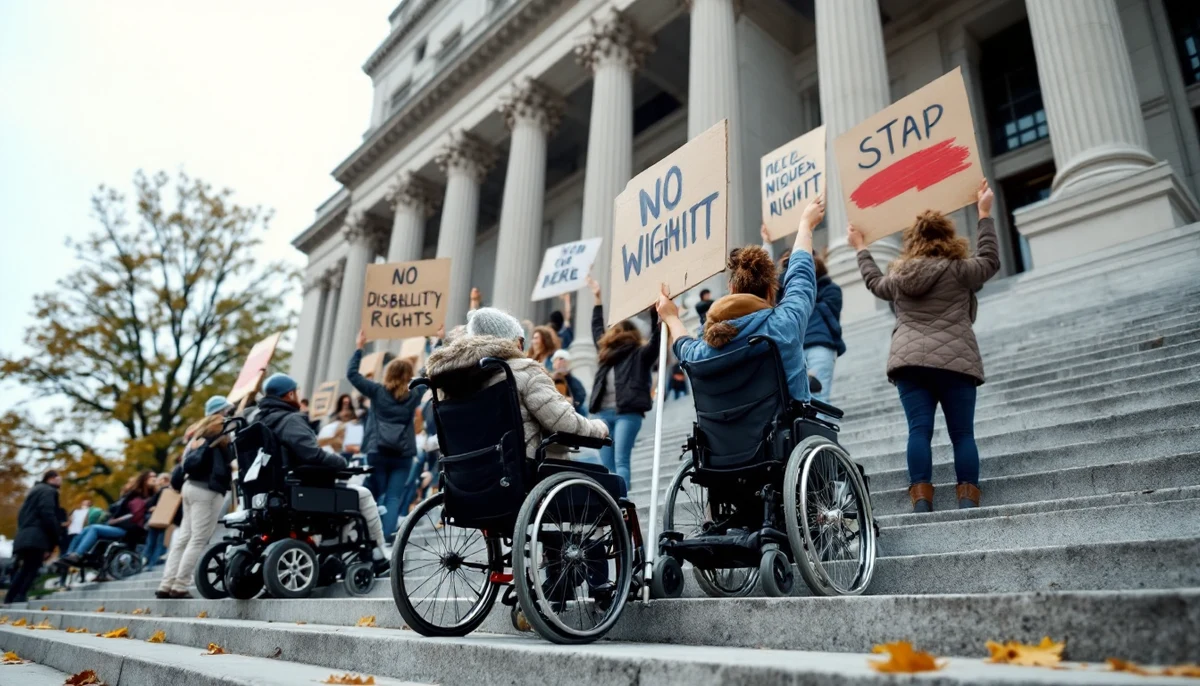
We are able to confirm that in the conclusions and dissertations and presentations of the event, it was asserted that disability is not a personal attribute, but mainly imposed by social conditions and therefore its response demands social action, a social responsibility, requiring environmental modifications to ensure full participation of people with disabilities in the life of the community.
So disability, as an issue, is really more of an attitudinal and ideological conception requiring social change, but is also a political question that must address Human Rights. From this perspective it is concluded that disability must be addressed as a citizens rights responsibility, which really becomes a political approach.
|