
International Disability Alliance Focuses on Proposed UN Convention
By Mike Erwin (Mervin4241@aol.com)
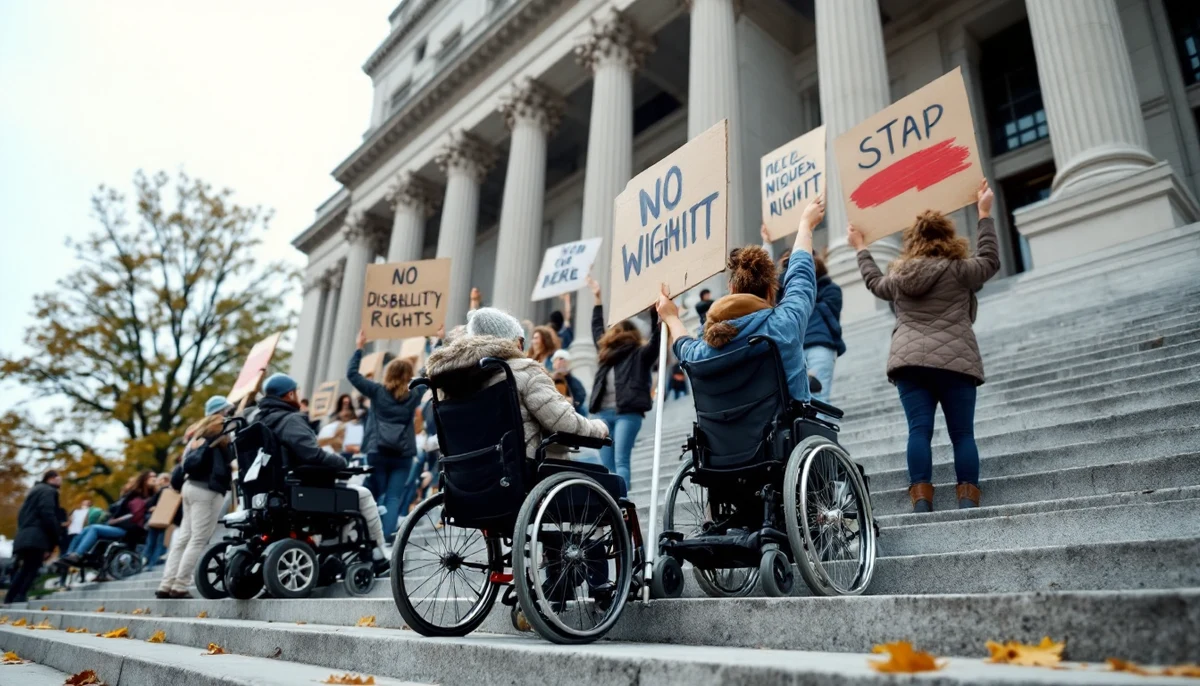
On February 18, members of the Mexican delegation to the United Nations presented to members of the International Disability Alliance (IDA) their plans to win fast-track approval of a first ever UN Convention on the Rights of Disabled People. But the incoming chairperson of IDA, Kicki Nordstrom of Sweden, expressed concern the approach entailed risks that might ultimately backfire or result in a weak Convention.


Luis Alfonso de Alba, Deputy Representative for the UN Mexican delegation, told Disability World that Mexico is preparing a draft of a document that spells out the need for and general features of a convention. He said it will be circulated to disability leaders from around the world who will be invited to discuss it at a meeting in Mexico City in April or May. De Alba said he hopes a single consensus document will emerge which can be presented when the ad hoc committee of members and observers that will explore the need for a convention meets this summer. "We are speeding up the process," he said.
Mexico trying to avoid bureaucratic delays
In December 2001, Mexico put forth Resolution 56/168, calling for consideration of a convention. With the backing of the Third Committee (responsible for social issues), it passed easily through the UN General Assembly without a vote. Luis Alfonso de Alba said the process from here would usually be for UN officials such as the Secretariat to prepare a report recommending a convention, which could take years. "We're just trying to avoid some of the bureaucracy," he said. De Alba said this strategy was employed to make the UN Convention on Land Mines a reality within two years of passage of the initial resolution. He said he doesn't know if a disability convention could come about that quickly, but he hopes to win official UN approval as quickly as possible.
But Kicki Nordstrom, president of the World Blind Union (WBU), said she's skeptical that this approach will work in this case. "Disability is different (from land mines). Disability is very complicated," Nordstrom said. She thinks the Mexican delegation might come up with a more viable document if it takes time to get input from disability organizations and to sell the idea of a convention within the UN. Nordstrom said, "It's not easy forcing the UN down a different direction. If they manage to do that I will applaud them. If they don't they will cause problems. I hope they're right."
Tomas Lagerwall, Secretary General of Rehabilitation International (RI), said he would consider it a victory if the convention were to come about in four to six years. In addition to WBU and RI, IDA member organizations are the World Federation of the Deaf, World Federation of Deafblind, Disabled People's International, World Network of Users and Survivors of Psychiatry and Inclusion International.
Contributions from many countries De Alba said it's a misconception that Mexico is preparing the draft in a vacuum. He said many delegations are contributing, such as, Brazil, China, Cuba, Ireland, Sweden, South Africa, Chile and Algeria. The United States and Canada, he said, are taking a wait-and-see attitude as the process unfolds. "They have been active on the issue but they're not so enthusiastic about the process."
But Rami Rabby, social affairs officer for the U.S. delegation, said that the U.S. would be interested in giving input on the draft but at that point had not been informed of its substance. Rabby pointed out that the U.S. has joined in the consensus in moving the resolution forward so far.
De Alba said he hopes the fast pace will demonstrate a sense of urgency that will forge a political will for a convention among the powers that be in the UN. " I know that 90 percent of it is political will. It depends on the disability community, how strong they want it and defend it." Holding a convention is imperative, Alfonso de Alba said, because conventions produce binding powers absent in the UN Standard Rules. "We can force some action." However, he was careful to emphasize, it's only the approval process Mexico seeks to accelerate. Determining goals and agendas for a convention should be much more deliberate. " We don't want to hurry when it comes to discussing things of substance," he said.
Support from Commission for Social Development
The convention idea has also picked up support on other fronts. On February 21,The Commission for Social Development approved a resolution which, "welcomes the adoption of resolution 56/168." The resolution was put forth by Argentina, Brazil, Chile, Cuba, Dominican Republic, Ecuador, El Salvador, Guatemala, Jamaica, Mexico, Peru and South Africa. The resolution expresses deep concern "about the disadvantaged and vulnerable situation faced by six hundred million persons with disabilities around the world." It also, "notes with appreciation the valuable work undertaken by the Special Rapporteur on Disability."
IDA records support for UN Disability Rapporteur
The rapporteur, Bengt Linqvist, presented his report at the same session of the Commission. Lindqvist urged in his report that the UN keep making progress toward bringing about a convention. But he also urged the adoption of a supplement to strengthen the current existing Standard Rules on Equalization of Opportunities for Persons with Disabilities. Lindqvist included the supplement, entitled "Reaching the Most Vulnerable" in his report. IDA issued a statement supporting Lindqvist's conclusions. It said the Commission should "invite member states and international disability organizations to comment on the Supplement, so that a decision can be taken by the United Nations not later than 2003."
But besides supplementing the Standard Rules and pursuing a convention , IDA also advocated, "developing a disability dimension to the present human rights monitoring system." Lagerwall said this would mean that all reports on the status of human rights should also explore from a disability perspective when applicable. IDA also said the Commission should request the Secretary-General to appoint a new rapporteur to replace Lindqvist when his term expires at the end of the year. Lagerwall said Lindqvist has served for 9 years and is not willing to accept another term as Rapporteur. "But," he said, "not everyone in the UN supports continuing on. For example, India has questioned whether we need a rapporteur. This is something we may have to fight for."
|