
Disability World
A bimonthly web-zine of international disability news and views • Issue no. 22 January-March 2004


home page - text-only home page
 Disability Buzz

Awards, prizes and all like that
The Henry B. Betts and Paul Hearne awards ceremonies, the winter's premiere disability event in Washington, D.C., took place on March 16, the eve of St. Patrick's Day. Knowing how to make an entrance, Disability Diva Susan Daniels rose from her hospital bed to accept the Dr. Henry Betts award for outstanding achievements in the disability field in front of a cheering crowd of family and colleagues. Recovering from a seriously broken leg, Daniels spoke movingly about how far the U.S. disability community has come in the last generation of efforts and how important it is to work internationally so that some of these same improvements can take place in countries where poverty and exclusion still dominates the lives of disabled persons.

The Paul Hearn Awards are given annually to emerging U.S. based disability leaders and this year, fittingly, the three young individuals selected have all concentrated their energies on making a difference in developing countries. Alison Ashley Hillman, a lawyer and psychiatric survivor, is helping to prepare a case about abuse in Paraguayan institutions to be presented before the Inter-American Commission on Human Rights, its first disability based case. Kevin Long, who discovered that learning sign language helped him conquer his dyslexia, has started his own volunteer project, the Global Deaf Connection (www.deafconnection.org) to place U.S. deaf and hard of hearing volunteers as short-term teachers and mentors for deaf people in Kenya, the Congo and Jamaica. Cheri Blauwet, a 4-time Paralympian winner and medical student, has also launched her own International Institute for Disability Advocacy, focused on educational assistance to disabled persons in the poorest countries.

Both awards are administered and juried under the auspices of the American Association of People with Disabilities and much greater detail about the AAPD gala and the awards can be found on its website: www.aapd-dc.org

It was announced in February that a 35-year-old disabled author had won the 2003 Russian Booker Literary Prize for his autobiography about a grim life in Soviet institutions, "White on Black." With a plot line befitting Dickens, Ruben David Gonzalez Gallego tells his story about being born with cerebral palsy to parents from Spain who were studying in Moscow, then abandoned to Soviet institutions and orphanages because his parents were told he had died, to emergence during Perestroika, to finally tracking his mother down in Prague where she was a Radio Free Europe correspondent, and eventually returning with her to Spain. There were other twists and turns along the way including two marriages and a sponsored trip to the U.S. In an Associated Press interview Gallego stated: "I can talk a long time about America - the individual wheelchairs, talking elevators, smooth roads, ramps, buses equipped with elevators... blind programmers and paralyzed scientists. And how I cried when...I had to go back to Russia and give up the wheelchair."

However it may be the British who have come up with the most novel prize of all this winter: a marble statue of an eight month pregnant woman who is lacking limbs due to thalidomide, will be placed on an empty plinth in one of London's most visited tourist sites, Trafalger Square. The sculpture by Marc Quinn, called Alison Lapper Pregnant, was announced on March 16 as one of two winning entries in a public competition to select works of art to join the group of marble generals already on display in the square. Lapper, an artist herself, could not be present for the award ceremony, as she is on vacation in South Africa with her newborn son. Bert Massie, Chair of the Disability Rights Commission, stated: "Congratulations to Marc for realizing that disabled bodies have a power and beauty rarely recognized in an age where youth and 'perfection' are idolized."


Governance & Disability
The first international workshop on the impact of disabled politicians was held in Durban, South Africa in October under the auspices of the Rehabilitation International African regional conference. Ten presentations were made, mostly by African ministers, members of parliament, national disability policy offices and representatives of national human rights commissions (A brief report of the meeting was published in the last issue of Disability World.) Due to the popularity of the Durban meeting, a follow-up workshop will take place on June 23 in Oslo as a session of the RI World Congress, spotlighting mostly European politicans.

These meetings are part of a World Institute on Disability initiative to capture information on three global trends: impact of disabled persons elected or appointed to high government office; method of work and effect of newly established national disability policy bodies; and progress in efforts to make elections and information about the workings of democracy more accessible to disabled citizens. In addition to the meetings, interviews are being conducted with key persons around the world and the first one, with U.S. Representative James Langevin, is featured in this issue. If you know of a politician making an impact in the disability arena, please recommend him or her for an interview for this project. Contact: Kathy@wid.org

Advancing disability laws and rights in democracies
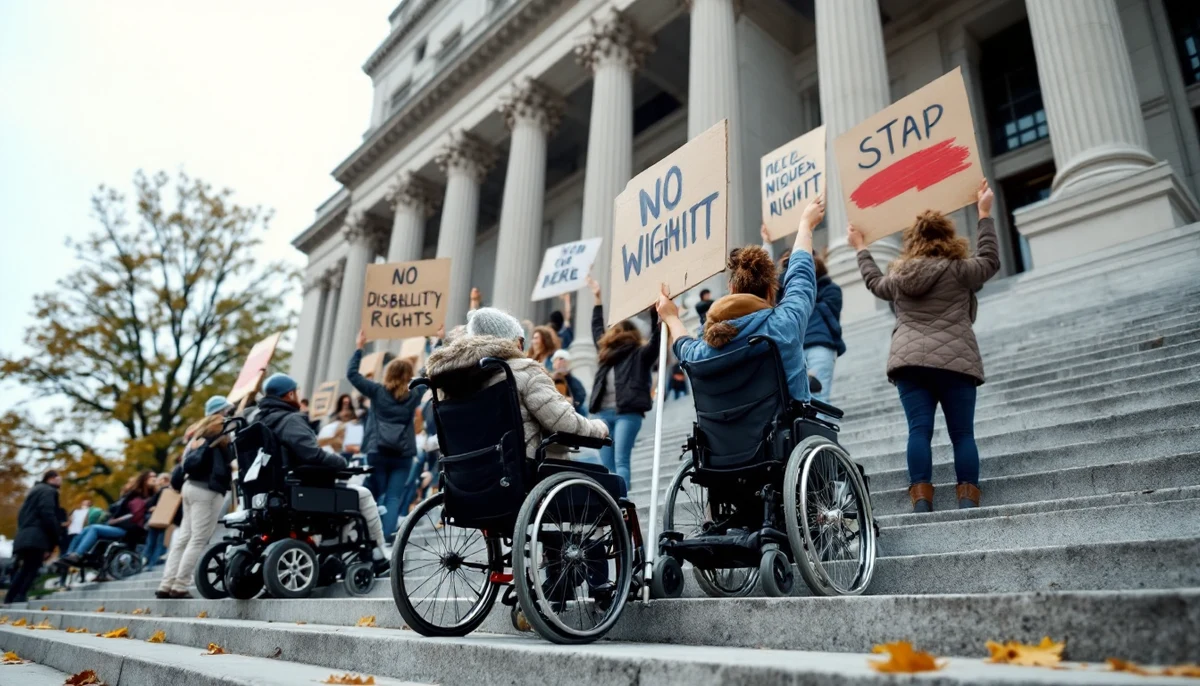
As meetings about the forthcoming UN disability convention enter their third year, evidence is accumulating that national advocacy groups in developing countries are using this process to insist that their governments accelerate the pace of local laws, benefits and recognition of rights. Some recent examples are:

"India's disabled demand place in democracy," was a March 17 headline in OneWorld South Asia (http://southasia.oneworld.net/article/view/81764/1) The article describes a convention of an estimated 1000 disabled Indians taking place this month to "pressure politicians to include disability in election manifestos for parliamentary polls and make voting procedures more disability-friendly."

In Ghana a January 26 newspaper article described an appeal by blind activists to the government to "expedite action on the passage of a new disabilities bill into law, to give disabled persons equal opportunities in job placement." One of the representatives argued that as a signatory to an international convention on the protection of people with disabilities, Ghana has failed to fulfill its obligations. (www.accra-mail.com/story.asp?id=8821) Another article in March described a two day workshop of about 70 disabled persons from throughout Ghana, held to "empower disabled individuals with the requisite skills and knowledge to enter the nation's political life as active participants."

The Zimbabwean government has responded to calls from the National Disability Board for more support to go to "advocacy campaigns that will inject a disability dimension into both government thinking and planning." The Board is an advisory body that helps develop national policy. Details: http://allafrica.com/stories/200403020614.html

In this issue of Disability World
By coincidence, several reporters filed stories for this issue reflecting on disability and rehabilitation in Japan, so there is an unusually multi-faceted presentation of developments in this nation. Other timely features in this issue are a report on the successful outcomes of the December World Summit on the Information Society, achieved through virtual meetings; highlights from the UN Working Group's January meeting on drafting a disability convention; reports on the range of complications and disabilities caused by female genital mutilation and new approaches to eliminating this practice; introductory articles by new DisabilityWorld reporters from Afghanistan, Kenya and Madagascar; and a series of interviews with a human rights lawyer from Ireland, a Paralympic swimmer from South Africa and an inclusive education networker from England.

graphic of printer printer-friendly format

home page - text-only home page

Email this article to a friend!