Disability World
A bimonthly web-zine of international disability news and views • Issue no. 28 January 2007


home page - text-only home page

Frank Bowe, Ph.D., Outlines How to Improve Electronic Access in University Setting

Dr. Bowe of Hofstra University, well known disability advocate and assistive technology expert, prepared this paper covering a multitude of tips for improving the accessibility of academic tools, such as powerpoint.

e-Accessibility at Hofstra University
The 2005-2006 Schloss Lecture
Frank G. Bowe

The Issues
Increasingly, professors at Hofstra are using electronic media in their instruction.  Some have created course Web pages.  Many post PowerPoint slides there, or on Blackboard.  Others point students to documents in PDF format (portable document format).  Still others may post their own, using Hofstra’s e-Reserves resource, at http://eres.hofstra.edu/eres/default.aspx.  Many send students to particular URLs for required readings.

In other cases, instructors may not use electronic resources that are available.  One example: many textbooks today are offered not only in print but also in electronic form.  The publishers of my current texts, for example, make e-books available upon request.

Hofstra has a long and proud tradition of accessibility (http://www.hofstra.edu/studentserv/advise/adv_phedcomm.cfm).  Our accessibility is a magnet bringing several hundred undergraduate and graduate students with disabilities to campus every year.  The current Collective Bargaining Agreement (CBA) obligates faculty to take appropriate steps, most of them both easy and quick, to accommodate for their needs http://www.hofstra.edu/StudentServ/Advise/adv_agreement.cfm.  The Program for Academic Learning Skills (PALS; http://www.hofstra.edu/academics/sus/sus_palshome_page.cfm) headed by Linda DeMotta, and the Program for the Higher Education of the Disabled (PHED; http://www.hofstra.edu/studentserv/advise/adv_phedservices.cfm) headed by Karin Spencer are resources that are named in the memorandum of agreement (MOA).  publications (e.g., http://www.hofstra.edu/Academics/Law/law_handbook_disabilities.cfm) advise students to follow different procedures self-contained within the handbook, adding that “Students with disabilities may have some concerns with respect to access that is beyond the scope of the Law School.”. Fay Rosenfeld, Senior Assistant Dean for Student Affairs, heads the accommodations effort at the Law School.  

Faculty Computing Services (http://www.hofstra.edu/StudentServ/CC/FCS/index_FCS.cfm) can help faculty members. Several staff members there, notably Sharon Ross, are knowledgeable about accommodating for special needs.  Within Axinn Library, Joshua Liebman, the Library Computer Operations Facilitator, can be a very valuable resource person. In addition, resources on the Web can help. One is the DoIt "Faculty Room" site at the University of Washington.

Spurred, in part, by a study conducted by Nancy Kaplan in Communications, and, in part, by my own interactions with the above Hofstra offices, I have concluded that accessibility efforts at Hofstra are more informal, loosely coordinated, and under-funded than they should be at this stage of the University’s history.  We need a more comprehensive policy and an administrative plan that helps us to implement it effectively. Over the years, different people have stepped forward to perform vital functions and found themselves serving, informally and often without official recognition and funding, in accessibility-related roles.  To illustrate, Lanny Udey has assumed leadership in Web accessibility at Hofstra, but I think that is informal and not an assigned duty.  While the PALS office has an official, full-time, director, it is described as supporting freshman-year students with specific learning disabilities.  Additionally, PALS is funded for undergraduate but not graduate students.  I am told that Law School students do not have access to PALS services. Neither PHED nor PALS is formally described in University publications as charged with faculty support, although both offer it, as in these faculty “hint sheets” http://www.hofstra.edu/studentserv/advise/adv_phedacc.cfm, http://www.hofstra.edu/studentserv/advise/adv_pheddis.cfm, and  http://www.hofstra.edu/studentserv/advise/adv_phedvac.cfm

I have also concluded that the pace of innovation in computing and use of the Internet has been such that some steps not envisioned in that 2000 memorandum of agreement are necessary.  Specifically, despite the fact that the University’s top leadership has shown strong support for accessibility of information technology, none of the above-cited University documents address electronic accessibility.  The University home page no longer has a prominent, one-click link to a page on accessibility.  The new portal has none either.

For all of these reasons, as Kaplan has shown in her new study, it can be difficult for students (especially graduate students), faculty, and staff to navigate the University to get problems solved.  A lot could be done, quickly and quite easily, to enhance e-access.  This document is intended as one step in that direction, and also toward more consistency across the University in accessibility generally.  I am making it available to the Provost’s office and to the AAUP office in the hopes that information contained here may prove useful in updating the 2000 memorandum of understanding.

Adaptive Technologies
Students may use – at home, in class, in a computer lab – any one or several of a wide variety of adaptive technologies.  Knowing about those assistive devices and software programs is the student’s responsibility, with advice from Hofstra staff as needed.
The faculty role, as I see it, is three-fold.  First, to avoid unwittingly creating accessibility barriers.  It is my hope that the information offered here might help many to avoid such mis-steps.  Second, to respond when apprised of special needs by acting affirmatively to remove barriers when feasible.  Professors need to know what they can do, quickly and easily, and where to find help (i.e., to use a free trial of needed software to enable a student to perform in-class and in-lab functions).   Third, as just implied, to use available resources, both on campus and elsewhere, as needed to make instruction accessible. 

A much-used adaptive technology is known as text-to-speech.  (An alternative term is speech synthesis.)  Students who are blind or have low vision, and many with specific learning disabilities, rely on text-to-speech.  Faculty need to be aware that text-to-speech engines and software read horizontally across the screenThey cannot read images, icons, pictures, or other non-text material. 

Students who are blind, and some who have low vision, use screen readers.  These software programs incorporate text-to-speech.  They also offer users control over what is read (punctuation, spelling words out, etc.) and how it is read (speed, etc.).  Screen readers include navigation tools allowing users to skip from headline to headline, or category to category.  The New York State Commission for the Blind and Visually Handicapped (CBVH; http://www.ocfs.state.ny.us/main/cbvh/about.asp) usually will purchase screen readers for eligible individuals.  CBVH has an office in (; voice 516-564-4311).  Clients install the software on home/office machines.  That does not solve the problem when students are on campus.  Students may download free-trial versions for use in class or in a computer lab.  Hofstra may also acquire a license.  A good example of a screen reader that has a free trial offer is Job Access With Speech (JAWS; http://www.freedomscientific.com/index.html).  Another is WindowsEyes (http://www.gwmicro.com/products/).  Note that some screen readers cannot open PDF files (see below).

Students who are blind or have low vision also may use screen-magnification and document-enlargement devices.  Hofstra has a ZoomText license, but the newest edition of ZoomText is much better and, in my view, should be adopted (http://www.aisquared.com/index.cfm).  ZoomText includes a text-to-speech utility.  There is a 30-day free trial option, so students could use it in class or in a university computer lab.

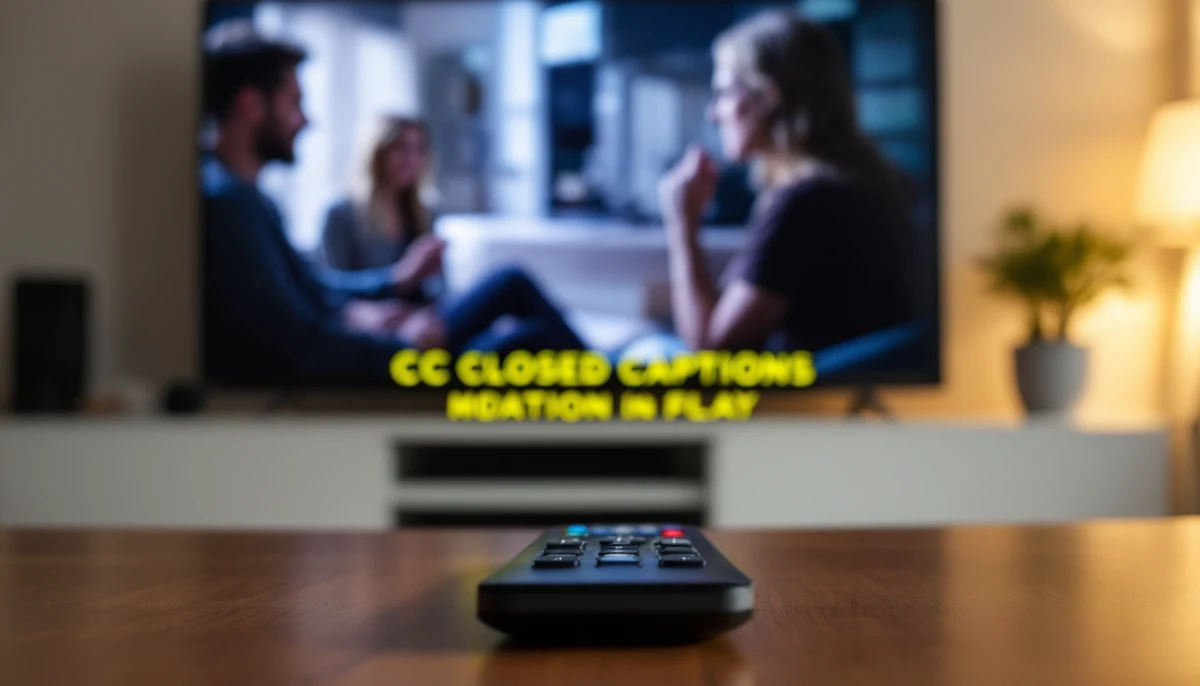
Captioning is much-used by deaf and hard of hearing persons.  For it to be helpful, two things are needed:  (a) video or DVD material must be captioned, and (b) closed captioning must be activated (on the TV monitor, on the remote).

Personal communication devices are used by some individuals with severe physical disabilities (some with CP, some with quadriplegia, some with stroke).  Some makers are Prentke Romich Co. (http://www.prentkeromich.com) and DynaVox (http://www.dynavoxsys.com).  Students may use these products to produce “their voice”.  The same devices may be used at home/in the dorm to type term papers.  For many of these people, typing is both time-consuming and arduous.  Faculty need to be sensitive to the need and to allow them the time required to compose term papers, or, in class, compose and speak the desired message.

In what follows, I will address, in order:

  • e-texts (e-books)
  • captioning of videos/DVDs
  • URL’s to which faculty send students for required reading
  • faculty and course Web pages
  • PowerPoint
  • PDF files
  • tables
  • distance education tools
  • remote interpreting

e-Texts
Increasingly, publishers are issuing not just printed textbooks but also electronic versions of those texts.  Faculty need to be aware of this fact.  Sometimes the availability of e-books is noted on publisher Web pages; at other times, a specific inquiry needs to be made to the publisher.  If it is known, at the time that books are ordered, that one or more students would want/need e-texts, then the professor should instruct the departmental staff member ordering the book to request an e-book as well as printed books.  If, as my experience suggests is more likely, the student’s needs become known to the faculty member only after books have been ordered, the faculty member could tell the student how to secure the e-text version.

Videos/DVDs
The TV monitors at Hofstra have built-in caption display capabilities.  There is a “cc” or “caption” function either in the unit itself or in the remote.  Media Services, if alerted to the need, can activate the captions in advance of class time. Professors who show videos/DVDs in class should check, ahead of time, to see if the movie is captioned.  If the faculty member discovers well in advance of planned use (say, a few weeks or months) that a given video/DVD is not captioned, there are more than three dozen companies and not-for-profits that caption videos and DVDs.  One list of providers is posted at: http://www.agbell.org/DesktopDefault.aspx?p=Captioning_Providers; another is posted at http://www.cfv.org/caai/nadh11.pdf.  In addition, Internet-streamed video may be captioned.  Hofstra increasingly is streaming video, but rarely captions it.  Nancy Kaplan in Communications can assist in on-campus captioning and Josh Liebman in Axinn Library can help on Internet video captioning.

URL’s
Although tools for making Web pages accessible to and useable by persons with disabilities, including those who use screen readers, are well-known (see the Web Accessibility Initiative, a unit of the World Wide Web Consortium, at http://www.w3c.org/WAI), the sad fact is that the vast majority of uniform resource locators (URL’s) on the Internet today are not accessible.  Faculty who are aware that one or more students use(s) screen readers should screen URL’s that are required for students.  A number of “Web accessibility checking engines” do this for you, in seconds.  One is the fairly new A-Prompt Web Accessibility Verifier: http://aprompt.snow.utoronto.ca/.  Another that I recommend is the HiSoftware "AccVerify" tool at http://www.hisoftware.com/access/index.html    Well-known, but no longer as useful as it once was, is "WebXACT" at Watchfire. Originally developed at the Center for Applied Special Technologies (CAST),where it was known as "Bobby," it can still be reached at http://www.cast.org/bobby . These checkers review one page at a time of a Web site. So faculty should enter the specific URL of interest.  Some of these let you check 5 URLs free of charge.  One requires a one-minute wait between requests.  I tend to use the “section 508" button, rather than the WC3/WAI one; the 508 version focuses more specifically upon disability-related access issues (the W3C/WAI also addresses style sheets, etc., which are of less urgency in accessibility).  If a particular URL is not accessible, the professor has several options.  One is to contact the webmaster of the offending URL to request modifications (pointing the webmaster to the WAI guidelines).  Another is to download the required content from the site, convert it to screen-reader-useable format, and make that alternative version available to the student(s).  A third is to make available to the student(s), and preferably to all students, some other URL that both has the necessary information and is accessible.

Faculty and Course Web Pages
Key to making faculty-created Web pages accessible is following the WAI/W3C guidelines.  Briefly, good contrast between foreground (text, images) and background (screen color/wallpaper) is essential. Professors should use “Header 1,” “Header 2,” etc., auto formatting (because screen readers use those for navigation).  Faculty should seek to have clear and logical layouts that make sense when read horizontally.  If a table is used on the home page, professors should bear in mind that text-to-speech will read horizontally within each table box.  Any picture, icon or graphic that people need to be able to read should have alt text; if a longer description is necessary, or would be informative, then longdesc (also called d-link) should also be provided.  This is a simple “d” that is linked to a Word file describing the image.  Any files linked to the page should be in accessible format (see “PowerPoint” and “PDF” below). Neal Ewers, at the University of Wisconsin, offers a good "Introduction to the Screen Reader" video online here. (There is also a transcript of his remarks.)

PowerPoint
PowerPoint slides have a default format of “.ppt”.  Files in that format are not readable by screen readers.  Some cannot even open those files.  Others do open them, but display and read aloud gibberish.  Fortunately, Microsoft makes available a simple solution.  After saving the slide show in the usual .ppt format, faculty should click on “Save As” and scroll down to the last option (“Rich Text Format” or RTF) and save a second version in that .rtf format.  RTF discards all graphics, colors and icons/pictures, and saves only the pure text in the slides.

PDF Files
Some screen readers cannot open, nor read, image PDF files.  Those files are saved in what is, for all intents and purposes, picture format.  The pages are laid out as they are in print.  Because the page as a whole is saved, and not the individual elements, PDF format poses real problems for screen readers.  This includes, of course, any files placed in e-Reserve. Fortunately, the Optical Character Reader (OCR) software Axinn Library uses can also save to text PDF format. Additionally, Adobe offers help: http://??w.adobe.com/enterprise/accessibility/main.html (see right-hand side of the page).  FCS has software that may be used to convert PDF to Word.  Faculty should be aware that conversion, after the fact, of PDF files to alternative versions is time-consuming (staff need to correct errors made by the OCR software).

As for files that faculty create, and save to PDF format, then post on course Web pages, on Blackboard, or elsewhere, an alternative format should also be made available as needed.  This takes a few seconds – you just “save as” in another format.

Tables
Because screen readers read horizontally, faculty need to take care in preparing tabular information.  The table should make sense when read line-by-line.  In addition, it can be very helpful to include, below each table, a brief textual explanation of it.  Below are two illustrations of what I mean.  Exhibit 1 is easy to read for sighted persons; however, a cognitive load is imposed on students who rely on text to speech software, which reads horizontally (speaking, in this order:  “Blank, Physics, English, PE, fall, 10(3), 5(1), 4(1), spring, 8(2), 3(1)….”).  Setting the table up this way is not recommended if any students use text to speech, because the key information is in the columns, and columnar data are not read out loud together.  If the table is laid out this way, a textual explanation ("Exhibit 1 reads:") is very important.

Exhibit 1 – Class Attendance: Physics, English and PE
(Average Classes Missed per Semester, with S.D. in Parens)


Physics

English

PE

Fall

10 (3)

5 (1)

4 (1)

Spring

8 (2)

3 (1)

2 (1)

Year

9 (2.5)

4 (1)

3 (1)

Exhibit 1 reads:  Undergraduate students missed far more class meetings in Physics than in English or PE. Attendance was better in spring than in fall terms.  On average, of 30 biweekly class meetings, students missed 9 in Physics, 4 in English and 3 in PE.  It appears, as well, that after the carefree frivolity of summer, many students take some time to adjust to the rigors of academia. (Note: the figures in the exhibit are imaginary.)

Compare this to Exhibit 2, below.  Notice that Exhibit 2 imposes a lesser cognitive load on users of screen readers and other text-to-speech programs.  In the table below, the imaginary differences are between the two parties.  Those differences appear one after the other, whether the information is viewed or heard.  That is, the important information makes sense as read horizontally (“Democrats, 105(15), 104(14), 106(16)…”).   Still, a text explanation ("Exhibit 2 reads:") can be helpful.

Exhibit 2 – Differences in IQ by Party Registration
(Average SB Scores with S.D. in Parens)


Both Genders

Male

Female

Democrats

105 (15)

104 (14)

106 (16)

Republicans

88 (23)

86 (25)

89 (24)

Exhibit 2 reads:  Democrats have average measured IQs of 105, with standard deviation of 15.  Republicans have average  measured IQs of 88, with standard deviation of 23.  The large S.D. among Republicans reflects the fact that very large numbers of red-state voters having low IQs drag down the few intelligent Republicans.  There are significant, but relatively small, gender differences, favoring females. (Note: The figures in the table are, of course, fictitious.)

Distance Learning via Broadband
Today’s broadband technologies – high-speed, always-on, two-way, voice/video/data connections – offer a “high-touch” complement to the “high-tech” feel of Blackboard for distance education.  Video conferencing facilities allow students to come much closer to the classroom experience, notably including the instructor’s image and voice, as well as classmates’, than is possible with Blackboard.   In rooms that are suitably equipped (as we equipped Hagedorn 190), it can be used, too, for remote interpreting and to allow a student who is home sick, on travel for business, or unable to come to class for another reason (a severe disability, caring for a child, etc.) to “attend” class.  The student would use an Internet video camera, or even a Webcam, at home and connect to the IP address of the Hofstra classroom.  He/She would see and hear the professor and classmates.

When presentations are placed on the Hofstra Web site, as with the IDEAS Institute, it often happens that the PowerPoint slides are large and the video is small.  Those videos usually have not been captioned.  For captioning to be easily readable, the video image needs to be larger.  IDEAS has made a good start by offering text of lectures, in a separate box, beginning in Fall 2005.  See, for example, Joanne Willey’s lecture here: http://www.hofstra.edu/Faculty/IDEAS/IDEAS_Pastvideos.cfm/
 
Remote Interpreting
Hofstra provides sign-language interpreters for students, upon request.  These interpreters work in person, in the classroom.  What if an interpreter does not show up as assigned?  At such times, an Internet-based service may be used.  Video Remote Interpreting (VRI) links an interpreter from a remote site (his/her office, or home, etc.) to a specific IP address (if the student has a laptop with a wireless Internet connection, the student’s laptop, or a Hofstra classroom equipped for distance education). VRI providers charge a per-minute fee, typically about $7/minute.  That’s high, compared to in-class interpreters (about $400 for a 55-minute undergraduate class or $600 for a 1.5 hour class, vs., respectively, about $100 either way for an in-person interpreter – there is a 2-hour minimum for in-person interpreters).  Among VRI providers are Sign Language Associates (http://www.signlanguage.com), Sign On (http://www.signonasl.com/video.htm), and Communications Access Network (http://www.caninterpreters.com/vri/).  Needed to effect this are a known IP address and a prearranged contract with the VRI provider. 
An alternative to remote interpreting is remote transcription.  I have used Caption First  (http://www.captionfirst.com) to produce verbatim transcripts of sessions.  Costs are, in my view, reasonable.

Conclusions
The University needs to take steps to improve implementation of campus accessibility efforts and, particularly, to improve electronic accessibility.  As Hofstra encourages faculty to make greater use of electronics in instruction, support needs to be extended to professors on how they can make electronic information accessible to and useable by persons with disabilities.  Much of what is needed is readily available, easily performed, and low in cost (time-limited trials are free of charge).  Information such as that offered in this paper should be disseminated widely to faculty and made available online on an as-needed basis.  One possible vehicle is a Faculty Accessibility Best Practices Guide, which Dr. Udey suggests might be proposed to the Senate Academic Computing Committee and the Center for Teaching and Scholarly Excellence.

Additionally, the different administrative units that assist students with disabilities should be strengthened, better-coordinated, and formally charged with faculty as well as graduate student support.   At this stage of the University’s development, we should no longer rely upon informal networks and part-time personnel for such vital functions.

Frank G. Bowe is the Dr. Mervin Livingston Schloss Distinguished Professor for the Study of Disabilities at Hofstra.  The professorship entails, among other things, an annual lecture.  The 2004-2005 one was Two-Way Technologies: A History of the Struggle to Communicate.  It was released in , at an event sponsored by The Hon. Fred Upton (R-MI), Chairman of the House Subcommittee on Telecommunications and the Internet.

graphic of printer printer-friendly format

home page - text-only home page


Email this article to a friend!