
Disability World
A bimonthly web-zine of international disability news and views • Issue no. 28 January 2007


home page - text-only home page

Taking the Right Approach to Disability

By Daniel Stubbs
Reprinted from Islands Business

Exciting, innovative moves afoot

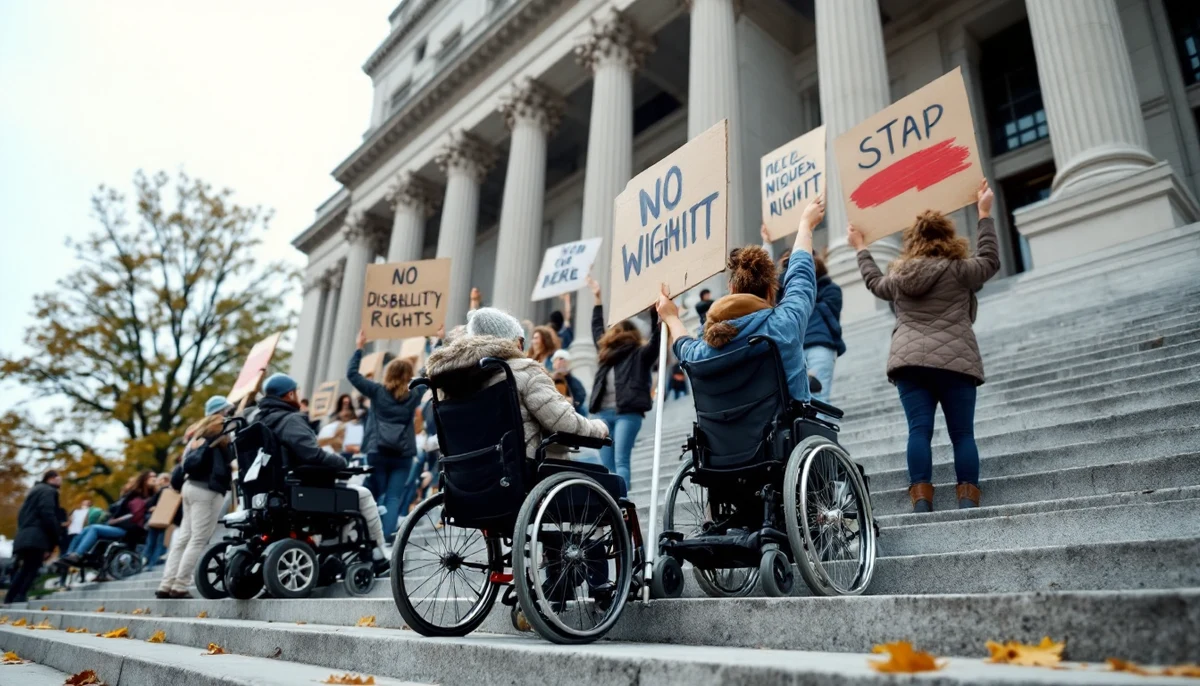
The more than 10 percent of Pacific Islanders with disabilities rarely enjoy human rights comparable to their peers.

Although their numbers are large, estimated at 915,500, they are invisible to most of the community, denied equal access to education, often unable to secure employment, disqualified from enjoying certain property rights and even deprived of basic health care.

As a result they are the group most likely to be living in poverty in the Pacific. They are likely to be hidden away by families or institutions, the object of pity and never even aware of their rights to participate.

There are, however, exciting moves afoot to turn this around. The Pacific Regional Rights Resource Team (RRRT) is developing an innovative new training programme to place highly skilled human rights advocates in Pacific Islands countries. Most of these advocates will be people with disabilities.

On 25 August last year many people with disabilities around the world celebrated the finalisation of the text of the Convention on the Protection and Promotion of the Rights and Dignity of Persons with Disabilities.

It is the first human rights convention of the century and the first to benefit from such thorough civil society involvement.

After five years of negotiations the convention is expected to come into force after it was passed by the UN General Assembly last month.

In essence the new Convention for the Rights of Persons with Disabilities enshrines for them rights which many Pacific Islanders already enjoy without a second thought. It includes rights such as liberty and security, legal due process, freedom of assembly, expression, access to information, religion, property and, importantly, the right to live free of discrimination.

Other key rights which will now be set out in the Convention for the Rights of Persons with Disabilities include the right to work and related conditions, mainstream standard of education and training, health, social security, adequate standard of living, housing, transport, social integration and cultural participation.

These rights too are often taken for granted by people all over the Pacific.

The August 2005 regional workshop on Disability organised by the Pacific Islands Forum Secretariat in Nadi, Fiji, called for RRRT to develop human rights training for disability advocates.

The team's skills in the area of human rights and experience working with organisations like the Fiji Disabled Persons Association made RRRT the ideal choice for such crucial work at this important time.

RRRT disability rights training will give disability advocates around the Pacific the professional skills they need to promote social and policy change in their countries. People with disabilities will take on human rights related skills and knowledge usually only exhibited by lawyers.

They will be able to fully understand and explain the various UN human rights conventions including those against discrimination of women (CEDAW) and for the rights of children (CRC).

The rights of these groups will be particularly important given that women with disabilities are often doubly disadvantaged and children with disabilities are particularly vulnerable to human rights abuses.

The three-year training course will be best practice training for people with disabilities. RRRT is discussing a partnership arrangement with the new Pacific Disability Forum (PDF - the regional peak body for disability) to ensure that the training and advocacy is well targeted and appropriately delivered.

Arrangements are currently being made to provide for deaf sign interpretation, Braille course materials and fully physically accessible training venues.

The hope is that after skilled advocacy and promotion of the rights of people with disabilities, society in general, and governments in particular, will learn to accept people with disabilities as active and vital members of our community-people most willing and able to contribute to the economic and social benefit of their countries, and the region as a whole.

Daniel Stubbs is a consultant on social policy and organisation development. He is currently working with the Pacific Regional Rights Resource Team (RRRT) on its human rights training for disability advocates programme. A project of the United Nations Development Programme (UNDP), RRRT provides training, technical support, policy and advocacy advice in human rights to promote social justice and good governance throughout the Pacific region.

graphic of printer printer-friendly format

home page - text-only home page


Email this article to a friend!