
Building Support for Disabled Women within Development Programs
By Mobility International USA
"It is quite absurd that international development programs rarely address the needs of disabled women. Women with disabilities are harassed sexually, exploited by men, suffer abject poverty and social disrespect, malnutrition, disease and ignorance."
- Safia Nalule, Disabled Women's Network and Resource Organization, Uganda
Building an Inclusive International Development Community
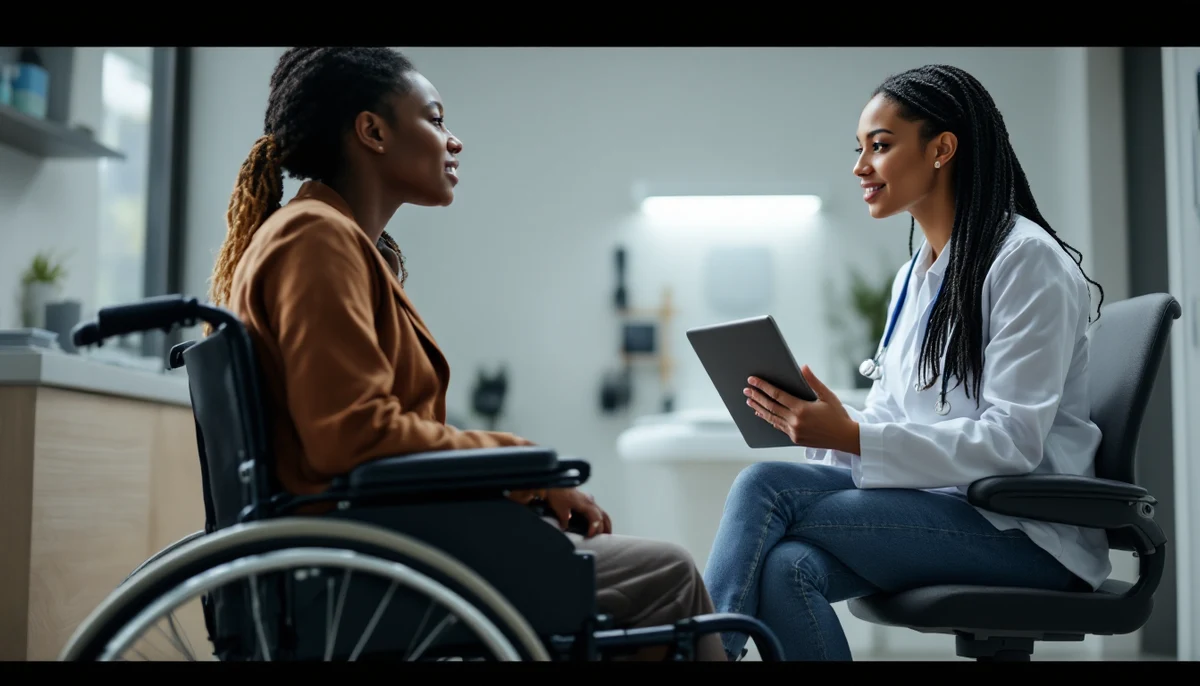
Mobility International USA (MIUSA) has known for years that women with disabilities face enormous disadvantages, not only in the world at large, but also within international development organizations. In spite of critical need, women with disabilities are under-represented and under-served in every aspect of the international development field: as partners, staff and beneficiaries of development programs. Women with disabilities traditionally have not had access to economic development initiatives, even those targeting women. Microcredit programs use selection criteria, lending procedures and training facilities that discriminate against women with disabilities, either directly or indirectly through inaccessibility. Disabled girls and their mothers have difficulty participating in maternal and child health programs. Young women with disabilities do not have access to vital health information, particularly HIV/AIDS prevention. Despite these adverse conditions, women and men with disabilities are organizing themselves worldwide to equalize access to opportunities in their communities.
New Report: Gender and Disability
In 2001, MIUSA completed a survey of InterAction member agencies, a coalition of international relief, development, environmental and refugee agencies based in the US, in an effort to document the extent to which these organizations include people with disabilities, particularly women and girls, in policies, employment, programs and services. InterAction has long demonstrated an organizational commitment to increasing diversity within the international development assistance field. In 2000, InterAction adopted Disability Amendments to their Private Voluntary Organization standards which call for inclusion of people with disabilities in governance, management, human resources, programs, material assistance and child sponsorship.
MIUSA's report, Gender And Disability: A Survey Of InterAction Member Agencies -- Findings And Recommendations On Inclusion Of Women And Men With Disabilities, sounds a clarion call for InterAction members to implement these Disability Standards. According to the survey's findings, little or no data is collected about the participation of women and girls with disabilities in field programs. Nearly half of the organizations that operate Women in Development or gender-specific programs do not use any specific strategies to include women and girls with disabilities in such programs. The data that are available support anecdotal reports that very few women with disabilities are served in either gender-specific or disability-specific programs. Obstacles include lack of training, information and resources for effective outreach and disability-related accommodations. The survey found that women and men with known disabilities fill less than 1% of staff positions in responding agencies.
On a positive note, the survey findings indicated that organizations are eager to obtain much-needed information on how to promote equal employment opportunities in the United States and overseas. Nearly one-third of CEOs interviewed listed training and education for both staff and program beneficiaries as a high priority toward reducing barriers to participation of women with disabilities. Interest and commitment among CEOs to create a more inclusive environment has been instrumental in the development of a partnership between MIUSA and InterAction member agencies devoted to the implementation of the Disability Standards.
New Project: Gender Appropriate Technical Assistance to International Development Agencies on Inclusion of People with Disabilities
In 2002, armed with the results of the Gender and Disability Survey, MIUSA launched a three-year project sponsored by USAID, to assist international aid agencies to incorporate women with disabilities in all aspects of their programs. Working in partnership with InterAction member organizations, MIUSA will design and implement new training models, services and materials to foster inclusion of women and men with disabilities as agents and beneficiaries of development assistance programs.
Over the first year of the project, MIUSA will provide training and technical support to five organizations: American Friends Service Committee, Holt International Children's Services, International Rescue Committee, Mercy Corps International and Trickle Up Program. All InterAction member agencies will have access to a variety of resources developed by MIUSA, including tools to assess gender-appropriate inclusion of people with disabilities, and a manual entitled "Building an Inclusive Development Community: A Manual on Including People with Disabilities in International Development Programs". To further explore issues and resources on participation of people with disabilities and international development, please visit MIUSA's website which includes project updates, a searchable database of disability organizations around the world, a clip from our award winning video "Loud, Proud and PassionateÂ", relevant links to organizations and publications, "tips for inclusion," and other useful information.
Gender and Disability: A Survey of InterAction Member Agencies is available for download at no cost from the MIUSA website. For more information, call MIUSA at (541) 343-1284 (V/TTY), e-mail at development@miusa.org, or visit our website, www.miusa.org.


|