
Disability World
A bimonthly web-zine of international disability news and views • Issue no. 23 April-May 2004


home page - text-only home page

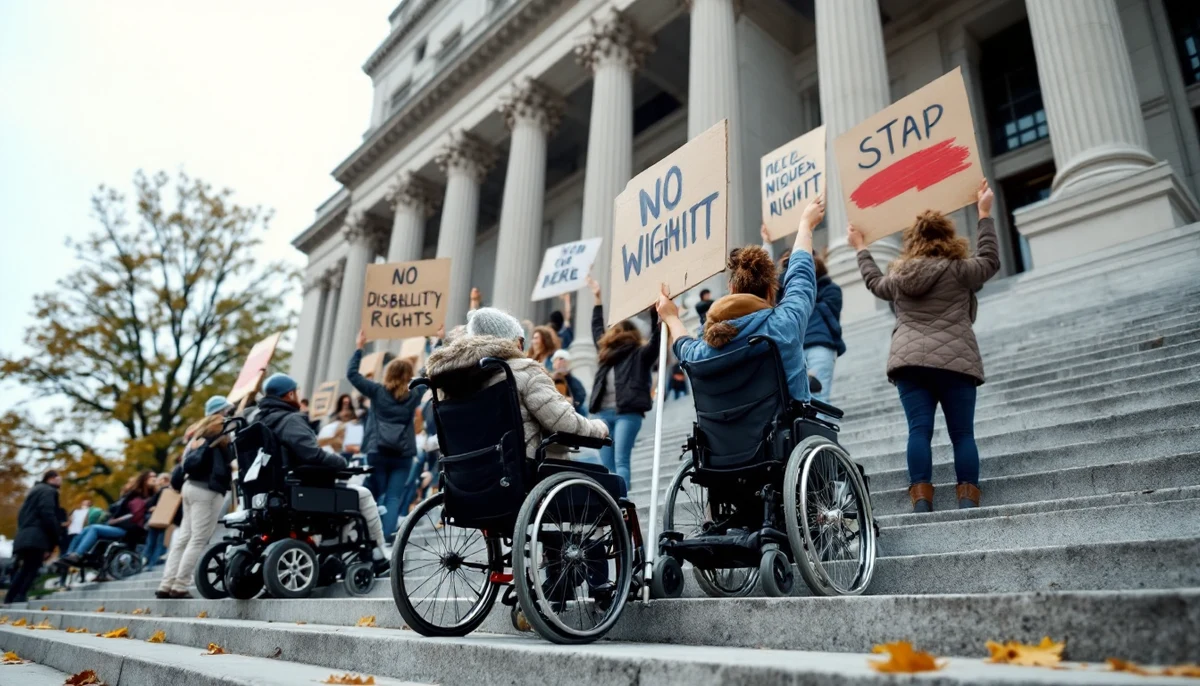
Kenya Forum Held on African Views on UN Disability Convention

By Phitalis Were Masakhwe

In December 2001, the General Assembly of United Nations adopted resolution 56/168, which established an ad-hoc committee to consider proposals for an international convention to protect and promote the rights and dignity of people with disabilities. Additionally, a working group was appointed to collect and collate draft texts on the same.

There is no question that people with disabilities are subjects of the international human rights system, and entitled to full enjoyment of all human rights delineated in each of the existing human rights instruments. Yet human rights abuses remain a daily reality of people with disabilities around the world. This is partly because there is currently a gap between the values expressed by the human rights system and the reality of disability. As the 2002 report for the office of UN High Commission for Human rights stated: "The most important argument for a convention is perhaps that of 'visibility'... it has proven extremely difficult to keep people with disabilities in focus in the proceedings of the (other human rights) treaty monitoring bodies. To some extent this is due to the relative lack of engagement of the disability NGOs with the treaty monitoring machinery. And to some extent it is due to the lack of general comments by the treaty monitoring bodies on disability or the kind of forethought that these general comments represent".

To move the process forward, many parts of the globe have been consulting on the nature and content of the proposed convention. Disabled people in Africa have not been left behind in this process of reflection and dialogue. They applaud the UN system for setting the ball rolling and request governments of the world to support this important milestone in the history of the disabled people. Nairobi recently hosted a regional forum to reflect and discuss the African position and inputs in the convention. The regional consultative forum on the convention was officially opened by Kenya's Vice President, the Hon. Moody Awori, and attended by delegates from Rwanda, Ethiopia, Uganda, Tanzania mainland and Zanzibar, and host Kenya.

The meeting which was ably hosted by the Kenya National Commission on Human Rights and financially sponsored by CIDA-Canada, sought to galvanize Africa's support and perspective for the proposed convention. So what did the delegates feel should be in the proposed convention?

Areas of consensus

There were many issues on which common agreement or consensus was arrived at. There was equally sticky or contentious issue on which further dialogue would be necessary. Among common issues, the participants agreed that the convention must provide a basic definition of disability from which states can build and develop national definitions. The definition must be comprehensive and inclusive enough to cover all forms of disabilities (including physical, psychiatric and multiple disabilities and the fact that disability is a social construct).

The question of data was also agreed upon as important. States should be required to obtain and maintain desegregated data on persons with disabilities. This information is crucial for targeted planning, policy formulation and implementation.

The delegates acknowledged that the convention should take into account the broad and divergent needs of all UN members. However, the convention must address itself to the unique situation of persons with disabilities in Africa. The unique issues include the fact that disability is a development issue and should at all times be seen from that perspective. They want a convention that will enhance their participation, widen their choices and opportunities. It should be acknowledged that poverty is a widespread African phenomenon, and that most persons with disabilities in Africa are the poorest of the poor.

Delegates want a convention that will outlaw all forms of primitive, discriminative and cultural practices as they relate to people with disabilities. They also felt that Africa is prone to all manner of calamities, civil strife and conflicts. They therefore, want a convention that will protect and promote the rights of people with disabilities under such circumstances.

Both disabled persons and their parents including guardians share the burden of disability. The recognition of parents and guardians should form an integral part of rights of persons with disabilities and should be included in the convention.

Social stigma in Africa continues to disinherit disabled people. Africans with disabilities feel that the right to own, inherit, use and dispose property is a fundamental right that should be protected.

HIV/AIDS And The Disabled People

To mitigate the effects and impact of HIV/AIDS on people with disabilities, African delegates feel that an article should be in the convention stressing the need to address its impact on persons with disabilities.

The convention must also address the issues of dual and multiple discriminations or marginalization. In this regard, disadvantages faced by special groups such as children and women with disabilities, minorities including linguistic minorities, displaced persons and refugees with disabilities, older persons with disabilities, people with disabilities living in rural areas and urban informal settlements must get their issues uniquely addressed by the convention.

Participants extensively discussed the vital question of responsibility. They agreed that the states should have the primary responsibility of ensuring that persons with disabilities get the full benefit of the rights conferred by the convention. States must allocate adequate national resources to the fulfillment of their obligation towards persons with disabilities. State parties should enact specific disability related legislation, develop national policies and strategic action plans, designate national structures to oversee implementation and put in place independent national bodies as monitoring institutions.

Regional Cooperation

The convention should recognize and promote international and regional cooperation on disability and development. Disabled people must share the benefits of international development assistance and co-operation. They must also be key players in development dialogue.

Specific Rights

Disabled people in Africa want a broad and diverse range of rights enshrined in the new constitution. They include the right to life and the lives of unborn babies; they want a right to clothing, housing and shelter, health including primary preventive health and early detection (including maternal care and redress for professional negligence). The other rights include right to rehabilitation, food and water, economic and social support, freedom of expression and access to building, public transport etc.

They also want a right to access medical facilities and legal redress affirmed. The right to participate in the political and governance processes is equally important. And so is the right to education and training and this has to be inclusive, integrated and specialized in the case of career opportunities. They want the new convention to assert the right to work and employment and access to information and communication. Africans with disabilities want each country to develop its own sign language and promote the development of an international and or regional sign language. They want protection from all forms of violence, abuse and exploitation including sexual abuse and sexual harassment. They want equal opportunities to experience their sexuality and parental rights and protection from sterilization and forced abortion. They also want obnoxious cultural and religious practices abolished through the convention.

Equality

The delegates want the principle of unambiguous non-discrimination and equality of opportunities to be a crosscutting issue in the convention.

Monitoring And Implementation

They want:

  • The UN system to set up institutional mechanisms to ensure implementation and monitoring, as is the case with other human rights convention
  • To have special and effective UN committees for implementation and monitoring
  • The composition of the UN committees to have adequate representation of Persons with Disabilities (PWDs), Disabled Persons Organizations (DPOs) and parents/guardians of persons with disabilities
  • To have room for shadow reporting
  • To have individual complaints mechanisms
  • National focal points to be established to facilitate monitoring
  • To have a UN fund on people with disabilities

Affirmative Action

The convention should make provision for affirmative action.

Corporate Responsibility

To oblige states to make provisions that ensures that corporations and the private sector at large are made responsible for non-compliance.

Contentious Issue: Tax Relief

The question of whether people with disabilities should be exempted from paying taxes accruing from their income was contentious. But disability has an extra cost both socially and economically. Disabled persons too however have civic duties and responsibilities to their countries. So it was decided that tax relief on income for people with disabilities should be decided at National level but should take into account the protection of their dignity.

The writer is a regular commentator on disability and development can be reached on phitalisw@amrefke.org

graphic of printer printer-friendly format

home page - text-only home page


Email this article to a friend!