
Brazil Discusses Strategies for Digital Inclusion
By Rosangela Berman-Bieler (iid@iidisability.org)
A Workshop for Digital Inclusion took place May 14-17, 2001, in Brasilia. The workshop was sponsored by The Brazilian Electronic Government Office for Digital Inclusion, with support from Sampa.org, Net of Information for the Third Sector - RITS and Committee of Democratization of Data Processing.
The documents drafted during the workshop will serve as the basis for the Brazilian Federal Government's policies in digital inclusion.
Additional partners in the workshop were the Program for the Information Society, Active Community, and UNESCO. The event was channeled through the Government Communication Office of the Secretary of the Presidency of Brazil and the Office of the Secretary of Logistics and Information Technology of the Department of Planning, in collaboration with NGOs.
Among the several social sectors invited to integrate the Workshop, the area of persons with disability and/or special needs was one of the better represented, strengthened by the participation of representatives of many national groups and also international organizations such as the Iberian-American Seminar on Accessibility on the Net - SIDAR (Spain) and of the Inter-American Institute on Disability - IID (USA).
What is Digital Inclusion?
Contemporary life has been significantly transformed by information and communication technology, i.e., by digital technology. Not all people, however, have benefited from this transformation. Therefore it is necessary to find ways to integrate them into the current information and technological space. This effort in social integration is what is called Digital Inclusion.
More specifically, the aim of Digital Inclusion is to:
- Make technology physically accessible to as many people as possible
- Make technology as user-friendly as possible.
It is questionable whether the simple presence of technology and its impact on certain aspects of society justifies the use of such terms as Information Society or Knowledge Society. This is especially when technology does not benefit most people at a personal level. Nonetheless, it is certain that technology has already deeply transformed social, economic, cultural, and political relations.
Given the big gap in communicative competence among society's diverse segments, the deep social transformation driven by technology could play a role in the weakening of democratic society. Therein the importance of Digital Inclusion.
General considerations
Opening the preamble of the official document developed by the participants, is the affirmation that "digital exclusion deepens socio-economic exclusion" and that "to all the population should be guaranteed the right of access to the digital world, both in the technical/physical ambit (sensitization, contact and basic use) and in the intellectual one (education, training, generation of knowledge, participation and creation)".
Due to the influential participation of the area of disability in the event, among the general premises that apply to the whole document, the following recommendation was included:
"The actions for Digital Inclusion should promote the inclusion and equality of opportunities for all Brazilian citizens, respecting the concepts of Diversity and Universal Design. It is necessary to specify that the social corpus includes populations with special needs, sometimes invisible such as the elderly or the illiterate; it also includes people with physical, mental and intellectual, sensoral, and mobility impairments; persons with permanent or temporary limitations, among others."
Digital Inclusion, People with disabilities, Special Equipment and Accessibility
Among the recommendations made in the document, a specific section called "Digital Inclusion, Persons with Disability, Special Equipment and Accessibility" was included, with several specific points relevant to disability inclusion. Those recommendations are as follows:
- Background
- Digital Inclusion, due to the possibilities it offers, is more important to people with disabilities than to other populations.
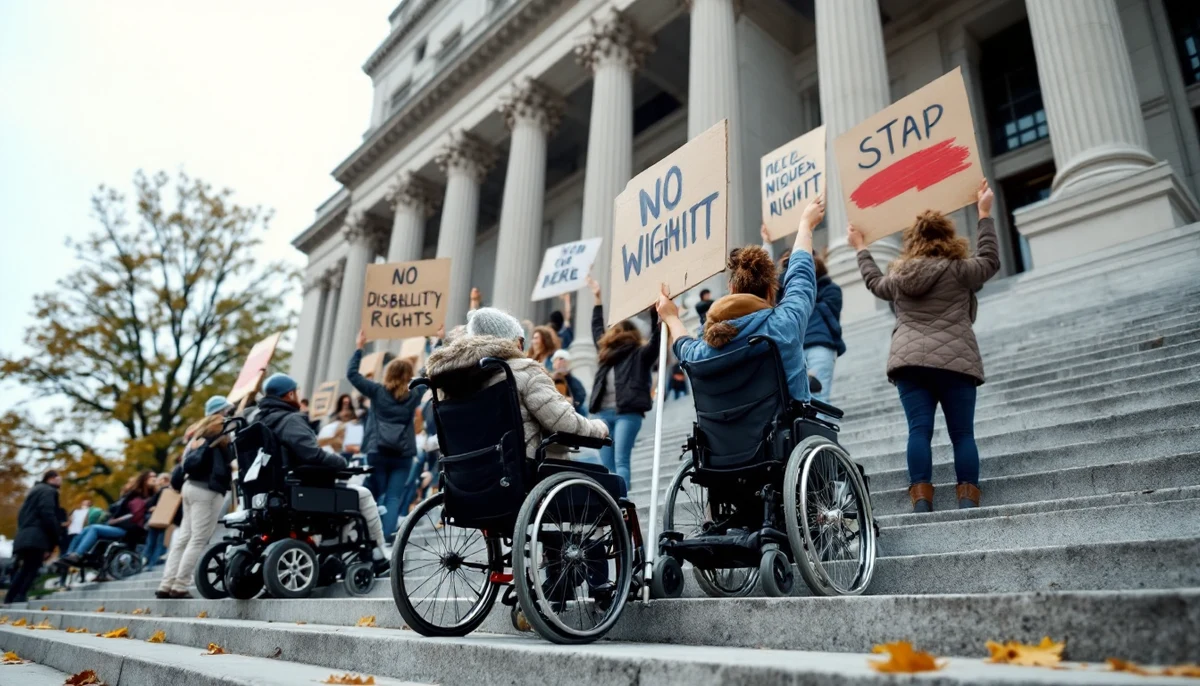
- Access has to be defined not only as access to information networks, but also as removal of physical access barriers, including architectural, communication, equipment or software barriers. Alternative modes of information presentation must be considered.
- All technical specifications, whether intended for people with disabilities or not, must include consultation with representatives from the community with people with disabilities. Compliance with full physical access should be guaranteed by the proper authorities.
- Guidelines
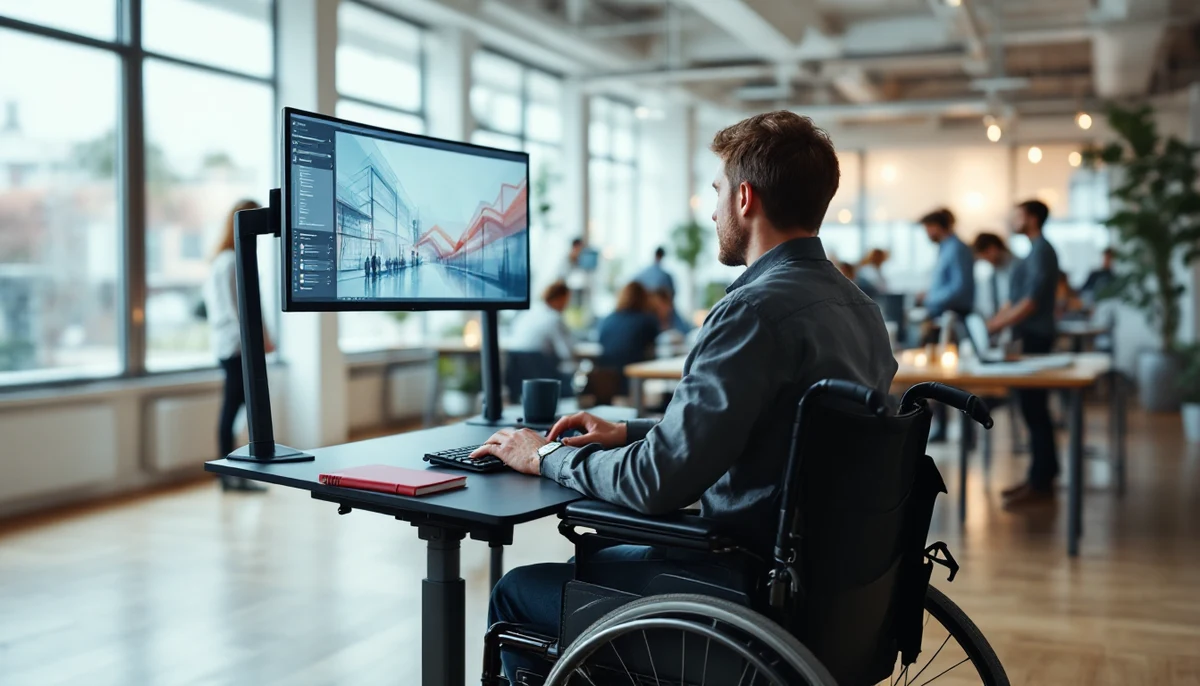
- Equal opportunity of job placement by adequate modification of physical, technological and human resources.
- Implementation and maintenance of government web pages whose design complies with accessibility guidelines set by W3C and WAI.
- Alternative means of information formats such as diskettes, audio tapes, Braille printouts, large print and so forth.
- Public information web pages must deploy content that is specific to the needs of populations with disabilities.
- Proposals
- Support the development of products that address the needs of populations with special needs.
- Support projects aimed at creating adaptive technology and at the adaptation of current technology to the needs of populations with disabilities.
- Support the development of low-cost adaptive technology products such as keyboard and mouse adapters, ergonomic chairs, adaptive workstations,
- Coordinate private, government, and civic society joined inclusion efforts by creating a job information network that lists employment opportunities, training, and general information on the job market.
- Train teachers in the use of adaptive technology and create public spaces with adaptive technology in schools.
- Create within the Ministry of Science and Technology a National Center for Adaptive Technology (CNAT). CNAT will be responsible for public awareness and financing of research and development of adaptive technology. It will do so by
- Creating and maintaining a database of adaptive technology information
- Supporting Brazilian presence in international organizations that create technical guidelines for the creation of accessible equipment and programs.
- Creating an Accessibility Seal of Approval that all products for public use must display
- Translate into Portuguese and sign language, upload to information networks, and make available in alternative formats such as Braille, audio, and so on, all international technical norms for accessibility.
- Guarantee that Digital Inclusion equipment allows for alternate output devices such as sound or video output.
Telecenters and Universal Design
The discussion groups who participated in the debate where divided according to interests, but a member of each disability area was present in most groups to insure all points of universal design were met and included in the final document. In addition to the chapter cited above many other sections in the document mention universal design. Such is the case of the section dealing with telecenters or infocenters.
Telecenters are modular stations that house computers and other equipment and are targeted at the general public. It assumes little knowledge of information systems. Following are the recommendations:
"Telecenters must adhere to Universal Access designs. That is they must guarantee worldwide access to its space, environment, equipment, and programs. Universal Design offers the following guidelines:
- 1. Equivalent ease of use:
- The design is commercially viable and useful to all levels of clients
- 2. Flexibility of use:
- The design works for a wide range of users, preferences, and abilities
- 3. Simple intuitive use:
- The function of the design is easily perceived, independently of client knowledge and experience, educational levels, language barriers or concentration issues
- 4. Information awareness:
- The design communicates to the user intended information, regardless of weather conditions or sensorial acuteness of user
- 5. Error tolerance:
- The design minimizes risk due to inadvertent or involuntary error
- 6. Low physical effort:
- The design may be used efficiently and comfortably with a minimum of exertion
- 7. Navigational space:
- The design space and dimensions allow the user to interact with it regardless of posture, height, or user mobility
- 8. In Universal Accessibility for everyone, those who benefit include people working with outdated or slow equipment and those who own the latest products.
-
How to obtain the entire document
The official document from the Seminar may be downloaded from the area entitled Documento Oficina para a Inclusão Digital at the following address: www.inclusaodigital.org.br.
Those interested in submitting a digital inclusion proposal for the purposes of distributing their work must enter the area entitled Inscrição de Iniciativas de Inclusão Digital.
from left to right, Emmanuelle Gutiérrez y Restrepo, Director SID@R/Spain; Rosangela Berman-Bieler, Director IID/USA; and Veronica Camisão, Arquitect CVI Rio/Brazil
Other related events
Developing countries fight digital exclusion
(Copyright © 2001 Rede SACI - http://www.saci.org.br/pesquisa/veredas/noticias/n2206015.html)
Representatives from 46 countries convened 18-19 June 2001 in Rio de Janeiro at the intergovernmental Summit of Information Technology and Communication: A Developing Country Outlook. Together they signed a resolution aimed at reducing the digital divide between nations.
The representatives argue that the G8 Group (the seven wealthiest nations plus a representative from EU) must provide clear indications that it supports the creation of sufficient financial resources to build the capacity of country-level strategies for the development of human resources, information and communications technology infrastructure, universal access, the digitalization of scientific and technological research and literature.

The document, known as the Rio de Janeiro Declaration, also states that developing countries must have a voice in decision making processes that affect technology distribution, and that all initiatives whose goal is to close the digital gap be explicitly supported by the G8 so as to secure their prompt implementation.

The Seminar was inaugurated by the Brazilian Minister of Science and Technology Ronaldo Sardenberg, who presented current digital inclusion policies, regional policies for the development of information societies and the use of information technology as a tool for social and economic development.
Aside from the participation of 35 countries from Latin America, Asia, Africa and the Middle East, there were also representatives from the UN, CEPAL (Latin American Economic Commission), the Inter-American Development Bank, and the World Bank.
For more information, please contact:
Professor Murilo Bastos da Cunha, Ph.D.
Universidade de Brasília
Departamento de Ciência da Informação e Documentação
Brasília, DF 70910-900 Brasil
E-mail: murilobc@unb.br
Homepage: http://members.nbci.com/murilobc/index.htm
Seminar on Digital Accessibility
Among the many digital inclusion initiatives current in Brazil, the first one to concentrate on disabilities is the International Seminar on Accessibility, Information Technology, and Digital Inclusion that will take place on 28-29 August 2001 at the School of Health, Sao Paulo University, Sao Paulo, Brazil.
Goals
- Develop awareness programs in the use of information technology for the use of people targeted at the general public, private and public sectors that may be involved, and people with disabilities themselves.
- Contribute to the adoption of inclusion policies and programs that merge people with disabilities with information technologies so that they may make use of these technologies as tools for social integrations.
- Provide incentives for the development of products, services, and systems for people with disabilities that are part of the development of products of services for the general public.
- Support research, training, and services aimed at assisting people with disabilities in ways that compensate for the functions available to them.
For more information please contact Professor Ana Isabel B. B. at paraguay@usp.br
|