
Disability World
A bimonthly web-zine of international disability news and views • Issue no. 8 May-June 2001


table of contents - home page - text-only home page

U.S. Disability Community Opposes Bush Nominee for Judgeship
By Kay Schriner (kays@uark.edu)

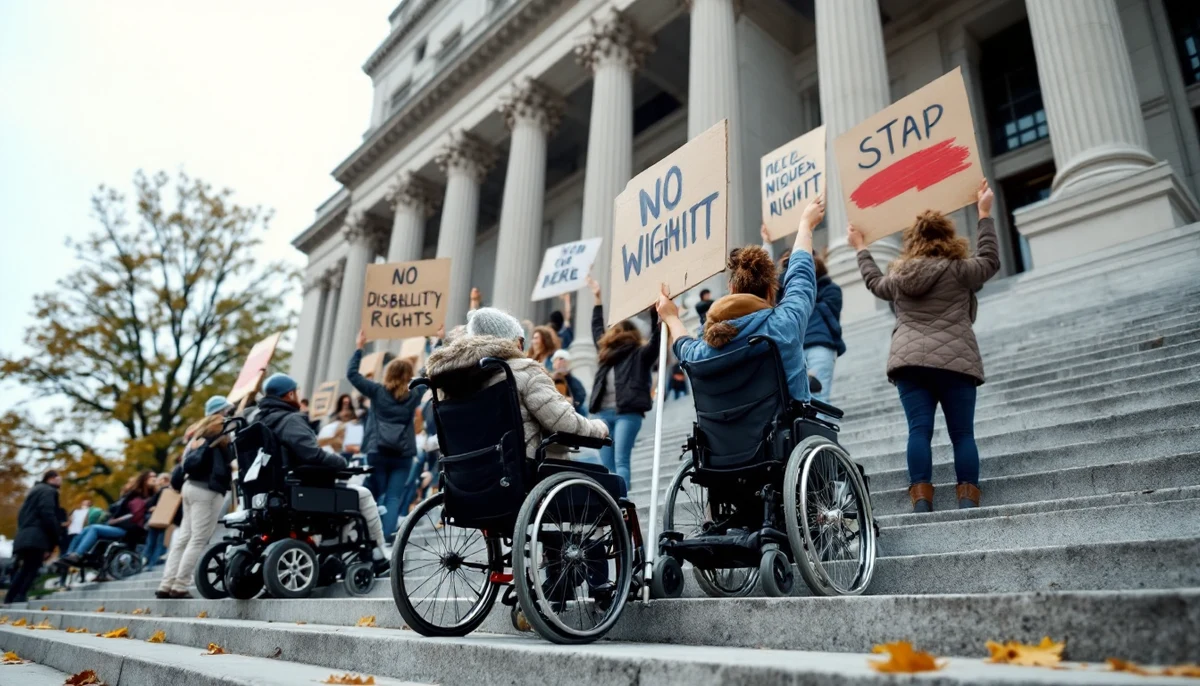
The U.S. disability community has organized to oppose President Bush's nomination of Jeffrey Sutton for a federal judgeship. In a May 19 news release, ADA Watch announced that it was mounting a vigorous attack on Sutton's nomination. ADA Watch is a consortium of 19 national and 54 state and local groups brought together to protect the ADA. The group protested in mid-May rallies at the White House which drew nearly 1,100 protestors. The Watch includes, among others, the National Council on Independent Living (NCIL), the American Association of People with Disabilities (AAPD), the Paralyzed Veterans of America (PVA), and the American Council of the Blind.

Sutton, a Ohio attorney in private practice, has come under strong fire by the U.S. disability community for his role in advocating for limitations on the remedies available to plaintiffs suing under the Americans with Disabilities Act. Arguing for the State of Alabama, Sutton won with a states' rights argument, asserting that Congress had not established a record of unconstitutional disability discrimination sufficient to justify the ADA's allowance of monetary damages to plaintiffs experiencing discrimination in state employment. He said that the ADA was not necessary because states had taken steps to ensure that disabled people were protected from discrimination. Sutton's arguments led to the Supreme Court's finding that the ADA thus does not meet the "congruent and proportional" standard it has established for federal anti-discrimination protections.

Sutton is widely known as a state's rights activist. He is an active member of the Federalist Society, a group promoting a reinvigoration of states' rights. In 1992, he was a clerk for Supreme Court Justice Antonin Scalia, perhaps the leading member of the conservative wing on the Supreme Court and a favorite among conservative intellectuals.

Sutton is being characterized as a threat to the civil rights of people with disabilities. Justin Dart, a prominent U.S. disability activist, issued a statement in which he said "It is very difficult to understand how President George W. Bush could send to the Federal Court a man who challenges the 'across the board' constitutionality of a great civil rights law written in the tradition of Abraham Lincoln and signed by his father, George Bush, Sr."

Andrew J. Imparato, CEO of AAPD is quoted by wemedia.com as saying "Jeffrey Sutton is the most prominent lawyer who has been providing the chisel that activist federal judges have been using to disenfranchise and disempower millions of Americans with disabilities."

But not every ADA defender believes that Sutton is a danger to people with disabilities. Kimberly Skaggs, the executive director of the Equal Justice Foundation in Columbus, Ohio, where Sutton is a Board of Trustees member, is quoted by wemedia.com as saying "We're friends of the ADA and Jeff certainly supports our work. He's very smart, he's very fair and very open-minded, probably more open-minded than people are giving him credit for. I really don't think he's anti-people with disabilities."

Sutton also was the attorney who challenged Case Western Reserve University's denial of medical school admission to a blind man. He lost that case.
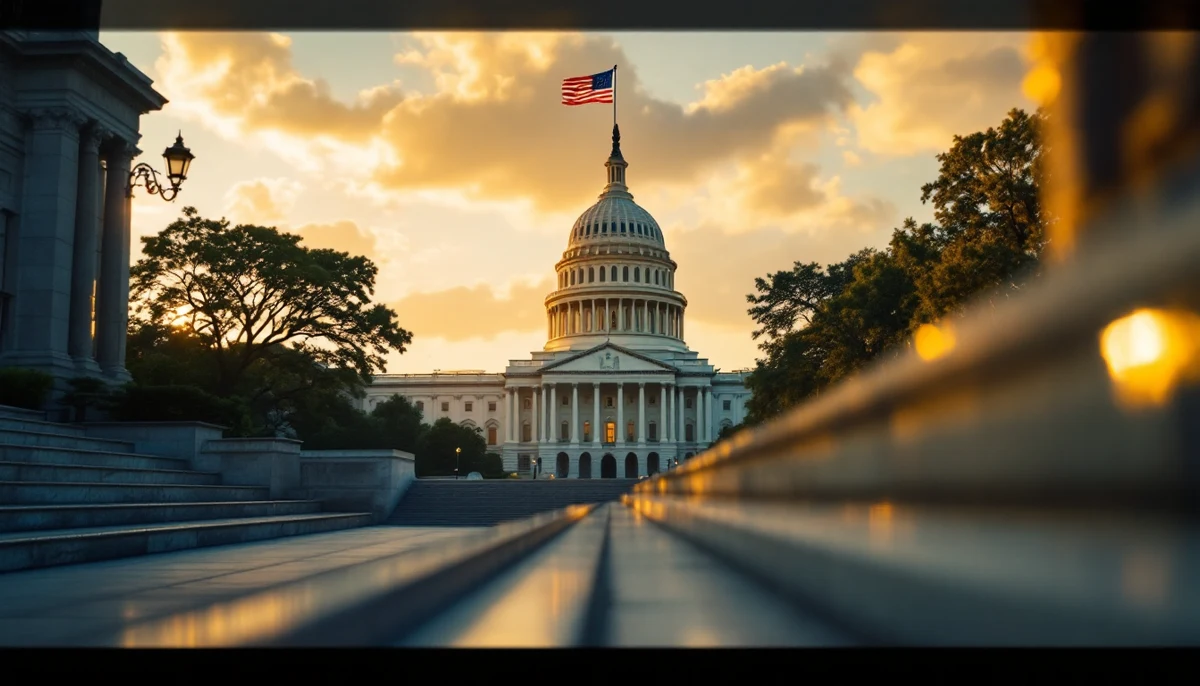
Sutton's nomination to the 6th Circuit Court of Appeals will be reviewed by the Senate Judiciary Committee, which is now chaired by Vermont Democrat Patrick Leahy. The shift in Senate control to the Democrats (brought about by Senator Jim Jefford's resignation from the Republican party) will change the dynamics of the confirmation process. Senator Leahy is expected to slow the confirmation process and his committee is likely to subject nominees to much closer scrutiny than it would have under the chairmanship of Senator Orin Hatch, the Republican Senator who formerly headed the committee.

The Judiciary Committee, under Senator Leahy's direction, also is expected to ask the American Bar Association (ABA) for its help in evaluating nominees' credentials. Soon after taking office, President Bush had said that the ABA would no longer be asked for their opinion because he believes the organization to have liberal biases.

Some observers predict that the power shift in the Senate means that the confirmation process for this President's nominees will be difficult and bitter, partly in retaliation for what Democrats see as the Republicans' politically-motivated failure to confirm dozens of federal judge nominees forwarded by former President Bill Clinton.

The federal courts have become a battleground in national politics, with the political parties and activist groups of all stripes concentrating on influencing the make-up of the courts. With so much at stake, it is little wonder. The federal courts are currently considering many challenges to federal legislation that governs the conduct of the states and the private sector, with federal civil rights guarantees hanging in the balance.

The Americans with Disabilities Act has been, and will continue to be, greatly affected by the federal courts. Jeffrey Sutton's nomination to the federal bench has become a symbol of the disability community's struggle to protect the ADA from political and judicial attack.

For pictures taken at the White House protest of Sutton's nomination, go to: www.mwcil.org

For other stories about Sutton's nomination, go to:
http://www.cleveland.com/news/plaindealer/
http://disabilities.about.com/health/disabilities/library/weekly/aa052801a.htm
http://libpub.dispatch.com/
www.ncil.org/sutton.htm
www.wemedia.com


table of contents - home page - text-only home page


Email this article to a friend!