
Disability World
A bimonthly web-zine of international disability news and views • Issue no. 19 June-August 2003


home page - text-only home page

Access and Technology briefly
Compiled and edited by Jennifer Geagan, World Institute on Disability

New Service Provides Audio Versions of Canadian Newspaper and Magazine Articles
Millions of blind and visually impaired Canadians now have Internet access to audio versions of newspaper and magazine articles. VoicePrint is launching its new archival system at http://www.nbrscanada.com where articles from hundreds of Canadian publications, read by VoicePrint's volunteer readers, can be accessed in audio format at any time of day on the Internet. The first audio archival system of its kind in Canada, VoicePrint can be accessed free of charge on the web at http://www.voiceprint.ca or http://www.nbrscanada.com. For more information, contact Pamela Muñoz, Outreach Associate at tel: 416.422.4222 x. 227 or 800.567.6755 or email: pamela@nbrscanada.com.

Conference on the Role of European Standardisation on Accessibility for All
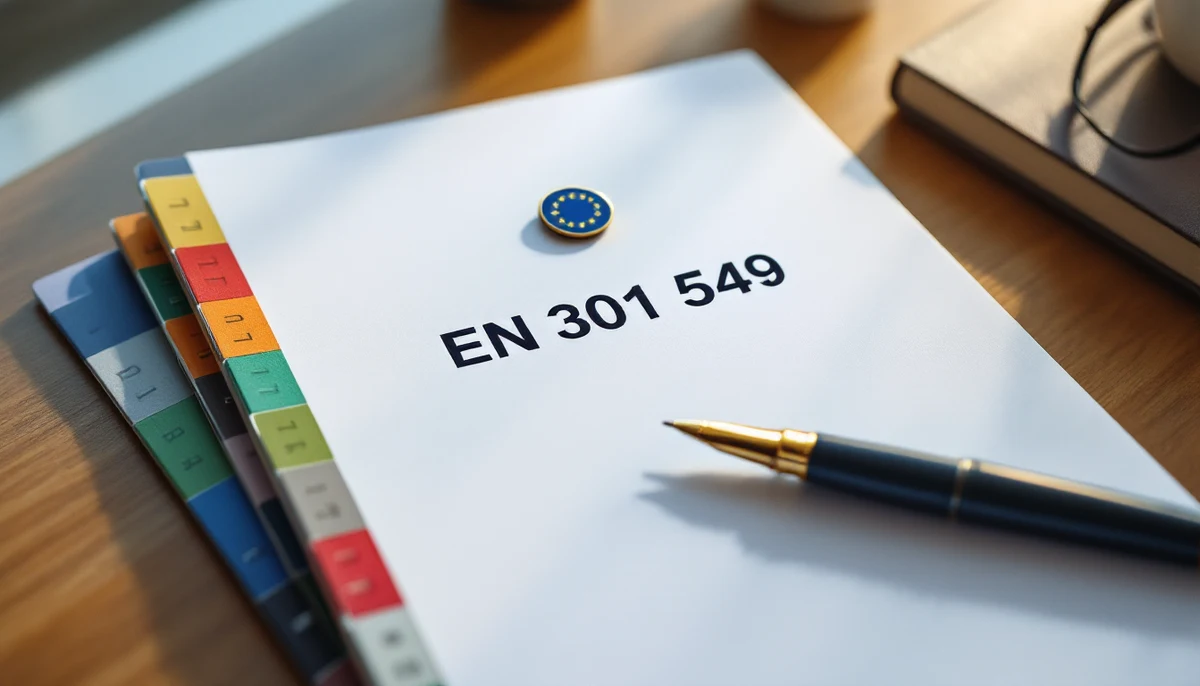
Several European standards organizations held a conference, "Accessibility for All," in March 2003, focusing on the role of European Standardisation on Accessibility for All and contributing to the objectives of the European Commission eEurope 2005 Initiative. Attended by 220 participants, the 7 theme-based sessions, presentations and subsequent discussion have been compiled into a set of conclusions and recommendations and are available at: http://www.etsi.org/cce/report.htm. The presentations included the topics: guidelines for accessibility of public access terminals; TV broadcasting for all; universal access to mobile communication; and requirements for deaf and hard of hearing people on mobile networks and are available at: http://www.etsi.org/cce/Programme.htm.

EU Transport and Communications Ministers' Declaration on eInclusion
The Transport and Communications Ministers of EU Member States met in Crete in April 2003 for the Ministerial Symposium, "Towards an Inclusive Information Society in Europe." Organized by the Greek Presidency of the Council in cooperation with the European Commission, Ministers agreed to take all necessary actions towards an open, inclusive knowledge-based society accessible to all citizens and to devise policies to overcome traditional and new forms of social exclusion, while ensuring that all citizens fully participate in, and benefit from, the Information Society. The Declaration on eInclusion is available at: http://www.eu2003.gr/en/articles/2003/4/11/2502/

Brazilian Voice-Recognition Freeware
In Brazil, a free application called Motrix has been developed by the Electronic Computation Nucleus (NCE), a group of technicians and engineers who have been creating adaptable software at the Federal University of Rio de Janeiro since 1994. Motrix allows disabled people to read, write and interact with their computers using an embedded voice-recognition system and to perform nearly all computerized tasks, including playing games. Motrix is a revised version of Dosvox, which is known worldwide as one of the best adaptable software programs for the visually impaired and uses a low-cost voice synthesizer that evolved from a text editor created by Marcelo Pimentel Pinheiro, a blind computer science student. NCE is already testing Motrix with home devices for turning on lights, TVs and air conditioners. To read a lengthy article on Motrix, go to: http://www.wired.com/news/technology/0,1282,55539,00.html.

U.S. Department of Commerce Report Outlines Steps for U.S. Assistive Technology Manufacturers to Dominate the Global Market
Commerce Dept. Undersecretary for Technology Phil Bond recently announced steps the Dept. is planning to take to implement the New Freedom Initiative. The recent report suggests that U.S. assistive technology manufacturers could benefit greatly from the demographic shifts now occurring in the U. S., Europe, Asia, and elsewhere. The Dept. of Commerce report dealing with these steps, "Technology Assessment of the U.S. Assistive Technology Industry" is available online.


iBOT™ Rolls Out
Independence Technology recently received approval from the Food and Drug Administration to market the groundbreaking innovation in mobility, the INDEPENDENCE™ iBOT™ 3000 Mobility System. The iBOT™ is a unique gyro-balanced mobility device that has been designed to operate on four wheels or two wheels, stabilizing the user by automatically adjusting and balancing itself. Eight years and over 150 million dollars in the making, the iBOT™ is for use indoors and outdoors and allows the user to move around at eye level and reach high places independently; climb up and down stairs with or without assistance; climb curbs as high as 4 inches and travel over grass, gravel, sand and other forms of uneven terrain. To find out more about the iBOT™ Mobility System, visit: http://wwwindependencenow.com/ibot/ or call 1-866-813-0761.

home page - text-only home page


Email this article to a friend!