
|
Russia: Perspektiva makes progress with the mass media
By Olga Drozdova, Perspektiva (Translated by Erin Trouth)
Background
According to official statistics, 10.8 million disabled people live in Russia. Each year this number increases by approximately one million people.

As a rule, Russian society shuts itself off from people with disabilities and knows almost nothing about them. Society's attitudes toward disabled people are still guided by stereotypes and myths. Most people believe that disabled people are unhappy, cheated by fate, and in need of charity and protection. Society is little aware of the real needs and abilities of people with disabilities and therefore is unable to effectively support or assist them to become fully included in the community.

The mass media are an important means through which we can overcome stereotypes. We can use the media to show the problems that disabled people face and potential solutions to these problems, as well as to tell the stories of real people who achieved active and independent lives. Journalists, however, are as much influenced by stereotypes as anyone else, and in Russia it still requires tremendous effort to convince them to address these issues.
Different organizations of disabled people of course issue their own publications. The
most important of these are the newspapers published by the All-Russian Society of Disabled People and the societies of the Blind and Deaf. In addition, in recent years the growth of the Internet has facilitated access to many different types of information related to disability, and this resource is becoming more and more important. However, these types of media are of limited effectiveness as they only reach a very limited audience of specialists, disabled people, and their families. With regard to the Internet, it is still not widely available due to an absence of computers or funds to pay for internet time. Television and radio are much a more effective and accessible means of communication.
The "Disability and the media" project
Perspektiva has always devoted a great deal of attention to its work with the mass media, believing that it is necessary in order to change attitudes and myths about people with disabilities. Hence, public education activities have become an integral part of all of Perspektiva's projects.
In 2002, with funding from the Soros Foundation, Budapest, Perspektiva implemented a project entitled "Disability and the Media." The project, above all, aimed to improve the image of disabled people in the media and to increase the number of articles and reports that appear in the media about people with disabilities. The project involved monitoring publications, conducting seminars for journalists, and serving as a resource on disability for journalists. The project was implemented by Perspektiva, together with its partners in Baku, Erevan and Tbilisi.
Monitoring media
One of the main activities of the project was to monitor media coverage of disability issues. This analysis provided valuable information about the stereotypes and perceptions of journalists about disability issues. It further provided information about the messages being conveyed to the community about disabled people. Finally, it confirmed many of our assumptions about the stereotypes held by journalists and their reflection in the way disabled people are portrayed in the media.
In Moscow the media team at Perspektiva monitored publications that appeared between June 2001 and January 2003. This included around 400 newspaper and magazine articles, most of which appeared in the Moskovsky Komsomolets, Kommersant, Moskovskaya Pravda and Argumenty i Fakty newspapers. In addition, we analyzed more than 200 reports from various news agencies. These articles and reports were analyzed using the following criteria: tone of the article (neutral, sympathetic, negative, or emotional), basic message, terminology, and the image of the disabled "main character" portrayed in the article (e.g., as ordinary people, sufferers, super-heroes, recipients of charity, etc). We paid special attention to the author's use or avoidance of direct quotes, and to the presence or absence of humor in the article. In addition, more than 50 TV programs were also reviewed and analyzed.
Analysis reveals prevalence of stereotypes
Our analysis demonstrated that disabled people and the problems that they face do not occupy an important place in the media, and that stereotypes of disabled people are still common. More than half of the articles reviewed were devoted to statistical data or commentary on new legislation, mostly concerning pensions and other benefits provided to disabled people. The remainder were problem articles, essays and reports that in some way described a person with a disability. A total of 12 percent of these publications were on issues of accessibility and approximately 5 percent were dedicated to new technical aids and services for disabled people. The majority of publications were neutral in tone, but 20 percent used highly emotional language, 10 percent evoked pity and a small handful contained insulting or negative expressions. The majority of the publications used appropriate terms to describe people with disabilities, although 7 percent referred to disabled people as "helpless." Disabled people are treated as "equal, ordinary people, members of the community" in only 12 - 13 percent of articles. Most often, disabled individuals are portrayed as heroes, and more rarely, they are shown as sufferers or as activists fighting for their rights, and humor is only used in 2-3 articles.
TV programs can be divided into 3 categories: those that highlight sports or cultural events that include disabled people, those that portray the life of someone with a disability - usually an artist or musician, and those featuringe disabled people carrying out so-called "herculean" activities such as opening a can of sardines with their feet, or climbing the highest mountain in the former Soviet Union in a wheelchair. Often these reports begin with "this show will be about a surprisingly brave person ... , or 'inspite of the fact that this person is disabled ... ', or '... who can do things that a non-disabled person cannot do ... " Rarely do you see anything beyond this aspect of the person's life, e.g. that a person has a family, a job, etc. Images that are often conveyed on TV are either those of the pitiful disabled person, the super hero or the freak.
Encouraging trend
Although the majority of articles and TV programs about disabled people are written or shot in response to specific events and laws that have been passed, there has recently been a noticeable trend towards increased interest in disability issues overall. From December 1 - 10 (marked as a period of disability awareness in Russia) 2001, nine articles were written on the subject. During the same time period in 2002, there were 24 articles written about disability issues. In total, 50 articles in the major national Russian newspapers were written about disability in December 2002, which is so far a record number.
From monitoring the press, we came to several conclusions. Disability is still far from a popular topic in the mass media, which means that society does not consider the problems of disabled people to be a priority. Nevertheless, popular interest is increasing. A larger number of analytical articles and more detailed stories have appeared in recent months, and it is this type of article that can command a broader audience and influence the formation of a positive opinion of disabled people and an understanding of the problems that they face. However, most of these articles are the work of a handful of journalists who are interested in the rights of disabled people and well versed in the issue. These are journalists who are invited and usually attend Perspektiva's events, and with whom we maintain a close working relationship.
The results of our monitoring of the media have served as a springboard for Perspektiva to engage journalists in conversations about how to portray disabled people in different way, i.e. in a way that discourages stereotypes and allows the voices of individuals with disabilities to be heard. During the project, Perspektiva organized a roundtable discussion for leaders of organizations of disabled people and prominent journalists who frequently address issues related to disability. The journalists advised, on one hand, to be forceful and willing to make waves, and, on the other, to be persistent and convincing. Their most important advice was not to take offence at criticism. The opinion of Valery Paniushkin, of the newspaper Kommersant was quite a surprise to us. "The Law on Mass Media prevents me from discrediting the honor or virtue of my subjects, but it does not prevent me from offending them. People who desire equality must understand that they will be offended by the media. The events that disabled people organize ... - these are their professional activities, and why shouldn't I pass judgment on them? Why can I criticize the President, but not disabled people? It isn't right. Organizations of disabled people should be prepared to be the subject of critical articles."
Seminars for Journalists
Another topic of the roundtable was Perspektiva's curriculum for training journalists on how to correctly address disability issues. Perspektiva believes that journalists should be responsible for the associations and stereotypes contained in their articles and broadcasts. Correctness of terminology and political correctness in general are far from being accepted in the Russian journalistic community today. Stock phrases - such as "confined to a wheelchair," or "shrouded in constant darkness" - are common. Authors often use these phrases unconsciously, and we can only help them avoid such phrases by informing them of the messages they convey and about the impact of such phrases and by acquainting them with alternative ways of writing about people with disabilities. At these seminars, we discuss stereotypes about disabled people and the associations that different words and expressions evoke. When disabled people themselves talk about their reactions to these phrases, journalists listen with interest and ask questions. After these discussions, journalists tend to begin using more appropriate terminology. At the very least, these seminars make journalists think. The practical exercises at the seminar also give participants something to think about. We ask the journalists to read and discuss articles, and then to rewrite them in light of the things they have just learned.
Seminars are an interesting but difficult way to work with journalists. As a rule, journalists have very little free time, and it is difficult to get them to come to a seminar. It is difficult to overcome their doubt that they can learn something new from an organization of disabled people. However, we have worked to make our seminars as short and effective as possible, and during the project we held eight such seminars in Moscow, reaching a total of 20 journalists and approximately 200 journalism students. In addition, eight seminars on presenting the problems of disabled people in the media were conducted in connection with the "Cinema Without Barriers" festival in different regions of Russia. These seminars were led by experts from other Russian and international organizations of disabled people. According to journalists who attended, these seminars provided them with a lot of new information and with material for their future work.
Public Education Events
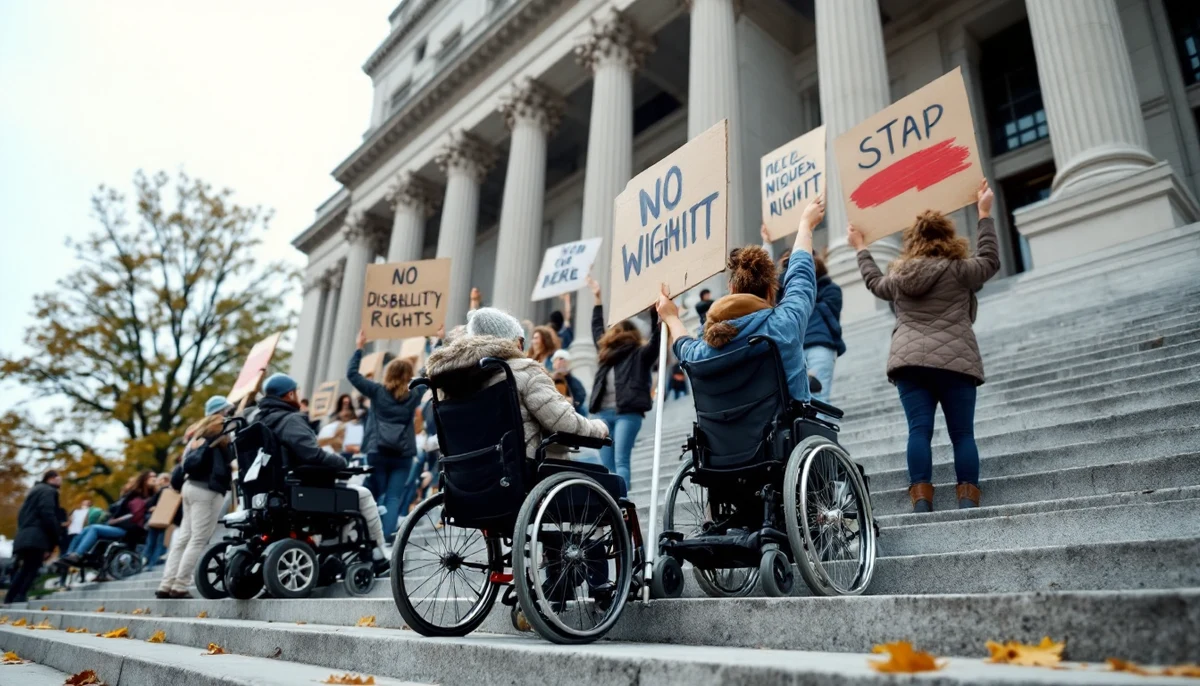
During the past year, Perspektiva has held four large-scale events that have drawn the attention of the media. These events included: a day in which volunteers came together to build ramps and lifts; a demonstration at a newly opened Moscow Metro station that is inaccessible for disabled people; a photo exhibition entitled "Disabled People on the Path to Independent Living;" and, the largest, the international "Cinema Without Barriers" festival, held in September 2002. The film festival brought together over 700 viewers and generated 21 articles in the media as well as coverage on radio and television news. The festival was newsworthy because it provided Russian viewers with a first glimpse at films about disability and brought together activists from all over the world. During the four days of the festival, 65 films were shown, eight seminars on the portrayal of disability in the media were held, and viewers and journalists had opportunities to speak with the film directors. The festival allowed us to make new contacts and develop future projects.
Media Competitions
Another aspect of Perspektiva's cooperation with the media in 2002 was our "Disabled people in Russian society" competition. This competition judged entries from three categories - print media, radio and television - and drew 62 applications from 18 different regions of Russia, including the works of authors from both major cities and small towns. Entries were not accepted if they were published in specialized disability publications because the purpose of the competition was to encourage the work of journalists in the mass media.
The articles, radio transcripts and television pieces sent in for the competition were very diverse, and the panel of judges (comprised of representatives of disability NGOs and journalists) had a difficult job. The basic criteria on which they judged the entrants included: the absence of negative stereotypes of disabled people (for example, descriptions of disabled people as "second rate" or as objects of pity, or associations with helplessness and illness); overall approach: social model of disability, and depictions of people with disabilities in everyday situations (at work, school, or with family); finally, the absence of an excessively emotional or dramatic tone. On the basis of these criteria, several winners were chosen. In the print media category, the two winning articles were written by Krasnoyarsk journalist Ilya Naimushin and Moscow journalist Anna Belokryltseva, and several other articles received honorable mention. The winner of the television category was a segment from a program about St. Petersburg produced by Kristina Gertsovskaya. Honorable mentions went to several other programs, including the "Desnitsa" series that shows on local television in Samara with the participation of staff of Desnitsa - a local disability NGO, and Nizhny Novgorod's "Kaleidoscope of News," which is produced by the Deaf television network. No contest was held for radio program entries because only one program - a program from St. Petersburg entitled "Don't Be Afraid!" - was nominated, but it was given a special mention.
During the past year, Perspektiva has worked actively and, most importantly, effectively with the mass media. As a result of our efforts, our contacts in the journalistic community have expanded and strengthened. A true partnership has been formed with many journalists, who now see Perspektiva as both a valuable source of information about disability issues, a serious partner and an NGO that makes news. We have learned which authors and what publications are most interested in disability related stories, and therefore have a better idea of who to invite to our seminars and other events. This is especially true with regard to print media and radio. Our contacts with major television stations are still rather limited, but we plan to work on developing them.
|