
Disability World
A bimonthly web-zine of international disability news and views • Issue no. 24 June-August 2004


home page - text-only home page

Proposing an Accessibility Agenda for Afghanistan

By Majid Turmusani (the author specializes in disability and development issues with policy research experience from Afghanistan)

Access and accessibility issues

An effective inclusion strategy for the largely excluded disabled population in Afghanistan requires a comprehensive rehabilitation program including a welfare support system. Inclusion will be possible within a barrier-free environment that takes universal design ideals on board. It is not enough to make buildings accessible if there is no accessible transport system to get people to such places. Equally, it is important for disabled people to have accessible housing so that they can live independently. An accessible environment can be useful not only to disabled people but to everybody including the elderly population, pregnant women, children, and other groups.

Central to accessibility standards is an information and communication system that covers all types of disability, gender, geographic area, and all age groups. This system may include training programs and provision of specialist devices when necessary. This is in line with development approaches to advancement of persons with disabilities promoted by World Program of Action Concerning Disabled Persons (Rapley, 2003).

The issue of accessibility cuts across and intersects with all areas of disabled people's lives. The draft new UN convention on disability recognized the cross cutting nature of accessibility in all other areas of disabled people life as an issue of rights. In fact all rights are interdependent and intersect with each other. For example the right to assembly is dependent on the right to participation and participation would not be possible if both physical accessibility and accessible information are not ensured.

Access and accessibility are generic terms and often used interchangeably within disability literature. Both terms however, imply participation, involvement and inclusion and they are regarded as unconditional rights for disabled people to enjoy services, programs and take part in planning process in society. While access often means the right to obtain and use certain services, accessibility refers to modifications made to these services such as environmental changes including modified communication systems, information, and policies. In this analysis the emphasis is placed on accessibility as an issue of rights in line with disabled people's rights as promoted in the Standard Rules (UN, 1994), the Biwako Millennium Framework - BMF (2002) and the draft new disability convention (2003) .

In policy planning terms, accessibility means measures taken to ensure a barrier- free environment. This includes primarily physical barriers such as architectural barriers manifested in steps, and inaccessible working places, etc; attitudinal barriers such as educators' and employers' fears and prejudices about disabled people etc; and societal barriers such as a lack of provisions resulting in unequal service to disabled people compared to the general population. For example, the lack of availability of sign language in schools often leads to exclusion of deaf children.

Accessibility also concerns all categories of impairments including those relating to people with invisible impairments such as deaf people. It also concerns people with visual impairments, those with learning or mental impairments and others. Disabled people's lack of access to service provisions is largely due to societal barriers. These barriers vary greatly for different groups of disability. Access issues for people with mobility problems is often related to the physical environment whereas access issues for people with sensory impairments including blind, deaf and intellectual impairments more often concerns communication and information services. Planning policy at national level will essentially require addressing such issues so that policies are themselves inclusive to everybody.


Communication and assistive devices

Accessibility issues include technologies that are used to assist disabled people in their daily life activities such as their personal mobility (physical rehabilitation including devices), and communication tools. Whether in the home, at work or leisure, technology plays an important role in the lives of people with disabilities, and also in the way that disability is experienced, and framed in society.

The physical rehabilitation aspect of accessibility is relatively more developed in Afghanistan compared to communication systems. This is due to the war situation and to the resulting increased international support to medical rehabilitation, especially for orthopedic technology. While this is something positive, it is important to note that these technologies have negative side effects and may reduce the independence of disabled people and lead to their exclusion. For example, it became a common practice in Afghanistan that people with limited mobility who could move around with crutches are often prescribed wheelchairs as a solution to mild functional limitations. Similarly and in the long term, communication tools including computers with access to internet can also result in spending substantial periods of time at home instead of going out and interacting with society, thus creating a new form of exclusion. This is still not addressed in Afghanistan and future intervention should take this risk into account.

On the other hand there are a number of partners providing orthopedic devices notably the International Committee for Red Cross (ICRC), UN Comprehensive Disabled Afghan Program, and Sandy Gall Appeal for Afghanistan. Like the rest of disability services in the country, orthopedic services are also not evenly distributed and they are concentrated in a few places only. It is not unusual to find orthopedic services over-serving a given community while many other places have total absence of such services. Many partners also focus on artificial limbs leaving out important need for splints, frames and other smaller items not met.

Maintenance of these devices remain a problem from the perspective of disabled users due to the changing needs of young users who grow up rapidly and require new devices on a regular basis. This problem is perpetuated by the far distances between locations of these orthopedic workshops.

Coordination is notably needed in the field of orthopedic devices as well as in other fields related to physical rehabilitation in Afghanistan. An appropriate technology for standardization of devices is needed throughout the country and this includes addressing the training needs of professionals.

Currently there is no government strategy existing to deal with the physical rehabilitation needs of disabled people including orthopedic devices. Even eye and ear care is not included in the government health plan. This means that the prevention of blindness and deafness and intervention services are left to the civil society to deal with, largely through international NGO's. This limits the scale and scope and services provided due to the priorities of these organizations. For example, only recently has an NGO taken the initiative to set up hearing aid production in Afghanistan.

Overall, classic disability technologies, such as the wheelchair, prosthesis, and hearing aid are being used in Afghanistan on a limited scale. As noted earlier, due to the conditional funding of donors, the majority support currently is given to orthopedic workshops, a funding priority which often results from a lack of insight into the real needs of the target group. The new technologies, including digital and medical technologies, communication and media technologies are all neglected in the country.

The working group on accessibility and communication has highlighted the need for supporting an assistive technology system that meets the individual needs of disabled people and their families as inseparable parts of communication strategy on disability. An Information system taking into account the needs of people with all types of disability is important, including support in the election process.

Issues and challenges

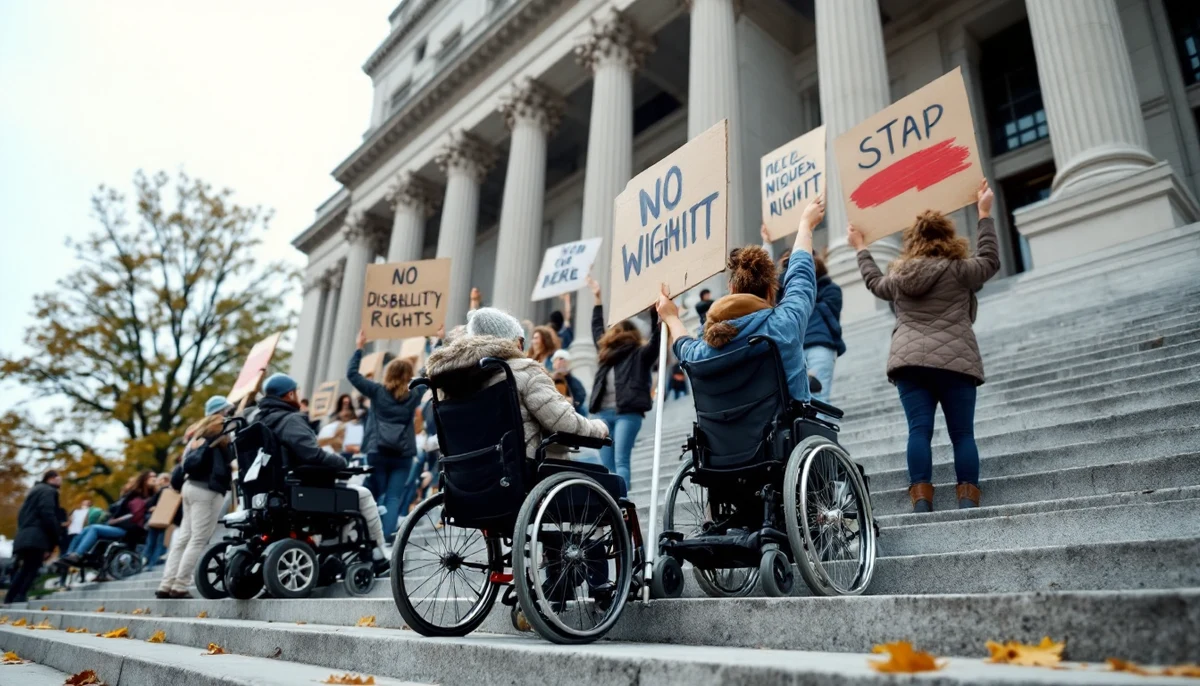
Despite the total lack of data on accessibility in post war Afghanistan, it is rather obvious to note the inaccessible [1] physical environment in the country. This is clearly evident throughout public services, as well as in the transportation system notably the road network, and the present information and communication system. Lack of accessibility services is not only restricted to people with physical disability but extends to all disabled people including deaf, blind and people with intellectual impairments.

Essential services for example such as education are not accessible and this keeps many disabled children out of schools as pointed out in the findings of the GVC study in Kabul. Health and employment services are little better. The Ministry of Martyrs and Disabled is trying to extend its reach to cover the needs of disabled people and promote accessibility standards in society. This Ministry has recently increased the level of accessibility in its central offices including services for deaf and blind people. However such services remained limited and civil servants lack sufficient training.

The fact that 80% of Afghanistan is rural areas with often difficult terrain means that environmental modifications may be difficult to make especially in remote settings. At the same time, this also means that other local accessibility solutions could be found and utilized. CBR workers for example find it difficult to reach disabled children in remote villages. Those children often need specialized services in a nearby centre but transport prevents them from receiving the services. To overcome this problem, the use of donkeys as a local mean of transport could be a good solution (Coleridge, 2002).

The geopolitical make up of the country may have also contributed to the man made inaccessible environment. Historically the majority population had sought after water reserves and became clustered in communities around rivers and valleys. Many houses therefore were built on high places to avoid floods and this meant having steps in the architectural design of housing and buildings including markets and public buildings.

Overall, coordination is notably needed for future action concerning access and accessibility in Afghanistan with government leading the process. The Comprehensive National Disability Policy sets out clear guidelines including key actions necessary for a future strategy on accessibility in Afghanistan.

Future planning

To date there is no information available on accessibility issues in Afghanistan. Donors and the majority partners believe this to be of a low priority issue for investigation and intervention. Even the discussion with majority representatives of the disabled community showed accessibility as less important issue to disabled people compared with education, training, and employment.

However, the working group on accessibility and communication in the course of planning the national disability policy has reached a consensus on this issue and identified the need for making society accessible for disabled Afghans as fundamental to their inclusion and independent living. They proposed an awareness strategy that highlights the needs and rights of disabled people as well as societal barriers that prevent access to those services and provisions. This group recognized the need for developing training programs and guidelines on accessibility to be used by various parties including policy makers and professionals and recognized the need for research and needs assessments as starting point in planning accessibility issues.

Hence, it is important to conduct research into the existing level of accessibility and identify barriers and gaps for improvement. The MMD survey on disabled people which started since 2002 adds no value to the issue of access and accessibility and there are no other studies on accessibility in the country. A proper survey concerning accessibility should be developed and carried out.

To get insights into the accessibility of disabled people through research, the existing provisions should be highlighted and identified. Sometimes only simple and local modifications are all that is needed to make environment accessible or communication system accommodating. Even the introduction of new provisions can cost less if taken from the beginning at the design level.

There are a number of issues that can be explored when researching accessibility. For example, the inclusion of disabled people in policy planning at local, regional, and national levels; issues relating to inclusion of disabled people in their everyday activities such as functional tasks of getting around the house, outside mobility etc.; specialist support to disabled people within public provisions (sign interpretation for deaf people, Braille support, etc); technical expertise in building standards etc (modified to local standards) and other issues.

Standard accessibility provisions include those for public use [2] such as education, transport, employment, etc as well as provisions for private use [3] such as home adaptation, car adaptation etc. In all standard accessibility provisions, communication and information system is fundamental. However, policies [4] can also be inaccessible and disabling - such policies should also be identified and rectified. This later aspect is being ensured in the new convention together with recognition of the role of the states in adopting measures to remove obstacles to participation in the physical environment.

References

BMF (2003) Biwako Millennium Framework for Action Towards an Inclusive, Barries Free and Rights Based Society for Persons with Disabilities in Asia and the Pacific (BMF). United Nations Economic and Social Council, Otsu City, Shiga, Japan.

Civic Voluntary Group (2003) The Situation of Disabled Children in the Education System in Afghanistan: a study for the city of Kabul. Kabul: GVC.

Coleridge, P. (2002), ‘Community Based Rehabilitation in a Complex Emergency: Study of Afghanistan', in M. Thomas, and M.J. Thomas (eds), Selected Readings in CBR - Series 2: Disability and Rehabilitation Issues in South Asia, National Printing Press, Bangalore, pp. 35-49.

Ministry of Public Health (2003) A basic package of health services for Afghanistan.

MMD (2003) The Comprehensive National Disability Policy. URL: www.disabilityafghanistan.org

Rapley, C (2003) Reconsidering the disability Dimension in Development Cooperation Activities; building national capacities for full participation and equality. Regional Workshop towards a Comprehensive and Integral International Convention on Protection and Promotion of the Rights and Dignity of Persons with Disabilities. October 14-17, UNESCAP, Bangkok.

UN (1994), The Standard Roles on the Equalisation of Opportunities for Persons With Disabilities, United Nations, New York.

UNESCAP (2003) Draft International Convention on the Rights of Persons with Disabilities. URL: www.unescap.org.

United Nations (1982) The World Programme of Action concerning Disabled Persons was adopted by the United Nations General Assembly at its thirty-seventh session on 3 December 1982 by its resolution 37/52.

Notes

[1] A practical example of this situation is seen in the work of the Task Force on Disability. When the Task Force started its meetings it was extremely difficult to find a venue with decent accessibility standards. When the room was found there were no accessible toilets.

[2] Provision for public use may include transport (streets, bus, airport, and parking places, etc); schools (accessible building, equipped classes,); public toilets; parks, rest places, public phones, etc; cultural and recreational places (theatre, sports centres etc); hospitals, medical centres, etc; public building where services are provided such as ministries, UN buildings, INGO's, local admin, police department, etc; market place, such as banks, barber shops, etc; religious places, such as mosque, etc; workplaces, vocational training etc; and others

[3] Provision for private use may include adapted home, kitchen, toilet, etc; adapted car, parking places, pavement, easy signs and directions; problems with existing provisions such as they don't know about them, they are not sufficient, they don't meet their particular needs, etc; aspirations and needs

[4] Policies could be verified in terms of the kinds of existing legislations, local regulations and International statements; policies to include disabled people and disability issues at the local agenda; technical code of practice re building standards etc; system for communicating information on accessibility to disabled people; system to coordinate such info with other partners and users, etc; policy to justify, explain and relate provisions in accessibility to the life of disabled people. For example how accessible transport and education system can increase disabled people's chances for employment etc.; policies that encourage a human rights approach; problems with existing provisions; aspirations and needs.

graphic of printer printer-friendly format

home page - text-only home page


Email this article to a friend!