
CBR in Africa -- Between Evidence and Ideology
By
M. Miles (m99miles@hotmail.com)
Formal schemes for Community Based Rehabilitation (CBR) began to be planned in Africa from the mid-1970s, with implementation beginning by 1979, e.g. in Botswana (Sebina & Kgosidintsi, 1981). Reported outcomes over 25 years have been mixed. In several countries there has been a pattern of starting with strong ideological rhetoric and high hopes, undermined by inexperience and planning errors, so the initial effort ran into major problems. In some cases there has been a serious effort to learn from mistakes and develop a more successful second or third phase. No African country began with a monitoring and research framework accumulating and sifting various kinds of data on CBR, so that planning could progressively be based on evidence rather than ideology. [1] The balance between these two factors, and their likely outcomes, is examined in this article.
Seeking Solid Evidence
Informal practice of many components of CBR dates back some centuries in African histories, and the foundations of CBR efforts of the past 25 years would presumably have been stronger if rooted in these documented historical practices. [2] Yet the earlier centuries have almost entirely been ignored, for various reasons. [3] Even within living memory, lessons from useful work of the 1950s to 1970s are little known and traces are fast disappearing. [4] One result is that CBR from 1980 onward has too often looked like yet another foreign import, rooted in alien ideologies, funded from distant countries, irrelevant to the actual needs of disabled Africans (Ndaziboneye, 2002, p. 110), coupled with aid agency ignorance about the very varied situations, concepts and cultures of disabled people across Africa and other developing regions (Miles, 2003a).
The lightness or vagueness that seems to have characterised CBR in Africa in the 1980s and 1990s was accompanied by a paucity of serious research studies, and the absence of coordinated and published research that could have illuminated a range of interconnected problems and possible solutions. The research actually done has mostly been fragmentary, and too often inadequately reported, or published without peer review and subsequent revision. [5] During the past 15 years there have been at least 50 (and possibly as many as 80) disability-related research reports of doctoral or post-doctoral depth and competence, in English or French, based on African field work. [6] Among the few directly relevant to aspects of CBR, eight are mentioned or reviewed below.
Useful ethnographic work concerned with disabled people was conducted and reported by D. Burck (1989), and in much greater detail by B. Ingstad (1997), in the context of CBR activity in Zimbabwe and Botswana. Both researchers reflected on the complexity of disability in the lives of individuals and communities they studied, which raised many questions about the World Health Organisation's approach to CBR, and the lack of serious engagement with people's existing knowledge, beliefs and practices. Close ethnographic attention was accorded to deaf people and their cultural resources by L. Sorin-Barreteau (1996) who was primarily studying gestural communication in rural Cameroon but included detailed notes of some 160 deaf individuals. In northern Nigeria, C. Schmaling (2000) devised a detailed technical description of Hausa Sign Language, necessarily also engaging with the identity and social context of deaf communities, far beyond the superficial 'survey of disabled people' that sometimes precedes CBR work.
Over several years, A. Sebeh (1996) undertook a complex evaluative study of different services in which he was involved (CBR; outreach; parent training; and control group; see Lababidi & El-Arabi, 2002, pp. 76-93, 144) targeting young children with intellectual disability in the slums of two major Egyptian cities, periodically measuring child developmental progress and parental attitudes, with standardised instruments. (Further detail and comment on Sebeh's work appear in Helander, 1999, pp. 183-189). This type of controlled, comparative study with a scientific basis, in one aspect of CBR activity, has been attempted during CBR projects in some other countries. In the longer term it should strengthen the wider picture of how CBR works in practice.
Two more recent doctoral theses, by O. Jadin (2002) and H. Finkenflügel (2004) engaged with CBR on a somewhat broader basis. Jadin noted in the early 1990s that hardly any CBR program on the WHO model had been described and analysed with full statistical data on outcomes and costs. He devised an elaborate survey of reported activities and outcomes in two groups of disabled people, totalling over 500 participants aged from birth to early 30s in CBR programs in Benin and in Ghana. A large array of comparative data is presented and discussed, using statistical significance analysis to overcome some of the practical difficulties of survey methodology. Jadin describes the process of developing CBR in Benin and Ghana, and aims to distinguish various factors contributing to the success or failure of the CBR work.
The CBR program in Ghana ran into major problems, which Jadin documents. After that study, however, the program was reorganised, apparently on a more successful basis (Tamm / NAD, 2000). The Benin CBR program, in which Jadin has been closely involved, is reported to have been successful, and major extensions are now under consideration. Jadin has certainly improved the supply of carefully tested data in CBR programs, covering aspects of great interest to governments and NGOS, i.e. the benefit to the individual and the cost to the service-providing organisation. The absence of any direct record of the views of disabled participants, while normal enough in the early 1990s when the study began, could now be considered a drawback.
Finkenflügel, after several years of training rehabilitation assistants for CBR work in Zimbabwe and documenting some outcomes in journal articles and an edited book (1993), began collecting and analysing CBR research literature. One of the most useful features of his thesis is the systematic review (Finkenflügel, 2004, pp. 23-48) of 128 papers concerned with CBR, published in peer-reviewed anglophone research journals between 1978 and 2002, among which 34 are focused in Benin, Botswana, Burkina Faso, Ethiopia, Ghana, Kenya, Lesotho, Mali, Nigeria, South Africa, Tanzania, Uganda, Zambia & Zimbabwe. This seems to be the first serious attempt to review and classify the peer-reviewed, published evidence base for CBR, and to track trends.



Finkenflügel notes a steady rise in the research literature, yet it remains poorly distributed across the spectrum of knowledge needed about CBR: "the articles available do not enable constructing coherent views about different key aspects of CBR, or about CBR in different countries / regions" (p. 43). Only in two small countries, Guyana and Jamaica, could a substantial picture be built up from articles produced over a significant period using varied approaches. Finkenflügel refrains from pointing out that even the gateway of peer scrutiny often allows weak studies with poor methodology and insufficiently critical discussion to pass through. The lack of coordination, coherence and coverage in the research data, over 25 years, suggests that sifted evidence is still lacking as to whether, broadly speaking, CBR works in Africa and elsewhere, or doesn't work; and in which circumstances it is more likely to work; and similar pertinent questions.
Baloney Fills the Gap
Governments and international aid agencies in Africa have been funding and piloting CBR for over 25 years, without significant evidence of its efficacy or cost-effectiveness. The gap has been concealed by ideological conviction and regular shots of published baloney, while planners wait for researchers to deliver conclusive proof that CBR means Empowerment, e.g. sight for blind people (or at least a Braille text of a UN declaration of their rights); all-singing, all-dancing, community involvement for deaf or lame people; exam success for those with learning disabilities; and a free balloon for anyone still left in the box.
There is some consensus that, in terms of aid agency interest and attention, CBR peaked around 1993, and has apparently been declining since then. Yet some developing or transitional countries are still taking up CBR for the first time, and possibly making a go of it. A survey among 29 African countries compiled by M. Giannelli and S. Deepak (WHO DAR Team, 2003a, p. 15) suggests that there is "no national program where multi-sectoral CBR activities cover the whole country", and CBR is mostly confined to pilot projects in some areas, using foreign funds. Three countries have already given up on CBR, closing down their attempts at national programs, while fourteen, i.e. 48% of countries surveyed, have never started. (The reported information was confirmed by governments in 2000 or 2002).
The slow decline might be attributable to the complex interaction of many factors, e.g. the rise of AIDS, causing extraordinary changes in family patterns with still unguessable social damage over the next 50-100 years; increasing 'donor fatigue', 30 years after the close of the colonial era; Socialism's disappearance as a credible national policy, and a switch of West European aid funds to Eastern Europe; the overthrow of South African apartheid (and loss of a long-term rallying point and excuse for governmental incompetence across Southern Africa); the growth of postmodern disbelief in grand metanarratives or ideological programs lacking any evidence base; increasing African urbanisation, mostly in slums, with further diminution of the (already attenuated) rural community traditions of mutual support; foreign pressure for tougher economic policies and obligatory individual contributions to health insurance; and perhaps the growth of Disabled People's Organisations in Africa with educated urban leaders, who may see CBR programs as a needless dispersal, to the periphery, of power and foreign funds that they would prefer to control at the centre.
In particular locations, various forms of CBR might remain buoyant through any of these adverse circumstances, thus sustaining unrealistic ideas in people who make global claims on the basis of too small and localised a sample. Yet the broad impact of factors listed above seems inimical to the long-term success of measures, like CBR, that assume the availability of a margin of civic conscience, voluntarism, communitarianism, and active caring for others without an immediate reciprocal basis. Helander (1999, p. 212) knows that such an assumption "strikes many people as naive, absurd and impossible", and admits (p. 121) a broad difference between Asia, where non-salaried volunteers may be found, and Africa, where people normally seek remuneration. The problems of an "unpaid CBR work force" are underlined by Brinkmann (2004).
Facing Choices
In a broad and critical review based on 18 years of developing externally-funded CBR programs in Rwanda and Tanzania, monitoring CBR work much more widely and training managers for it, G. Vanneste (2004) notes many specific difficulties encountered in CBR programs and projects in sub-Saharan Africa, and some possible remedies. Probably a majority of CBR programs have been run by people having neither a broad management background nor particular training for CBR. Yet Vanneste points out that "The organization and management of CBR is complex and difficult, in a continent where people either have no tradition of formal management and handling funds, or where traditions were severely weakened during the experience of colonialism."
Throughout his paper Vanneste returns to the point that, beyond the variegated work formally called "CBR", there is the already-existing, and vastly greater (though often under-skilled) daily effort of millions of parents, family members and neighbours, as well as disabled people themselves, to manage disability and build full and meaningful lives, in difficult circumstances. He notes (p. 16) that "By far the most widespread positive resources are those that already exist in the hearts and minds of African mothers, sisters, grandparents, neighbours, and disabled people themselves", and CBR programs must enlist and enhance such resources. To do so depends on CBR workers acquiring and passing on skills that are significantly more effective than those already possessed by the population they serve, a part of CBR that cannot be achieved by rhetoric alone, nor by rote learning.
A recent unpublished evaluation of CBR in a Caribbean country by the doyen of CBR developers, David Werner, underlines the crucial nature of a process of skill development incorporating the ability to modify and differentiate rehabilitation practice according to actual needs, rather than applying fixed routines without regard to differences. The development of lateral thinking in designing, fitting and customising simple, low-cost aids is a major theme in one of his outstanding books (Werner, 1998). However, Werner regrets that the lack of such skills is actually one of the commonest weaknesses seen in CBR programs he has visited across the world. The problem is pinpointed in Southern Africa by Myezwa & M'kumbuzi (2003, p. 24) quoting a CBR worker: "You cannot expect us to be precise on things we learnt without background training...." (In the 1980s, when CBR was a rising trend, professionals enquiring about the skill levels in briefly trained CBR workers used to be assured that they would always be supervised by properly qualified staff. That proved easier to claim during the sales talk, than to arrange in practice).
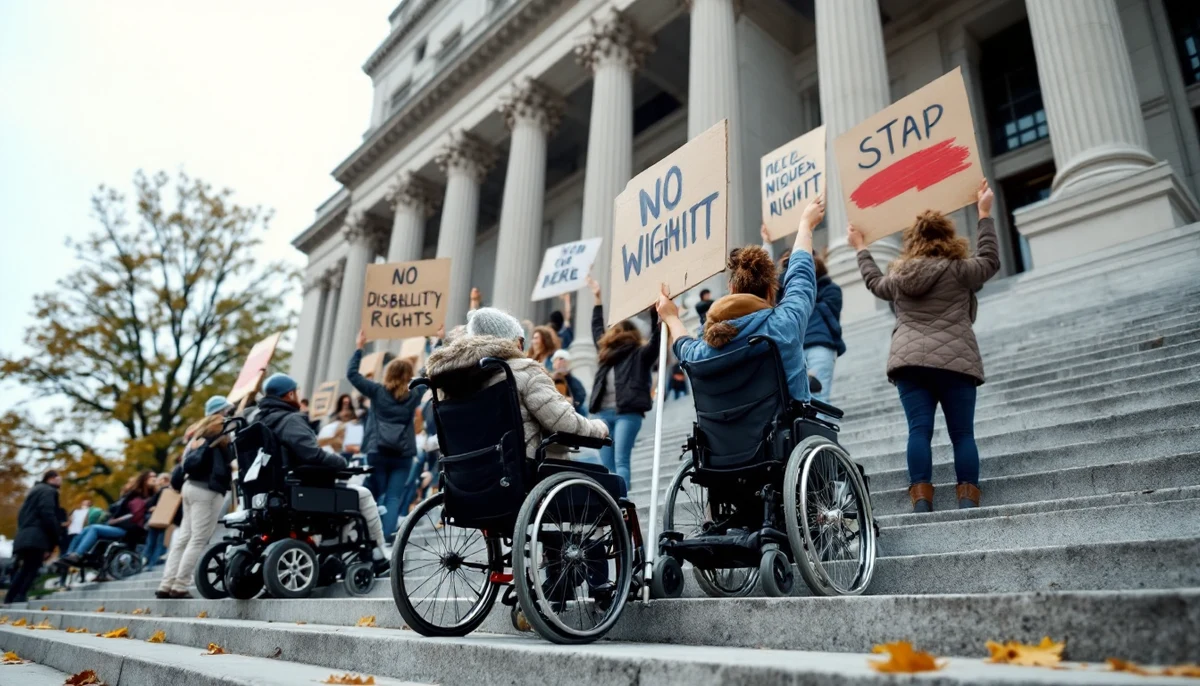
An obstacle to following the pertinent remarks by Vanneste and Werner is the tendency of UN agencies and international INGOs to seduce grassroots activists away from feasible, practical support within the day-to-day realities and motivations of disabled African lives, to seek instead the realm of ideology, the high-flown rhetoric of 'rights', 'equality', 'opportunity', the mantras intoned hypnotically at endless conferences by well-meaning people with a taste for development tourism. [7] The 2001 African regional CBR conference reported by S. Hartley (2002) brought together many people having practical experience with CBR, who offered some useful observations; yet most of the conference papers are stuffed with wondrous ideological slogans, leading to muddled and contradictory demands and priorities. Many participants probably knew that these belonged to the world of baloney, but thought that donor representatives might be listening so they had better mumble the correct jargon. In face of that conference's first "Key CBR Ingredient", that CBR must "take a rights-based approach" (p. 199), Hartley in her editorial chapter opted for reality, commenting that "a rights-based approach pioneering equal opportunities, may be an unrealistic and unhelpful approach in a community where few people have rights" (p. 10).
Experimental Futures?
As long as the stultifying mantras dominate CBR debate, a continued decline of CBR in Africa is likely, though not inevitable. Substantial amounts of evidence and information already exist about how to succeed or fail with CBR (variously understood) and other service options in Africa, scattered in libraries and databanks across the continent and in euro-american universities and aid agencies in six or seven languages. If even a few of Africa's leaders really wished to have over 90% of this evidence collected in Africa and sifted by disability-aware researchers in consultation with experienced African policy-makers, it could be done in under one year, at modest cost, to produce a set of action scenarios for CBR, matching typical African interests and capacities for urban and rural programs by government and/or NGOs, based on documented African experiences and incorporating a great deal more of African concepts, motivations and life situations than has been seen yet in CBR programs. [8]
At present, however, there is little actual demand for evidence-based policy and strategy. Mass politics is fuelled by baloney, not by research evidence or reflective practice. Some international agencies working in the disability field have practically given up using serious information. Under the 'Participation' banner, it is deemed preferable to collect more touchy-feely "People's Own Stories" and hoist them on websites illustrated with cute cartoon figures. Of course, in sufficient quantity, variety and veracity, people's stories about managing life with a disability are an important kind of evidence; but a dozen such stories, carefully chosen to support a particular strategy, do not make an evidence-based policy that will serve the wider population well. They are more like a kind of fraud.
Using whatever definition, CBR is nowhere a completed model that can be fully examined. That is why, some 15 years after launching his idea of 'national CBR', Einar Helander (1993, p. 189) modestly admitted that "Several decades of work will be needed to identify the appropriate ways of arriving at a system capable to deliver essential services to all those in need." This was perhaps the wisest forecast in the entire CBR literature. When Helander revised his book in 1999, his prediction remained unchanged (Helander, 1999, p. 192). "Several decades" are still needed, to discover whether CBR can be made to work on the larger scale.
NOTES
[1] Health service developers with a research mentality and an interest in disability have been at work in Africa at least since the early 20th century, for example H. Stannus (1914) in Malawi, and the deaf Nobel Prize winner for medicine (1928) C. Nicolle, in Tunisia. An example of the careful accumulation of data about disabled people and family care-givers, and its application in a CBR project near Addis Ababa, Ethiopia, is described by T. Gebremedhin (1997). However, the evidence / ideology balance is only one (though probably an important one) of several ways to review CBR development in Africa. For example, disabled historians in 2015 might wish to scrutinise the sources of foreign money and power entering Africa during the 1980s in the name of CBR, or in competition with CBR. Why did the Nordic countries pay for disability-related activities in many African countries? What did they get out of it? Did the big 'blindness' charities, like CBM, Sight-Savers and HKI, commission any research into the effects that their funding policies and priorities were likely to have on CBR development?; and so on.
[2] Some 4,000 years of historical evidence exists in Africa of people with disabilities, healing therapies, assistive aids, community attitudes, and self-organised disability groups (for references, see historical section in web bibliography, Miles, 2003b). The earlier part of the evidence derives from Egypt up to 2000 years BC. The geographical focus increases across northern Africa from Roman times and the early Christian era. Folk-lore and proverbs preserve some ancient community practices and viewpoints on disability, across the continent. Historical therapies and community practices were described by interested travellers from the 13th century on, and later by anthropologists and historians. Some African traditional interventions such as trepanation achieved cautious recognition by colonial medical officers. Blind people and those with leprosy sometimes organised themselves for mutual support, and other people with disabilities lived together, managing their own affairs, e.g. in a designated part of Kano city, Nigeria.
Systematic documentation of disability histories in Africa has only recently begun to mature, and to move beyond a celebration of service development by professionals and parents. While records of the latter are useful (e.g. Dommisse, 1982; Lea & Foster, 1990), the potential exists to produce detailed accounts, with strong roots in the earlier centuries, in which disabled people figure as agents and individuals, rather than merely a mass of beneficiaries. A formidable example, based on doctoral research by E. Silla (1998), concerns people with leprosy in Mali, starting from Arabic descriptions by Ahmad Baba al-Tinbukti, c. 1600, and proceeding to personal accounts of individuals organising group campaigns through the 20th century, with medical advances and complex social changes shifting the battlegrounds and their struggles for identity. See also Nesbitt, (1956, 1958) on independent living and mutual help in South Africa, and Miles (2004) on individual lives of deaf people across Africa through 500 years.
[3] The main reason for ignoring historical practices seems to be the thinness of published knowledge and lack of detailed studies in African social history, and a belief that traditional African responses to disabled people must be uniformly negative and harmful. Euro-American feelings of superiority may play a part, e.g. the ill-informed conviction that, in earlier centuries, all Africans lived 'primitive' or 'savage' lives, in which disabled babies were killed, elderly disabled people died if they lagged behind their nomadic group, and medical care for disabled youths and adults was minimal or actually harmful. Such practices very probably did occur in some, even many, parts of Africa, as they did in many other parts of the world; but they were not the whole story. Further, the yen for 'pioneer angel' status, i.e. to appear as the 'first' saviour of a downtrodden minority, may motivate some people to ignore, suppress or fail to search for evidence of earlier activities. Painting Africa as a perennial disaster area enables the stupider aid agencies to exhort the public to "help save a blind child" (etc), rather than to ask whether modern African cultures have any historical strengths on which self-help programs could be based.
[4] A tragic example was that of Mahfoud Boucebci in Algeria, an innovative psychiatrist, writer and humanist, who in the 1970s discovered a 'middle way' for people with mental disabilities, by basing a form of CBR in low-cost, locally controlled 'neighbourhood centres' (Boucebci, 1981). This man of large vision and practical concern was murdered in 1993 by political extremists who hated him because he did not hate the people they believed he should hate. Too early a death also overtook the development activities of the deaf black American Andrew Foster, who from 1957 onward planted schools where deaf children would be taught using sign language in at least 15 countries, and trained a generation of deaf African activists whose energy remained strong to the end of the 1990s. He is still honoured in the deaf community, though little known to more recent service developers.
[5] These flaws cannot entirely be blamed on idle researchers, indifferent universities, ignorant aid agencies or chaotic African governments. Broadly conceived, CBR is intended to mobilise resources so as to address 'disability in the community' across the spectrum of age, gender and impairment, with some involvement of disabled persons' families and other people in the neighbourhood, plus referral institutions, schools, health centres, potential employers, administrators, mass media and politicians, and designers of the environment, such as architects, civil engineers, city planners. From 20% to 40% of the population could have some direct or indirect involvement in CBR activities at different times. Even to describe the scope of such involvements, so as to determine a valid cross-sectional sample, would be a major task. To monitor such a sample in a controlled way would require very considerable resources, which might conceivably be allocated for studying topics considered vital to the security and financial future of an African state, but hardly for an experimental scheme for disabled people in slums and rural areas. Such difficulties make the CBR field unattractive to systematic researchers, so such studies as take place tend to be scrappy, and target whatever bits look as if they might be easy to measure. Nevertheless, some efforts have been made, over decades, to accumulate an evidence base by collecting, editing and publishing materials on disability concerns, as for example by K. Marfo and colleagues (1983, 1986) in West Africa, and by others over a much longer period in South Africa.
[6] Apart from eight items (Burck; Finkenflügel; Ingstad; Jadin; Schmaling; Sebeh; Silla; Sorin-Barreteau) referenced below, doctoral theses concerned with sub-Saharan disability have been written in English since 1989 by Adoyo; Bagandanshwa; Barcham; Bastos; Chiswanda; Eleweke; Hutten; Kalabula; Katwishi; Mantey; Mbise; Mboya; Moyo; Mpofu; Nambira; Peresuh; Tungaraza; Watts. Most of these are listed in the bibliography at http://cirrie.buffalo.edu/bibliography/Safricatoc.html. A majority concern some aspect of early intervention or educational work in special or integrated schools, or medical aspects of disabilities. There are very likely at least another 30 or 40 disability-related doctoral theses or major research reports since 1989, some probably in German, Italian or Afrikaans, still unknown to the present author. The same web bibliography includes over 200 items directly relevant to CBR in Southern Africa.
[7] A recent example was the "International Consultation to Review CBR", at Helsinki, May 2003 (WHO DAR, 2003b). Though attended by many people with significant frontline experience of developing and managing various types of CBR, the consultation 'report' merely compiles some snippets from discussions. Most are on Politically Correct lines, with a few contrary statements, e.g. doubting the capacity of disabled people or local communities to take a useful part in CBR and decision-making, on pp. 3, 6-8, 11 ("people with disabilities and DPOs do not have the capability for advocacy and lobbying on [accessibility] issues"), apart from the inherent problems of decision-making by people with severe cognitive disabilities (p. 13). The report causes this talented international group to sound like earnest teenagers making grand global plans based on three months' experience in a youth project helping elderly widows by tidying their gardens on Saturday afternoons. It can be paraphrased briefly as follows:
Lovely, Cool, Refreshing CBR
There shall be light,
There shall be love,
There shall be bubbles,
There should definitely be a budget.
There shall be music,
There shall be singing,
Everywhere there shall be ramps,
Braille, sign interpreters,
And a specially-made toilet,
of Italian design,
Which remains perfectly clean,
Because nobody knows how to go on it.
Everything will be wonderful,
When we have CBR.
[8] The difficulties of such an undertaking should not be underestimated. Independent symposia in 1998 assembled disability researchers in Bonn, with a focus on international cultures and concepts (Holzer et al, 1999), and in Harare, with a Southern African development focus (Cornielje et al, 1999). Researchers with much contiguity of experience and interest were meeting, often for the first time. In both events, participants struggled for several days to hear each other's meanings, across frontiers of concept, culture and language medium. Capability in at least two of six major languages used across Africa should be a minimum requirement for such occasions, regardless of professional interpreting services.
REFERENCES
Boucebci M (1981) Special education through neighbourhood centres in Algeria. Assignment Children 53/54, pp. 153-163.
Brinkmann G (2004) Unpaid CBR work force: between incentives and exploitation. Asia Pacific Disability Rehab. J. 15 (1) 90-94. To appear at: http://www.aifo.it/english/apdrj/apdrj.htm
Burck DJ (1989) Kuoma Rupandi (The Parts are Dry) . Leiden: African Studies Centre.
Cornielje H, Jelsma J & Moyo A (eds) (1999) Proceedings of the Workshop on Research Informed Rehabilitation Planning in Southern Africa, Harare, Zimbabwe, 29 June to 3 July, 1998 , Leiden: Leidse Hogeschool.
Dommisse GF (1982) To Benefit the Maimed . Johannesburg: South African Orthopaedic Association.
Finkenflügel H (1993) The Handicapped Community . Amsterdam: VU Univ. Press.
Finkenflügel H (2004) Empowered to differ . PhD thesis, Free Univ. Amsterdam. Also at: http://www.enablement.nl/pdf/empoweredtodiffer.pdf
Gebremedhin T (1997) CBR: Challenging Beliefs and Resources . Addis Ababa.
Hartley S (ed) (2002) CBR. A participatory strategy in Africa . London: Univ. College, Instt. Child Health. Also at: http://www.asksource.info/cbr-hartley.html
Helander E (1993) Prejudice and Dignity . New York: UNDP.
Helander E (1999, 2nd edn) Prejudice and Dignity . New York: UNDP.
Holzer B, Vreede A & Weigt G (eds) (1999) Disability in Different Cultures . Bielefeld: transcript-verlag.
Ingstad B (1997) Community-based rehabilitation in Botswana . Lewiston, NY: Mellen.
Jadin O (2001-2002) La stratégie de Réadaptation à Base Communautaire au Bénin et au Ghana . PhD thesis, Univ. Louvain-la-Neuve.
Lababidi L & El-Arabi N (2002) Silent No More. Special needs people in Egypt . American Univ. in Cairo.
Lea SJ & Foster D (1990) Perspectives on Mental Handicap in South Africa . Butterworths.
Marfo K, Walker S & Charles B (eds) (1983) Education and Rehabilitation of the Disabled in Africa . Edmonton: Univ. Alberta.
Marfo K, Walker S & Charles B (eds) (1986) Childhood Disability in Developing Countries . New York: Praeger.
Miles M (2003a) International strategies for disability-related work in developing countries: historical and critical reflections. Zeits. Behinderung und Dritte Welt 14 (3) 96-106. Also at: http://www.uni-kassel.de/zeitschriften/beh3w/ausgaben/ZBDW3-2003
Miles M (2003b) Disability & Social Responses in Some Southern African Nations ... A bibliography, with introduction and some historical items. At: http://cirrie.buffalo.edu/bibliography/
Miles M (2004) Locating deaf people, gesture and sign in African histories, 1450s - 1950s. Disability & Society 19 (5) [531-545].
Myezwa H & M'kumbuzi VRP (2003) Participation in Community Based Rehabilitation Programmes in Zimbabwe: where are we? Asia Pacific Disability Rehab. J. 14 (1) 18-27. Also at: http://www.aifo.it/languages/english/apdrj/apdrj.htm
Ndaziboneye B (2002) People with disabilities 'owning' CBR. In: S Hartley (ed) CBR. A participatory strategy in Africa , 106-116.
Nesbitt MB (1956) The Road to Avalon . Johannesburg: Central News Agency.
Nesbitt MB (1958) Avalon Adventure . Cape Town: Timmins.
Schmaling C (2000) Maganar Hannu. Language of the hands . Hamburg: Signum.
Sebeh AG (1996) Evaluation of community based rehabilitation for disabled children in urban slums in Egypt. PhD thesis, Univ. London.
Sebina DB & Kgosidintsi AD (1981) Disability prevention and rehabilitation in Botswana, Assignment Children 53/54: 135-152.
Silla E (1998) People Are Not The Same. Leprosy and identity in Twentieth-Century Mali . Portsmouth, NH: Heinemann.
Sorin-Barreteau L (1996) Le Langage Gestuel des Mofu-Gudur au Cameroun , Doctoral thesis, Univ. Paris V - René Descartes.
Stannus H (1914) Congenital anomalies in native African race. Biometrika 10: 1-24 + plates.
Tamm R, for Norwegian Association of the Disabled (2000) Final report. Ghana Community-based Rehabilitation Programme. [Oslo: NAD] http://www.atlas-alliansen.no/atlas-alliansen/doc/rapporter/Gha0003rapportTamm2000.doc
Vanneste G (2004) Current status of CBR in Africa: a review. Zeits. Behinderung und Dritte Welt 15 (1) 11-17. Also to appear at: http://www.uni-kassel.de/zeitschriften/beh3w/ausgaben/
Werner D (1998) Nothing About Us Without Us. Developing innovative technologies for, by, and with disabled person. Palo Alto, CA: Healthwrights.
WHO DAR (2003a) Disability and Rehabilitation Status. Review of disability issues and rehabilitation services in 29 African countries. Geneva: WHO. [Publication status unclear].
WHO DAR (2003b) Report of the International Consultation to Review Community-based Rehabilitation (CBR) . WHO/DAR/03.2. Geneva: WHO. http://www.who.int/ncd/disability/publications.htm
printer-friendly format |