
Interview: Ross Brereton, New Zealand's First Disabled Human Rights Commissioner
By Robyn Hunt
Ross Brereton has been a disability advocate for many years, the last six of them have been spent as New Zealand's first disabled Human Rights Commissioner. Recently retired, he gave the following interview about his views on the national and international disability scene.
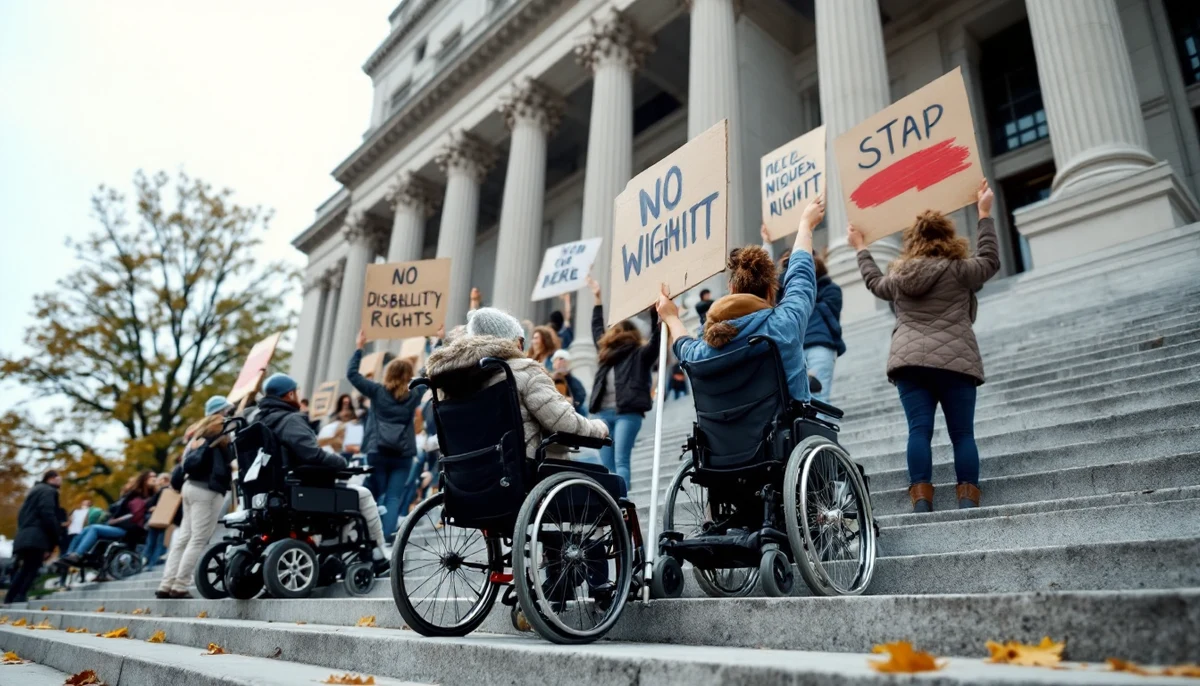
His appointment had particular significance for disabled people as it came with the inclusion of disability in New Zealand's Human Rights law after years of lobbying and advocacy.
'I was not appointed as a disability commissioner but I made it my role. It was known within the commission. I was the first commissioner who identified as having a disability coming from the sector with a passion for the job.'
Ross saw this identification as a disabled person as very important. 'My experience as a commissioner with a disability shows that the disability issues were highlighted, and seen as a priority, and that there is some trust and credibility within the sector to work with a commissioner with an innate feel for the issue.'
Importance of international conventions
'At the International level disability still doesn't rate as a priority in the work of human rights institutions. Economic social civil and political rights are more prominent.' He said
On the UN convention on the rights of disabled people he said 'There is nothing formal yet from the UN. The seed has been sown by the international disability community. Given the strength of the community it will probably take five or ten years to get it.'
'Those conventions are very important' He cited as an example the UN Convention on the Rights of the Child. In 1993 it resulted in the setting up of the office of the Commissioner for Children (in New Zealand.) 'Resources were given to researching and resolving children's issues. When conventions are signed and ratified they are committed to implementation, and special committees of the UN monitor them. New Zealand was criticized for our Crimes Act for the inclusion of 'reasonable force' provisions. Because of the convention the issue there is greater political will to change.'
Human rights issues in NZ and Australia
'Disabled people in New Zealand are protected by the Human Rights Act, but that is only anti-discrimination law - a convention binds the government to strategically promote the protection of human rights and issues that create barriers for that group.'
Ross describes NZ disability Human Rights as 'on a par with Australia, although they have an extra section in their act giving teeth - standards which gave legal requirement for their commission to be involved in developing standards for delivery in education, transport telecommunication and employment. In New Zealand the commission does not have such a clear mandate.'
One human rights issue that has been pursued for several years is a telecommunication relay system for Deaf people. 'Australia pushed ahead. We have not yet got a relay - the last discussion was a breakthrough in terms of service provider commitment we now have. We should look forward to a positive outcome for telecommunications services for the deaf community.' Ross said that research was necessary to convince Telecom of the need.
'The awareness of Human Rights (for disabled people) has markedly increased. This can be measured through enquiries and complaints. Disability is the largest group of complaints. Employment is the largest at 50%, then education, goods and services and accommodation.'
'We have achieved progress through training people with disabilities and inter agency connections. Alliances with the sector have been built, particularly at crisis times, when changes to the act were proposed, and over government compliance issues. At the end of 1998 the proposed permanent exemptions for government from the Human Rights Act was overturned. The disability community had a strong voice.'
Promoting attitude change
'Attitudes still have to be changed, but they are changing. The most proactive way to change them is for disabled people to participate in jobs and recreation, and decision making in everyday life - change through disabled people.'
Ross made the point that disabled people and their organisations should use the existing avenues for change. 'They can approach the commission and use the resources and powers, for example investigations. The commission has the power to work across agencies on issues in a proactive way, for example community housing. The commission was involved in changing district plans over housing. The commission can report to government on these issues and brief the Minister of Disability issues.
'Having a minister of the Crown responsible for disability issues is significant. No future government could not have one.
The recognition that disabled people are a significant part of NZ society - 20% - is now well understood. Statistics matter. They can trigger policy change. That breakthrough in 1996 came about because of the disability sector. Any future New Zealand census will include that measure.'
Ross believes that the proposed 'one stop shop human rights institution is a good idea as long as the major vulnerable groups are recognized within the commission structure. I believe that the restructuring of the commission should include a disability commissioner - 25% of complaints relate to disability so there is much work to do.'
Other international issues to address
There are still things to be done. For example, Ross believes ILO Convention 159 offers an opportunity to pursue vocational outcomes. 'The disability sector does not know about it or use it in terms of promotion of vocational rights. New Zealand has not ratified it yet. It should be one of the things to be done. Ratified conventions are measured and legislation follows ratification.'


International contacts are important 'Bringing to New Zealand international people like Patrisha Wright (DREDF) known for their international advocacy on civil and human rights issues means the disability sector can identify and promote issues through them.'
Ross also acknowledged the work of disabled people, whose advocacy during the 1980's contributed to achieving the inclusion of disability in the Human Rights Act.
Ross will continue to be involved in Human Rights and in the disability community in making a difference.
|