
The Treaty for a Genetic Commons
(This article is in four parts: a statement of support of the Treaty for a Genetic Commons and a response to the statement, followed by a draft of the Treaty and a letter seeking support for the Treaty.)
The Treaty for a Genetic Commons - Why the Disability Rights Movement Should Support It
Drafted by Deborah Kaplan and Anne Finger
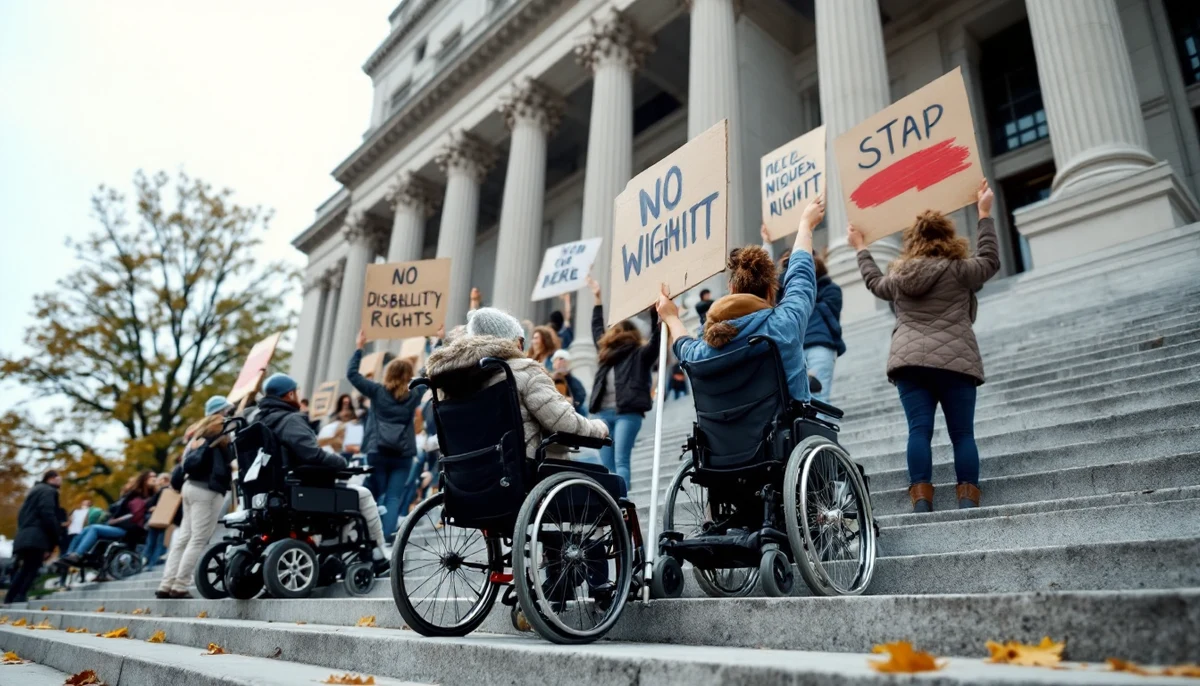
One of the primary principles of the disability rights movement is that having a disability must come to be regarded as a normal part of living. We reject the medicalized perspective of disability, through which we are regarded as flawed human beings who will never be completely socially or economically acceptable unless we are cured.
Therefore, we are suspicious of new medical technologies that are promoted with the promise to cure long-term disabilities, in part because such assurances have historically been used to generate public sympathies for questionable treatments and procedures. To be clear, we do support the availability of appropriate health care for all, especially for people with disabilities who are often unable to obtain health care coverage because of discrimination by the insurance industry or because of poverty.
We support the Treaty for a Genetic Commons because we are concerned about the social consequences of corporate zeal to maximize profits from genetically-based technologies.
Corporate marketing of such new medical technologies could further the economic disparities between rich and poor countries. One of the risks of commercial control of genomics is that we will become a world of genetic "haves" and "have-nots," with genetically-caused disabilities increasingly becoming concentrated in the Third World and among the poor. People with disabilities are already found in the greatest numbers in Third World countries, where there are the fewest resources for support.
Existing tests for genetic conditions are promoted by exploiting public fears of disability. The treaty will thwart the further marketing of medical products through the exploitation of stereotypes of "normalcy". Unless stopped, genetic tests and treatments will be marketed by corporations through strategies that devalue the lives of disabled people and create fear of disability as a motivation for people to use them.
In a world that is saturated with commercial marketing images of complete cures for disabilities and medical conditions (even though not supported by reality), problems which are social in nature could come to be regarded as medical and therefore preventable. For example, rather than spending scarce public resources to eliminate architectural barriers or to provide social services, policy makers will be pressured to promote genetically based "cures" so that disability-based problems can be eliminated.

Unless there is no profit motive for corporate research into genetic conditions, people with genetic disabilities may come to be seen as potential "sources" of genetic material. People with genetic disabilities might have little or no control over how material derived from their own bodies is used.
We believe that there are many reasons to support the Treaty for a Genetic Commons.
Response
By Stephanie Ortoleva
The writer states:
"In a world that is saturated with commercial marketing images of complete cures for disabilities and medical conditions (even though not supported by reality), problems which are social in nature could come to be regarded as medical and therefore preventable. For example, rather than spending scarce public resources to eliminate architectural barriers or to provide social services, policy makers will be pressured to promote genetically based "cures" so that disability-based problems can be eliminated."
Pardon????
I just don't get this. During the last several weeks and months I have been studying the science and bioethics of stem cell research. As a blind woman, I must say that I want as much research as the scientific community can actually do to be devoted to a so-called "cure" for my disability. Yes, I long for all the medical technology which will make the visual accessible to me: adaptive computer technology, a voice based palm pilot, a cell phone with speech input and output, a good public transportation system, a movie and tv system with a dvs descriptive video service, feminist books on tape and all that the world should provide.
Yet, as I sit here surrounded by the flowers which my sweetheart has brought in from my flower garden for my pleasure, and which he has brought into the sunlight of my parloI long for the day in which medical science could bring to me the images, visual images of my flowers which i could behold yet a few years ago. What kind of bull shit is this which says that we can put the social construct above medical results? What about pain, what about emotional stress, what about economic reality? We do not live in a world without pain and be dammed if I do not want to eliminate the pain of disability. This is not to say that i am a pathetic creature waiting for goodness to come my way. I just want to be able to utilize the science which is there for the taking.
To be unmistakenly clear, I vigorously support the concept of a "genetic commons." The recent Bush decision regarding irrational restrictions on stem cell research to those so called 60 or so stem cell "lines" clearly reflects a support for the comodification of our genetic pool. The corporations which now hold patents on these stem cell lines and the resultant medical innovations derived from research on these stem cell lines tells us of the dramatic influence of the biotech genetic industry on our lives and the corporate ownership of these developments. To be certain, the results of this tax paid research should be held in common, by society, not some private corporate patent holder.
Nonetheless, this does not mean to me that we should limit research on those scientific ideas which might result in the elimination of some of the disabilities with which many of us live. I, for one, would be pleased to give this up for 20/20 vision. Yet, I still demand an accessible society and equality for all. Why are these concepts incompatible?
Stephanie Ortoleva
-- DRAFT --
THE TREATY INITIATIVE TO SHARE THE GENETIC COMMONS
We proclaim these truths to be universal and indivisible;
That the intrinsic value of the Earth's gene pool, in all of its biological forms and manifestations, precedes its utility and commercial value, and therefore must be respected and safeguarded by all political, commercial and social institutions,
That the Earth's gene pool, in all of its biological forms and manifestations, exists in nature and, therefore, must not be claimed as intellectual property even if purified and synthesized in the laboratory,
That the global gene pool, in all of its biological forms and manifestations, is a shared legacy and, therefore, a collective responsibility,
And,
Whereas, our increasing knowledge of biology confers a special obligation to serve as a steward on behalf of the preservation and well being of our species as well as all of our other fellow creatures,
Therefore, the nations of the world declare the Earth's gene pool, in all of its biological forms and manifestations, to be a global commons, to be protected and nurtured by all peoples and further declare that genes and the products they code for, in their natural, purified or synthesized form as well as chromosomes, cells, tissue, organs and organisms, including cloned, transgenic and chimeric organisms, will not be allowed to be claimed as commercially negotiable genetic information or intellectual property by governments, commercial enterprises, other institutions or individuals.
The Parties to the treaty - to include signatory nation states and Indigenous Peoples - further agree to administer the gene pool as a trust. The signatories acknowledge the sovereign right and responsibility of every nation and homeland to oversee the biological resources within their borders and determine how they are managed and shared. However, because the gene pool, in all of its biological forms and manifestations, is a global commons, it cannot be sold by any institution or individual as genetic information. Nor can any institution or individual, in turn, lay claim to the genetic information as intellectual property.
Letter Seeking Support for the Treaty
Dear Colleague,
We are writing to you to ask your support in a civil society process that will lead to a Treaty to Share the Genetic Commons, which we propose to have adopted by governments and civil society at the Rio+10 Conference in South Africa next year. A copy of our draft treaty text is attached as a "work-in-progress".
CONTEXT STATEMENT
We, the undersigned, would like to enlist your active support in a new initiative to establish the Earth's gene pool, in all of its biological forms and manifestations, as a global commons to be jointly shared by all peoples.
Our aim is to prohibit all patents on plant, microorganism, animal, and human life including patents on genes and the products they code for, in their natural, purified or synthesized form, as well as chromosomes, cells, tissues, organs and organisms including cloned, transgenic and chimeric organisms.
We feel the time is right for a broad challenge on all patents on life and believe that this initiative can rally widespread public support across the entire political spectrum and among every major social constituency and interest group.
How does this initiative differ from current efforts underway - the Biological Diversity Convention, the International Undertaking on Plant Genetic Resources, TRIPS, etc. - to establish a global regime to govern and regulate the use of biological resources? Our initiative adopts some common themes but differs in one very fundamental respect. Unlike the other initiatives, we oppose the extension of intellectual property rights to any living thing as well as the components of all living things. We believe that our evolutionary heritage is not a negotiable commodity. While we hail the good intentions of both the Convention on Biological Diversity (CBD) and the International Undertaking on Plant Genetic Resources (IU), their goal of equitably sharing the earth's biological heritage can only be realized by prohibiting all commercial patents on life.
We agree with the position that the gene pool and its products are a global commons - a position often put forward by the life science companies and some governments, including the United States. Unfortunately, the life science companies have misinterpreted and misappropriated the term "global commons" to claim unlimited access to the world's genetic diversity for the purposes of converting it into private intellectual property. They have failed to understand that because the Earth's gene pool, in all of its biological forms and manifestations, is a global commons and, therefore, a product of nature, it cannot be claimed, in whole or in part, as intellectual property.
We agree with the position, often extolled by the group of 77 and China, that governments and Indigenous Peoples have the sovereign responsibility to oversee the biological resources within their borders and determine how they are managed and shared. However, because the gene pool is a global commons, it cannot be sold by any institution or individual as genetic information.
All of the current arrangements and consultative initiatives, to the extent that they are based on the principle of selling "prospecting rights" to genetic information and extending intellectual property protection to life, are unacceptable mechanisms for governing the gene pool in the Age of Biology.
The Treaty to Share the Genetic Commons is designed to make every government and Indigenous Peoples a "caretaker" of their geographic part of the global genetic commons and to establish the appropriate statutory mechanisms to ensure both national sovereignty and open access to the flow of genetic information, in the spirit of collective responsibility for our shared evolutionary legacy.
It is our intention to reach out to civil society organizations, political parties, and governments around the world to enlist broad popular support for this initiative. We are on the cusp of an historic transformation from the Age of Physics and Chemistry to the Age of Biology. It is critical, at the dawn of this new era, that we establish our collective responsibility for stewarding the earth's gene pool.
Those of us writing to you today wish to express our strong commitment to the core message and goals in the draft treaty. We also wish to assure you and our other colleagues in civil society that your advice and input are both needed and welcome and that we fully expect the language of the text to be altered with discussion. In sending you this draft at this time, we are seeking your ideas as well as asking for your support, in principle, for the values expressed in the treaty. Could you please sign and return the enclosed form, and contact us with your thoughts at:
treaty@foet.org?
We look forward to discussing this with you by e-mail and in person in the days ahead.
Yours sincerely,
Alejandro Argumendo, Director, Asociacion Quechua-Aymara ANDES / Indigenous Peoples' Biodiversity Network (IPBN)
Maude Barlow, National Chairperson, Council of Canadians
Bill Christison, President, National Family Farm Coalition (NFFC)
Neth Dano, Executive Director, South East Asian Regional Institute for Community Education (SEARICE)
Benedikt Haerlin, International Coordinator, Greenpeace Genetic Engineering Campaign
Jaydee Hanson, Assistant General Secretary, Public Witness and Advocacy, General Board of Church and Society, United Methodist Church
Debra Harry, Executive Director, Indigenous People's Council on Biocolonialism (IPCB)
Randy Hayes, President, Rainforest Action Network (RAN)
Deborah Kaplan, Executive Director, World Institute on Disability (WID)
Jerry Mander, President, International Forum on Globalization (IFG)
Camila Montecinos, Jefe Programa de Biodiversidad (Head of Biodiversity Program), Centro de Educacion y Tecnologia (CET)
Pat Roy Mooney, Executive Director, Rural Advancement Foundation International (RAFI)
Andrew T. Mushita, Director, Community Technology Development Trust (CTDT)
Fabrizia Pratesi, Architect Coordinator, Comitato Scientifico Antivivisezionista (CSA)
Jeremy Rifkin, President, Foundation on Economic Trends (FOET)
Mark Ritchie, President, Institute for Agriculture and Trade Policy (IATP)
Vandana Shiva, Director, Research Foundation for Science, Technology and Ecology
Martin Teitel, President, Council for Responsible Genetics (CRG)
Yes, add our organization as a signatory to the Treaty Initiative.
Signature: ____________________________________
Printed Name: ____________________________________
Title: ____________________________________
Name of Organization: ____________________________________
Address: ____________________________________
____________________________________
Telephone: ____________________________________
Fax: ____________________________________
E-mail: ____________________________________
Please return this form to
The Treaty Initiative to Share the Genetic Commons:
Email:
Treaty@foet.org
Fax: 202 429 9602
If you need additional information, contact us at:
1660 L Street NW, Suite 216
Washington, DC 20036
Tel (202) 466-2823
|