First Latin American Congress on Inclusive Education
8 - 13 December 2001
Hotel Tropical Tambau, João Pessoa, Paraíba, Brazil
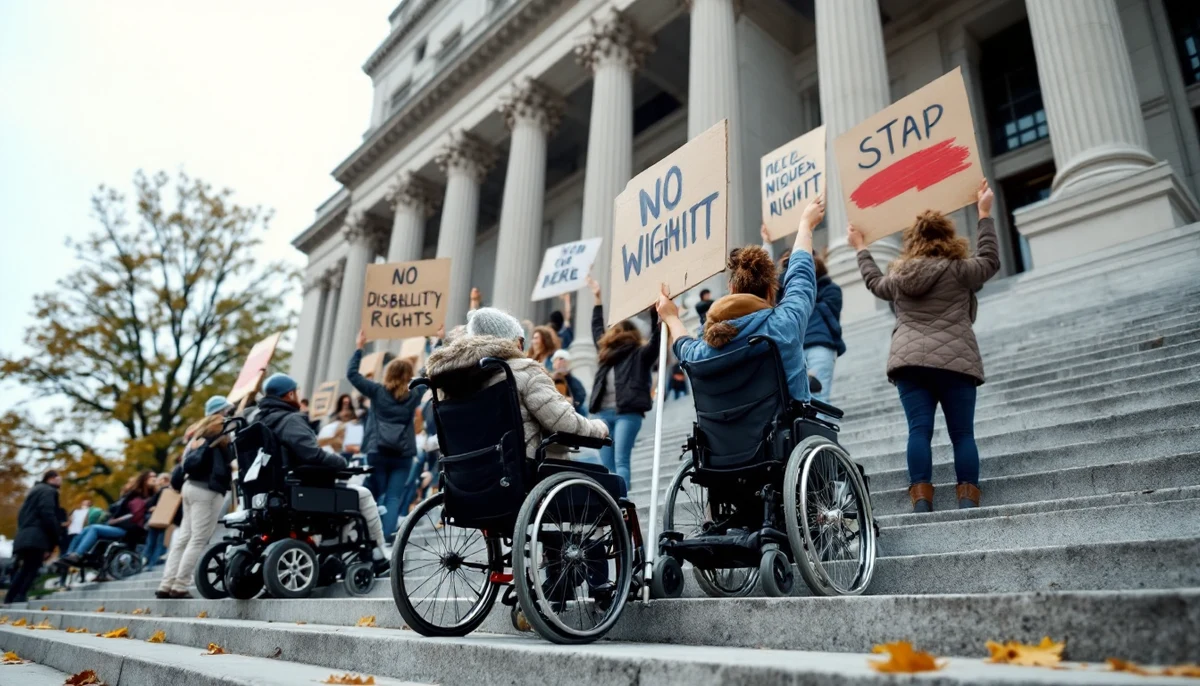
The decision to hold the First Latin Amercian Congress on Inclusive Education in Brazil emerged as a initial response to the need to move towards more inclusive and higher quality education systems for all children and young people, including those with disabilities, in this continent. The Latin American countries have had fewer opportunities either to access or to share knowledge and experiences of academic success among children from vulnerable social groups, including street children, children with disabilities, girls, working children and those from ethnic minorities. Beside this, Latin American countries often also lack opportunities to create international partnerships, and lack the institutional and financial support to implement projects that aim at developing education systems.
The First Latin Amercian Congress on Inclusive Education's mission is:
-
To become the first of a series of several forums to share experiences of success, to exchange up-to-date scientific knowledge in the field of inclusive education and to provide an opportunity for those committed to inclusion to reflect about alternative ways of overcoming barriers to participation and to fight exclusion;
-
To facilitate longlasting partnerships between people and institutions from the same or different countries, as well as for learning with each other about current ways of accessing national and international resources for projects that aim to guarantee the right of every person to a full life, to education, to social recognition and to professional opportunities;
-
To contribute towards making inclusive education better known and understood as a quality education for all children of social groups 'at risk', including among others those with disabilities, street children, females, children from African-Caribbean communties, children from ethnic groups, working children, abused children, children with HIV/AIDS, cancer or other terminal disease, and pupils with a history of academic failure or dropout.
Congress Chairwoman: Windyz Brazão Ferreira
Congress Programme
Opening Session
Exclusion and Inclusion in Education in Latin America: myths, reality and perspectives
Rosa Blanco, UNESCO - Chile
Keynote Sessions
These special sessions will provide an opportunity for participants to reflect upon current international and Latin American trends towards educational inclusion, in opposition to social and educational exclusion. It will be a time in which to acquire a critical, worldwide overview of the exclusion of vulnerable groups and to learn from experiences of equal participation.
-
Meeting the challenges of a quality and inclusive education for all
Alan Dyson, University of Newcastle, England
-
The rights of children in Latin America
Representative of the Defense for the Rights of the Children (to be confirmed)
-
Gender equity in the inclusive education movement
Sarah Whitelaw, University of Leeds, England
-
International Dialogue between international NGOs that support inclusive education and Latin American NGOs
Lena Saleh, Former Chief, Section for Special Needs Education UNESCO Paris
Round Tables
Four round tables will address issues related to inclusive education and equal opportunities, including:
-
Self-Advocacy and the voice of members of social groups 'at risk';
Brian O'Toole, School of the Nations, Guyana
Ana Paula C. de Resende, Association of the Physically Disabled of Uberlândia, Brazil
-
Legislation vs. inclusion: school development and teacher training programmes;
Maria Teresa Égler Mantoan, University of Campinas, Brasil
Sue Pearson, University of Leeds, England
Carlos Manhiça, University Eduardo Mondelane, Moçambique (to be confirmed)
Eugênia Fávero, Procuradora Geral da Republica, Brazil
-
Technology Information and media: supporting educational and social inclusion;
(To be confirmed)
-
Preventing educational exclusion: infance health and family breakdown
Craig Loftin, UNICEF, Brasil
Helia Molina, Regional Adviser on Child and Family Health and Population in Latin America (to be confirmed)
Forum
A series of forums will be held during each day of the congress with the objective of bringing together people committed to specific issues. These forums will provide a setting for reflecting current trends and methods of lobbying on behalf of and in partnership with members of vulnerable groups. The focus of these forums are:
-
Networking: Ed-Todos/The Enabling Education network partnership in Latin America
Susie Miles, The Enabling Education Network-EENET, England
Windyz B. Ferreira, Edtodos/EENET, Brasil
-
Rights of the disabled in Latin America
Elena Dalbo, Federación Argentina pro Atención a las Personas con Discapacidad Mentales-FENDIM, Argentina
-
Convention on the Rights of the Child: an instrument of defense
Anna-Karin Petré, SCF Sweden, Latin America Adviser on Disability Issues
Windyz Ferreira, Ed-Todos/ Universidade Federal da Paraíba, Brazil
-
Gender and social and educational inequality
Sara Whitelaw, University of Leeds, England,
-
Popular Education and inclusion in Latin America
Edna da Góes Brennand, Universidade Federal da Paraíba, Brazil
Jorge Jeria, Chile/USA
-
Inclusion of youth in the labour market
Emilia Prestes, Universidade Federal da Paraíba, Brazil
Paper Sessions
These sessions will be organised according to the papers submitted, based on the list of themes provided.
Poster Sessions
Posters may be put up during the mornings and the exhibition will take place from midday. The participants must ensure the availability of a summary for each poster that provides thorough information for further contact. Format: Poster: 1:00 x 1:20m.
Film Session
There will be video sessions about successful educational experiences.
The videos must be no longer than 20 minutes. The presenter must provide a self-explanatory leaflet giving the context in which the film has been produced, including, working group or research group, place (country, etc), aims, results, etc.
Board
President: Windyz B. Ferreira
President Deputy: Josiana F. da Silva
Treasurer: Augusto Antonio Pinheiro Neto
Secretary: Mado Socorro N. Rodrigues
Secretary Assistant: Benidita de M. Almeida
Internacional Adviser: Elizabeth Dore
Press Adviser: Núbia Ramos
Projects Co-ordinator: Edézia Gomes
Projects Coordinator: Vera B. de Brito
Themes of the Congress
-
Sharing experiences of educational success
In this theme we expect to share successful experiences led by
-
NGOs - motivation, action and results,
-
Teachers and/or school communities, teaching-learning experiences with pupils with disabilities in the mainstream system,
-
Formal and non-formal education of children and young people from disadvantaged social groups.
-
Teacher training and human diversity in the classroom
Innovative and inclusive teaching strategies in the classroom: successful experiences of providing equal opportunities for participation and gender equality.
-
Accessing the curriculum: effective learning process and information technology
Successful experiences of inclusion through information technologies.
-
Mothers, fathers and supporters in action
Fighting educational exclusion: successful experiences for the right to education in the mainstream system.
-
Successful partnership
Collaboration between families, schools, universities, government, institutions, NGOs and national/international agencies in seeking resources (material, human and financial) in order to implement and sustain inclusive social and educational projects.
-
Preventing social and educational exclusion from taking place
Experiences of projects that aim to prevent social and educational exclusion of children and young people from vulnerable groups, including preventative approaches to premature death, to HIV/AIDS infection, to child exploitation (labouring, sexual abuse, and prostitution), to social and cultural deprivation, etc.
-
Sharing experiences of successful action-research projects
Social and educational intervention projects that aim at overcoming barriers for participation, promoting sustainable development and supporting individual and community empowerment.
Information
http://www.edtodos.org.br
Email: edtodos@hotmail.com
|