
Disability World
A bimonthly web-zine of international disability news and views • Issue no. 10 September-October 2001


table of contents - home page - text-only home page

Raising the Bar to Achieve Empowerment
Remarks by Lex Frieden, RI President
Beirut, Lebanon, September 19, 2001


Honored Delegates, Guests, Friends, and Colleagues:

I regret that the tragic circumstances of recent days have prevented me from being there with you in person. My visit to Beirut was one which I have planned for several months and one of which I looked forward to with great anticipation. I want to thank all of you for your understanding and support during this time. My love and thanks go out to Khaled El-Mohtar and our colleagues in Beirut for the wonderful preparations which you have made for this meeting.


I am deeply saddened by the conflict and fear which we all must bear today. Of course, those of us in RI will continue to work as best we can to ensure opportunities for people with disabilities, to provide rehabilitation as necessary, and to prevent disability wherever possible. In doing so, may we work together in the spirit of love and peace, and may we be examples for others as we do so.

The remarks which follow were written by me prior to last week's events. They indicate the strength of purpose which I believe we in RI must have as we work together to achieve the objectives of our Charter for the Third Millennium.


I believe that there are three imperatives to which we must commit ourselves in order to ensure that people with disabilities are able to share in the future of human kind and even to obtain the basic amenities of life in the present time.

Partnerships bridging differences
First, we must work together in partnership. We must stop fighting, stop competing, stop working at cross purposes. Groups representing different disabilities must work together, disabled and non--disabled people must work together, professionals and consumers must work together, disability leaders in developed and less developed countries must work together.

As one means of achieving the goal of partnership among cross-disability groups, the leaders of six major international disability organizations have formed the International Disability Alliance (IDA) to advocate for equality and social justice for people with disabilities around the world. For its part, Rehabilitation International is working to bring together consumers, advocates, family members, rehabilitation professionals, and government leaders to work on policies and programs designed to empower people with disabilities. Even with these exemplary efforts, there is a need for more work to resolve the differences between the various interest groups in the disability movement and to break down the barriers which prevent their coordinated and mutually supportive achievements.

Empowerment & enforcement
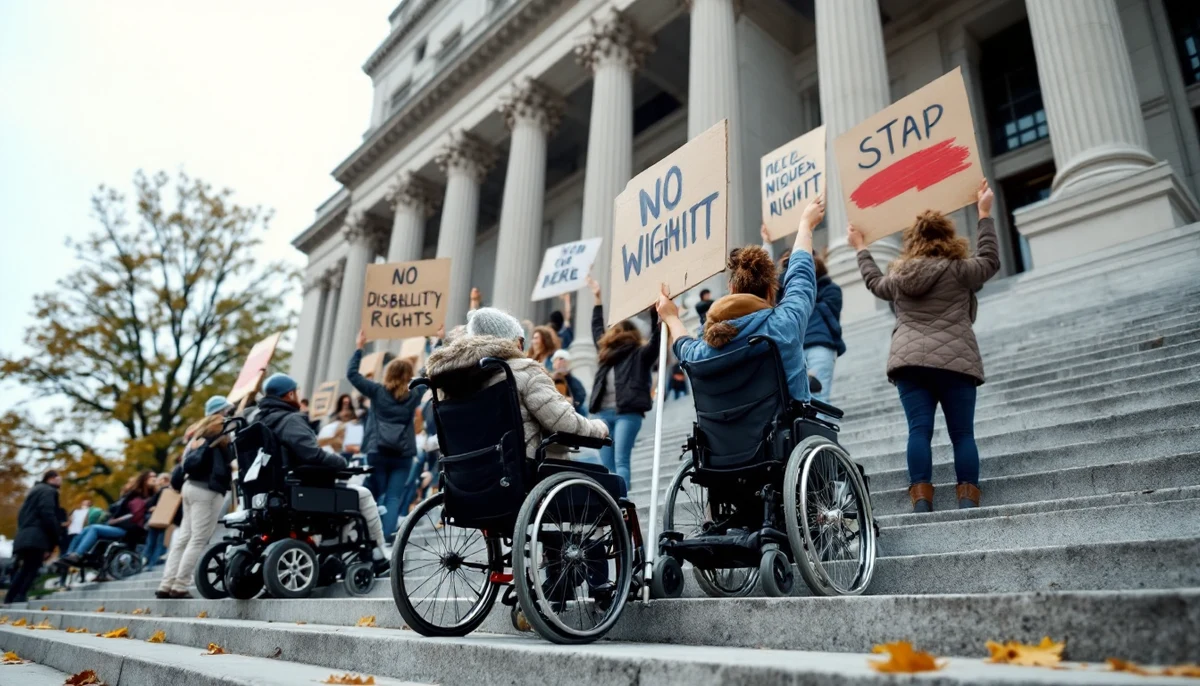
Second, we must empower people with disabilities. Our governments must institute and enforce policies and laws which protect the rights and promote opportunities for people with disabilities, and they must assure that public services are equally accessible for all people with disabilities. Our commercial enterprises, businesses, and industries must implement procedures which allow their services and products to be accessible to people with disabilities, and they must provide employment and job development opportunities to people with disabilities. Our schools must fully address the educational needs of people with disabilities, and they must ensure that no one is left behind due to physical or programmatic barriers. Our mosques, churches, and synagogues must assure full access so that people with disabilities can find spiritual support as they wish. Our professions must actively encourage and recruit people with disabilities. Our social service organizations must identify, prioritize, and address the support service needs of people with disabilities in the community to assure that people are not prevented from reaching goals due to lack of services or other infrastructure barriers, and they must strive to serve them in a manner which assures dignity and promotes independence.

People with disabilities should be empowered to make decisions which affect their lives. People with disabilities should be empowered to engage in independent living, as they may choose. People with disabilities must be empowered with rights to protect them from discrimination. In fact, people with disabilities must be empowered socially, culturally, politically, and economically.

UN Convention supplemented by national laws
Third, we must have a United Nations Convention on the Rights of People with Disabilities which is enforceable and which extends assurances of assistance to every disabled person in every country of the world. In U.N. parlance, the term "convention" means "treaty," as opposed to a convention or meeting in the usual sense. Such a treaty will need to be supplemented and implemented by national laws. It should be noted that there has been an encouraging trend in the recent past toward implementation of national disability laws and policies that commit governments to providing access to necessary services and promoting inclusion in society. In addition, there are disability--specific instruments of the U.N., such as the Declaration on the Rights of Disabled Persons and the Standard Rules on the Equalization of Opportunities for Persons with Disabilities. Of course, these instruments, while useful in providing guidelines, are not legally binding.

A convention at the United Nations on the Rights of People with Disabilities offers these advantages: it would be well known to all people in the world, it would serve to collate all of the provisions and rules that address treatment of people with disabilities by member nations, and it would provide clearly understood and organized methods for enforcement of its provisions on behalf of people with disabilities.

Time for high standards & shared commitment
I am convinced that now is the time for the global disability community to act in partnership to achieve full recognition of our rights and appropriate implementation of remedies to discrimination, including the provision of needed services and the opportunity to obtain economic as well as social justice. I am fearful that as the world becomes a smaller place to live in, and as we all properly begin to share in the rich benefits of our human intellect and our planet, that we will compromise certain expectations and standards to which those of us in richer, more developed countries have grown accustomed. Our shared commitment should be to set a high standard and to reach that standard so people with disabilities everywhere can enjoy their lives; so they can have the opportunity to improve their standard of living and that of their families; so they can be fully contributing members of their respective families, communities and societies; and so they can contribute to improving the quality of life and standard of living for all other people throughout the world.

Now is the time to act by implementing that which we know, by committing ourselves to standards like those of the U.N. Standard Rules, to enact new laws when necessary, and to ensure appropriate treatment of and protection for the rights of people with disabilities. We need to do this in our individual states and nations, we need to do it in regional bodies like the European Union and the North American Free Trade Alliance, and we need to do it globally, at the level of the United Nations.

Now is the time for the disability community, nationally and internationally, to act by securing and implementing a U.N. Convention which will ensure appropriate treatment of and protection for the rights of all people with disabilities. I believe that we must have this convention before the end of this first decade of the 21st century. In order to achieve this goal, all of us must recognize our closeness to one another in a world where we are growing more interdependent every day, and we must work together in partnership. Together, we can create a new future for people with disabilities around the world--and it will be a better one for us all.


table of contents - home page - text-only home page


Email this article to a friend!