
Disability in East Timor and Cambodia in 2001
By Kozue Kay Abe-Nagata, Social Affairs Officer, UN Economic & Social Council for Western Asia, Beirut
The author (social affairs officer of the United Nations Economic and Social Commission for Western Asia, Beirut Lebanon) was re-deployed for the United Nations Transitional Authority for East Timor (UNTAET) from January to July 2001. The author served as the head of unit of social services, under the Division of Labor and Social Services. This article is based on her own observation during the seven months and the views expressed here are those of the author and do not necessarily reflect the views of the United Nations. Through the author's short-term mission to Cambodia, the unique link between two countries was found, about services for disabled persons, delivered by the same international civil society actors.
Background
East Timor has emerged from a period of mass destruction of housings and infrastructure in addition to loss of human lives due to the violence after the referendum for its independence on 30 August 1999. Nearly 80% of people voted for independence, which resulted in massive scale of destruction carried out by the Indonesian army backed pro-integration militias. It is estimated that the militias destroyed about 70 % of the nation's infrastructure, and livestock. At the current moment, still 250,000 displaced East Timorese are sheltered inside Indonesian territory of West Timor.
Since then, there are commendable results from the humanitarian efforts with support of the United Nations System, NGOs and international donor community. As of today (Oct. 2001), UNTAET is the official transitional government and it works together with international and local civil society to keep the people alive with food, supply of shelter, rehabilitate and operate clinics, re-integrate returnees from Indonesian West Timor and assist in the process of democratic national building.
The country is very poor with GDP per capita of US$ 431 and the average life expectancy of less than 50, and about 80 % of people are farmers, living on subsistence economy. During the initial nation building process, unfortunately the focus is placed on those who are considered having very strong capacity to develop and those considered needing assistance for mere survival is neglected. The current situation of East Timor poses challenges and opportunities for the forthcoming fully independent government and people to create a truly democratic "society for all".
Disability incidence in East Timor
Disability statistics in East Timor are almost non-existent and not so accurate; therefore it is very difficult to estimate the number and incidence of disabled persons in this country. A well-known international NGO, the Cambodian Trust (UK based NGO) specialized in rehabilitation of disabled persons undertook a preliminary survey in East Timor in January 2000. According to their sample survey, disability incidence in East Timor was estimated to range from 1.5 % to 2.5 % (excluding sensory impaired individuals) --- some 10,000 to 17,000 of the total population of 750,000. Those requiring prosthetic, orthotic or medical rehabilitation are estimated to be around 1.0% of the total population, 7000-8000 individuals. However, for various reasons, these statistics could be significantly under-estimated and a more extensive survey should be conducted in the near future. In addition to physical disabilities, a significant number of people are still suffering from post-traumatic stress disorder.

The level of physical disability in East Timor looks like within the range of an ordinary low GDP country, and the East Timor situation is different from the examples of other landmine affected countries such as Cambodia, Mozambique and Angola. It is rather related to a standard package of disability causes in any resource poor country, including lack of balanced nutrition, insufficient preventive and early intervention measure, substandard medical care, poverty, etc., indirectly related to last 25 years of civil conflict.
Various actors providing service to disabled persons
-
Unit of Social Services, UNTAET
UNTAET is an interim UN Government of East Timor, until the country becomes fully independent in January 2002. The Government allocates high priority on education, health and employment issues for non-disabled persons. Most of school buildings and clinics were demolished during the violence immediately after the Referendum, and the major part of the social service funds was allocated to rebuilding schools (fixing roofs) and opening health clinics.
Under the current circumstances, social welfare and developmental projects for disadvantaged groups including disabled persons received the lowest or no priority in the UNTAET budget. Unfortunately there is no policy or guidelines for disability issues at the national level. Since the author was assigned to the unit of social services, however, issues concerning disabled persons, women, youth and children have been incorporated into the framework of the new government. Now, the unit of social services has one particular section focusing on the issue of disabled persons, and two national officers were recruited to handle social welfare and social integration programmes of disabled persons.
Outside this transitional UN government, at the moment, there is no UN specialized agency (such as UNICEF, ILO, UNESCO, etc.) particularly focusing on disability matters. The United Nations Economic and Social Commission for Asia and Pacific (ESCAP) together with DPI sent a fact-finding mission in August 2000, and promoted the importance of integrating disability concerns into the ongoing development efforts in East Timor.
-
Maryknoll Sisters and other Catholic orders in Aielu
East Timor being a resource poor country and without qualified personnel, it is imperative to formulate and strengthen Community Based Rehabilitation (CBR) programmes. There are already a few very good CBR programmes carried out by catholic churches in the country. CBR programme in Aielu (a mountainous village within 2-hour drive from the capital, Dili) run by Maryknoll mission since the mid 1990s has excellent referral services. This catholic order has identified a significant number of East Timorese disabled persons (over 700 cases). Some of these people could not be given medical care within the community. In the past, during Indonesian time, some professional medical care was provided through referral to Indonesian Prosthetic and orthotic practitioners in Flores and West Timor. The medical services provided in Indonesia may not have been up to the international standard, but acceptable, and now with East Timor's own choice for independence, such referrals are not possible politically and practically. Currently, sometimes, similar services are provided by visiting surgical teams from Australia and other developed countries. The role of existing CBR activities, carried out mainly by Catholic missions is of extremely importance and should be strengthened. This order, Maryknoll is active in social integration programme for disabled persons in Cambodia, too.
-
The Aishun Foundation in Dili
The Aishun Foundation, which was established by a Catholic priest in 2000, is the home for about 20 children and youths with various kinds of disability. The home is managed by 3 staff including Mr. Mario Cardoso, and located in Delta, a suburb community of Dili. The students were taught by teachers, on various skills such as art (painting, music, curving, etc.), daily living skills including proper hygiene and computers in order to encourage their self-reliance and productivity. It is hoped that the skills obtained will increase their self-esteem, gaining respect from the community. The manager of the foundation expressed the urgent need for financial support to cover the costs for food, transportation, accommodation and teacher's salary. The overall objective of this foundation is to create a comprehensive training center with dormitory in Dili.
-
Grass roots community group activity: Active Rehabilitation in Dili
With the large influx of expatriates (e.g. aid workers) working for developmental projects in East Timor, sometimes a visible positive contribution is found in community initiative for disabled persons. Mr. Nigel Gravey, who is a UNDP computer staff but with a decade long experiences working in the field of rehabilitation engineering, has started an innovative voluntary activity, called "Active Rehabilitation", involving the local community and expatriate community in Dili. His work is not a part of UNDP development effort, but totally voluntary.
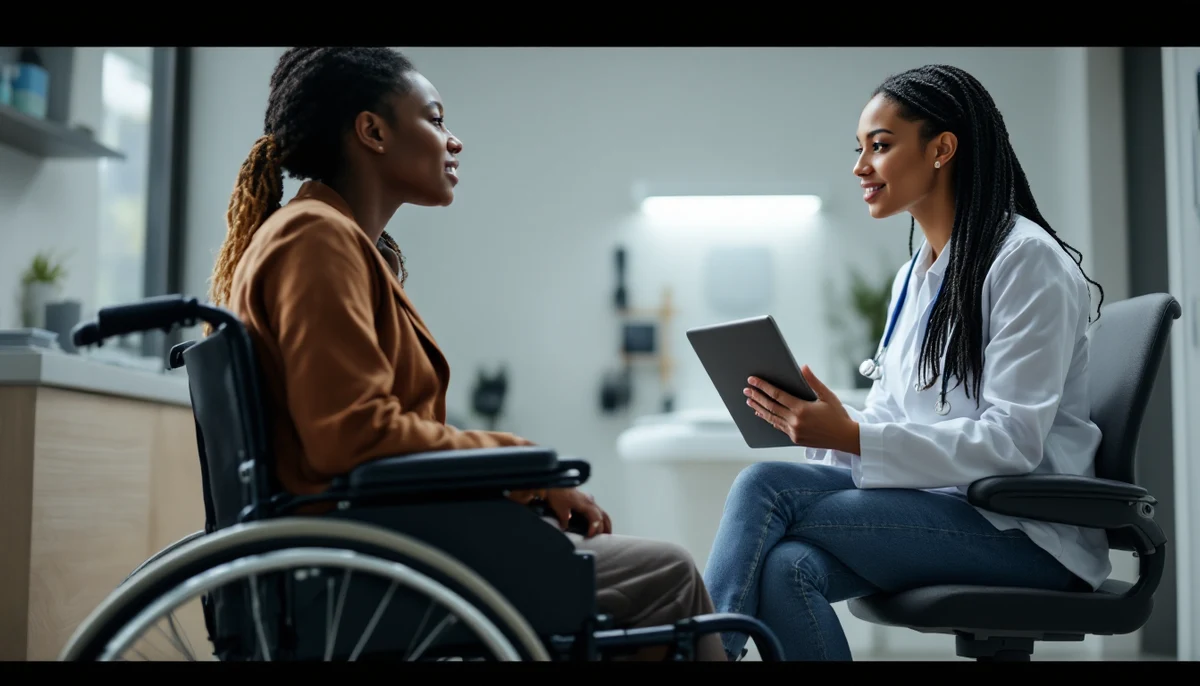
Active Rehab is a unique rehabilitation for wheelchairs uses, and the concept was promoted and spread from Sweden and is now becoming prevalent throughout Europe. It is different from more orthodox rehabilitation, and skills are generally taught in the community by wheelchair users rather than medical staff. The principle taught in Active Rehabilitation includes the basic necessities, such as balance, stability, negotiating ramps, techniques of transfer to and from a wheel chair as well as getting dressed by oneself, personal health care and hygiene. Wheelchair users can learn from the lessons that others had to learn in discussion groups and practices. In East Timor, since the group of disabled persons is still very small, non-disabled volunteers also learn wheelchair techniques so that they can transfer the knowledge to others, in the absence of experienced disabled participants. Again, this community activity is continuing without independent budget, premises, transportation, and other support, but it is gradually expanding and empowering a small group disabled persons in Dili.


-
Cambodia Trust project
An internationally recognized NGO, the Cambodia Trust is planning to fill the above-mentioned gap, to develop a 5-6 year project of establishing a prosthetics and orthotics production workshop together with physiotherapy and CBR in East Timor. The NGO established the Cambodian School of Prosthetics and Orthotics (CSPO), evolved from Cambodia Trust Limb Project Clinic for Land Mine Victims at Calmette Hospital in Phnom Penh. The CSPO is now recognized as a programme of excellence, and it is becoming a regional center, receiving students from the neighboring countries.
The purpose of this long-term project is:
-
To send a few East Timore students to the regional 3-year CSPO course in Phnom Penh for international level training;
-
To establish a small national clinic and P & O workshop in Tibar, the suburb of Dili through intensive training of locally available manpower (P & O local bench technicians and local physiotherapists) by expatriate highly qualified P & O experts and a physiotherapist;
-
To develop CBR and network with the existing community-oriented services in the country such as Mary knoll missionary in Aielu.
The project is designed to be implemented together with the Government and an Australian NGO, the Ryder Cheshire Foundation that is providing residential service at Tibar. The graduates of the regional 3-year CSPO are expected to be responsible for running the above-mentioned national P & O clinic/workshop, upon their return. The Cambodia Trust is currently negotiating about budget, land allocation, and other administrative matters with the Government.
East Timor and Cambodia
The author completed her 7-month mission re-deployment and returned to her position with UN ESCWA in Beirut, and on the way back she undertook a short-term fact-finding mission about the services for disabled persons in another war torn country, Cambodia.
There is a visible link between service providers in East Timor and Cambodia. As explained above, the Cambodia Trust is planning a new, and somehow linked project in East Timor. The Cambodia Trust was founded in 1989 as response to the humanitarian crisis in Cambodia after almost 2 decades of civil war, foreign occupation and genocide. At the beginning, the Trust concentrated on the supply of appropriate prosthetic and orthotic care for the country's over 35,000 landmine victims. Since it opened the first prosthetic and orthotic clinic in Phnom Penh in 1992, it has provided rehabilitation to around 10,000 people. Currently it runs 3 such clinics, the Cambodian School of Prosthetics and Orthotics (CSOP) -- a regional school --- and CBR outreach programmes to meet the needs of Cambodia's high number of disabled persons. Now they cover different kinds of physically disabled persons, and with regained peace of the country, now the number of traffic accident victims exceeded landmine patients. The CSOP started to admit regional students from the neighboring Asian countries such as Laos, Sri Lanka, etc. and the planned project in East Timor is their new endeavor. The rehabilitation team provides prosthetics, orthotics, physiotherapy, follow-up services in the community and community work with disabled persons. It is a good project.
Employment-focused skills
The above-mentioned Maryknoll mission provides Cambodians disabled by landmines or polio with skills for employment so that they can live with dignity and participate in the development process. The programme is named "Maryknoll Wat Than Skill Training Programme for Landmine and Polio Disabled. The Ministry of Social Action, Labor and Veterans Affairs, together with Maryknoll have been assisting disabled Cambodians to reintegrate into their society since 1991. The programme offers, at the premises of Buddhist temple, skills training, small business know how, self-esteem and advocacy/awareness with the principle that "disability" is indeed "ability". Students from many provinces can choose to study tailoring, weaving, or more modern skills such as computer/English. They also learn job-seeking skills, basic business know how and given health education. Graduates can continue learning skills in their in-house production workshops of tailoring and weaving (traditional and elegant Cambodian Takeo weaving). The center has a small showroom and retail shop for fund-raising purpose. Tours of the Maryknoll Wat Than Center are available, so if you visit Cambodia for tourism, it is highly recommended to visit this Center and the Cambodian Trust. They will be most grateful to receive financial support for running their programme.
Final remarks
There is an urgent need for good projects in East Timor to meet the needs of disabled persons. The Cambodian model may not fit exactly, but with some adaptations, the experiences gained in Cambodia will work out. A key success will be the active role of those NGOs of excellence such as the Cambodian Trust or Mary knoll mission, who have been working in a war torn Asian country for long time, and the new fully independent Government's support for their roles. Such support includes co-financing, disability policy formulation, logistic support, etc. Another key to success will be the capacity of newly trained local staff, their determination for development, and quick action for integrating these planned projects into the comprehensive disability policy of the country.
Parallel to the practical development work, the other most important element will be the capacity of developing social capital -- a liaison group working on behalf of disabled persons in all sectors as well as the developing of self-help and self-advocacy groups of disabled persons themselves in East Timor.
Expatriate support including bilateral donor support, technical support and individual financial support from wealthy countries will be of a great asset to achieve the common goal.
List of sources
Cambodian Trust
"The Rehabilitation of People with Disability: To Develop and Establish a Physical Rehabilitation Center for People with Disability at Tibar Center, Dili East Timor", October 2000.
Cambodian Trust
"Assessing the Needs of People with Disability", February 2000.
Disabled People's International and ESCAP
"Report on Fact-Finding Mission on Disability-Related Situations in East Timor", August 2000.
Mary knoll Wat Than Cambodia Project
"Mary knoll Wat Than Skill Training Program for Landmine and Polio Disabled", information leaflet.
Nigel Garvey
"A proposal for an Active Rehabilitation Camp in Malaysia", unpublished paper
United Nations Transitional Administration in East Timor
"The East Timor Combined Sources Budget 2000-01", Dili, East Timor, 2001.
|