
Bionic in our future? Mainstreaming our bodies? Is this what we are looking for?
By Andrew Freeway (Andrew_Freeway@yahoo.com)
There is a very thin line between developing new technical aids and developing new techniques. Implanting electronic devices is somewhere in between and calls for mixed emotions. The implant itself is of course a technical aid but it only functions if it is made part of the functions of our body. A pace maker and a cochlear implant are examples of these hybrid developments. The smarter we get the more often we have to ask our self questions like: do we want to be engineered on? Being bionic could be the solution to many physical disabling problems. But are we still intact if we become bionic? And does it really matter if we are still intact as a human being with a little bionic 'improvement'?
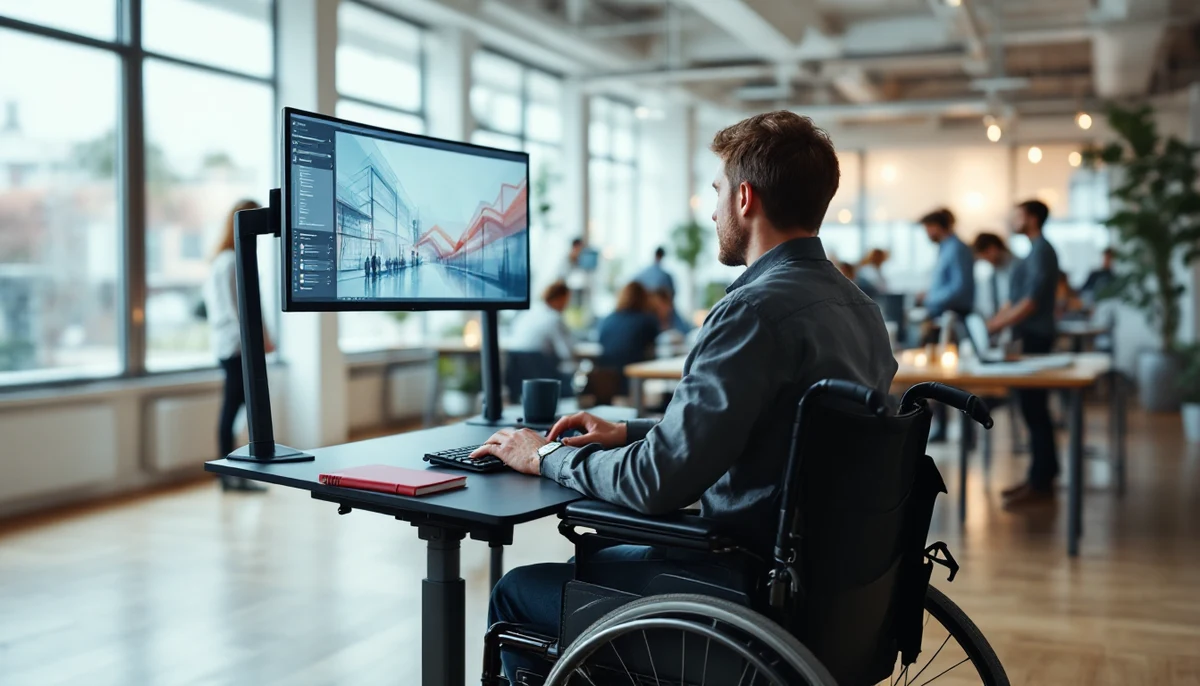
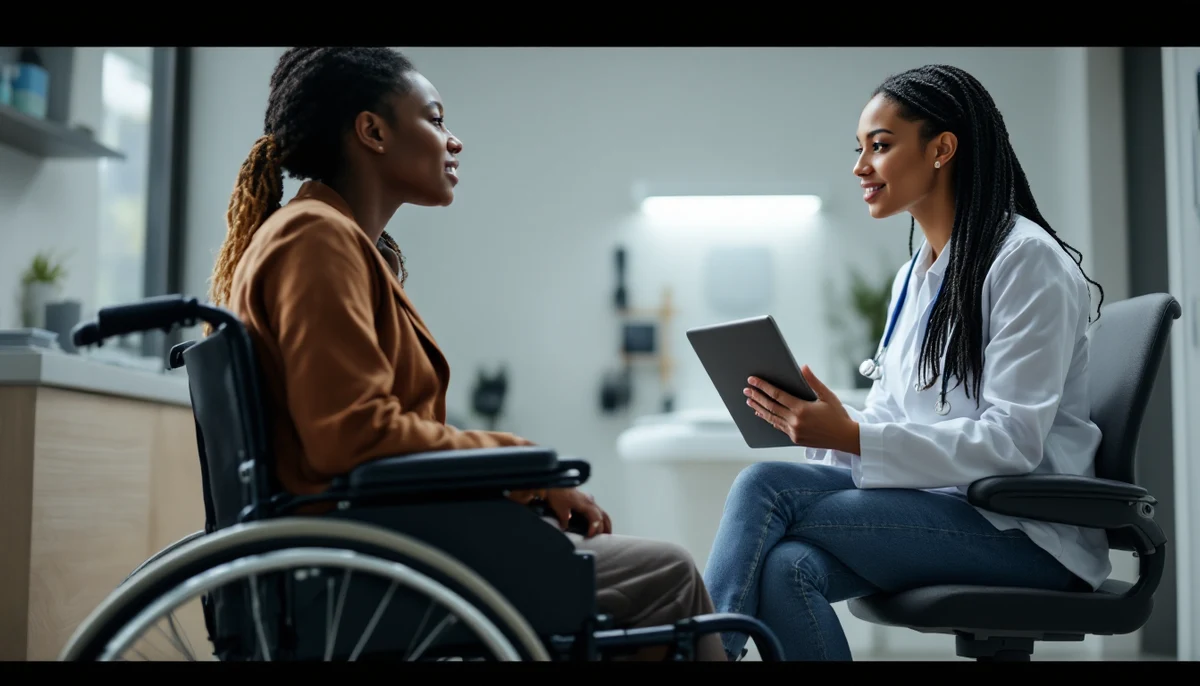
Of course, it is especially our society which makes me, Andrew Freeway, a disabled man. But what if.... Whatever happens, the next couple of years people without a disability will always look upon me as someone in a wheelchair. And using that technical aid means that a big part of my surroundings is hard to reach. So what if? Not because not being able to walk but not being able to participate is hindering me the most. Or always having to make alternative plans in case of problems with the first one. Or bumping your nose against the fact that life is not that obvious any longer. So what if I started to look for some new techniques to get me on my feet and walking in stead of looking for a new state of the art wheelchair and changing society while looking?


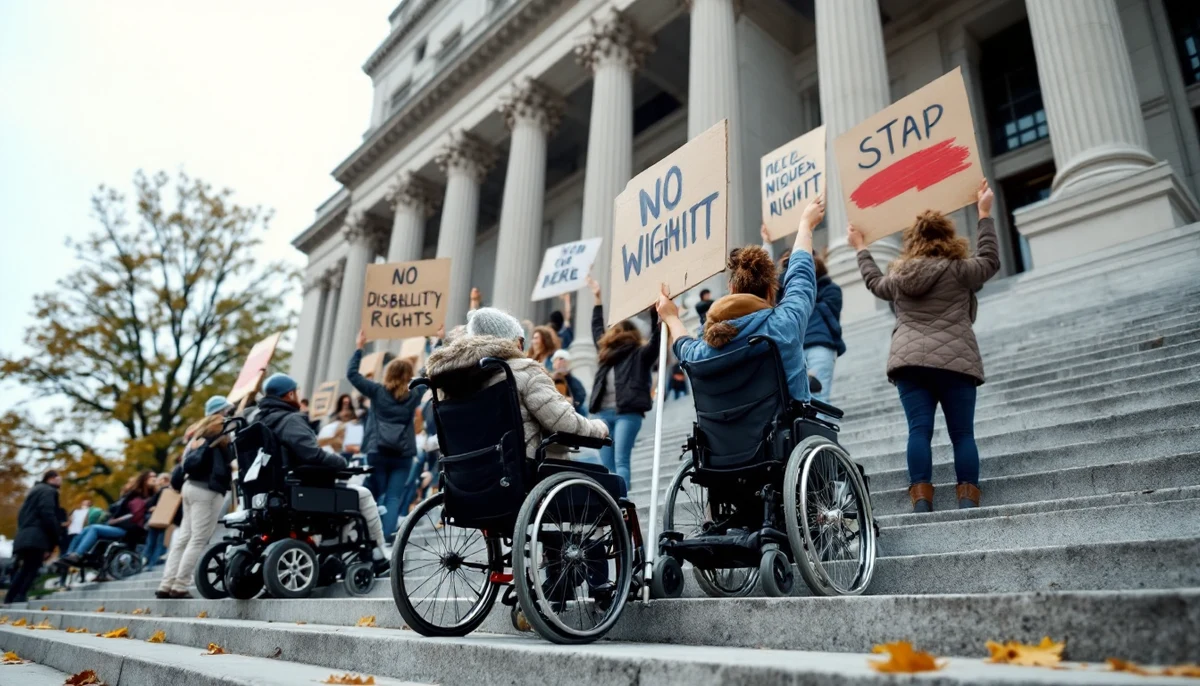
For a long time there were no choices. Breaking your spine equals paraplegia. Born deaf equals never able to hear. Losing a limb equals using a prosthesis. But the last couple of years the possibilities of adjusting your body have been growing. Not only are new functional possibilities of your body knocking on your door, but some new opinions on your current one are being expressed. Why just adjust if you think the current one is not good enough? Why are we putting so much effort in fighting the anti discrimination battle if mainstreaming your body gives you the chance to opt out?
Anyway, this article is again helping me wonder about the fragility of the existence of proud and powerful people with a disability. There is always something or someone luring you into the possibilities of bionic repairs. And, oh boy, how tempting this is!
Recent research
Two men paralyzed on one side of their body can walk again, thanks to an ingenious implant that uses signals from a healthy leg to control a paralyzed one. The new implant could help some stroke patients to walk again.
Both men, aged 47 and 64, had been paralyzed by strokes. Previously neither could walk unaided. But after sensors were placed over certain muscle groups on the healthy leg and stimulators implanted in the paralyzed leg, they can now walk, stand and sit. The unique therapy allows a patient to move their paralyzed leg in a natural way without being aware that they are doing it, says Wenwei Yu, who developed the technique at Hokkaido University in Sapporo, Japan. But it could be another five years or more before the technology becomes available, he says.
In Yu's system, muscle sensors monitor signals from the patient's able leg. These are used to trigger pre-programmed electrical impulses in 11 electrodes implanted near nerves in the paralyzed leg. This lets the paralyzed leg do what the patient wants it to do - by taking its cue from the good leg.
Abnormal behavior
Producing movement in limbs by electrically stimulating muscles or nerves is known as functional electrical stimulation. One of the difficulties of using conventional FES, says Paul Taylor, a clinical engineer at Salisbury District Hospital in Wiltshire, is overcoming "spasticity" - involuntary muscular spasms normally suppressed by the brain. "So even if you had appropriate signals in the appropriate muscles it may not behave normally," he says. "There will also be stiffness, the muscles will be weak and activity from other muscles might be working against what you're trying to do," says Taylor.
Another problem with conventional FES, says Yu, is that patients have to activate the electrodes using their upper body, either through hand-held switches or sensors in their arms. A certain wrist action, for example, could make a leg move. But this is far from practical, as they may want to make that same arm movement for other reasons. And while researchers have been trying out FES for many decades, much of the work on legs has focused on paraplegia, where both legs are paralyzed. But hemiplegia, where only one leg is paralyzed, is far more prevalent.
Falling danger
By taking advantage of the working leg to control the paralyzed one, Yu avoids the problem of using the upper body to activate the electrodes. And he avoids any spasticity by tuning the electrical stimulations and their timing so that the muscles work in concert with each other to produce smooth coordinated movements. Not only that, but the electrical stimulation itself has a therapeutic effect, preventing the leg muscles from getting stiff.
Gerald Loeb, an expert in FES at the University of Southern California in Los Angeles, says Yu and his team will have to ensure their technique is safe because many hemiplegic people are elderly. One fall and they could break a hip. Yu acknowledges these dangers but says his system uses a learning program that tailors itself to the individual patient's muscle contractions. This means it can get almost perfect recognition of the patient's intentions, which should reduce the risk of falling.
(source www.newscientist.com)
|