
Disappointing Progress of Disability Rights in Madagascar
By
Fela Razafinjato (fela.csm@netclub.mg)
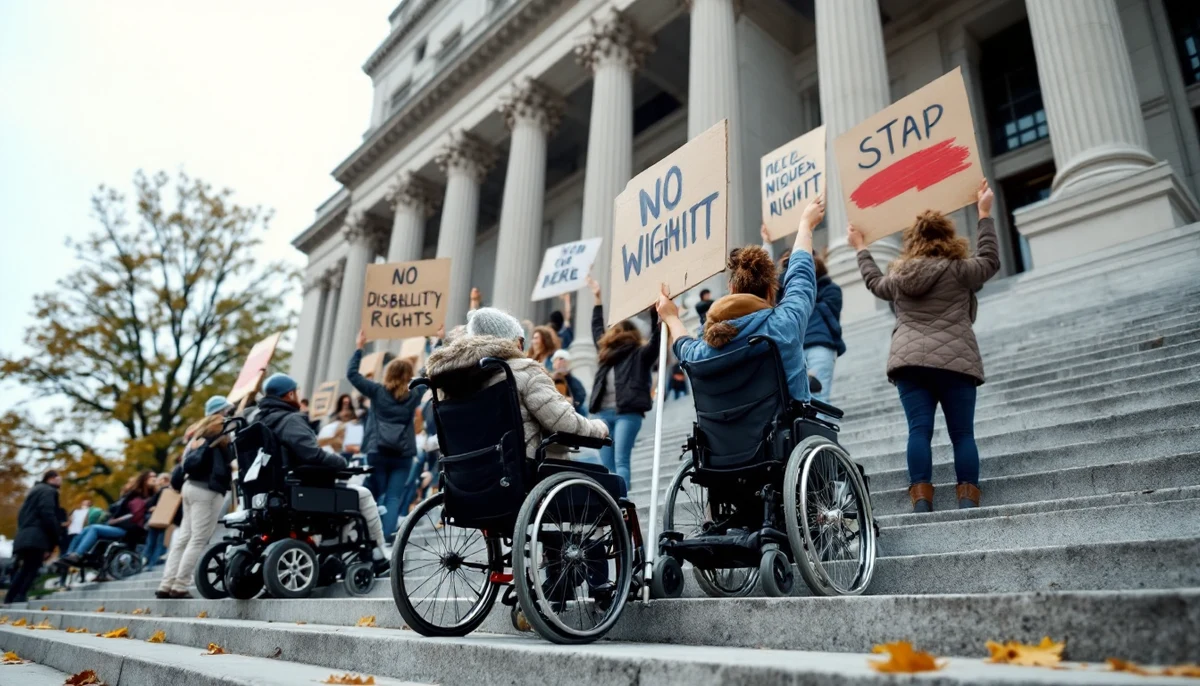
Since March 2000, an umbrella organization called the Collective of Organizations acting for Disabled Rights (COPH) has become a beacon of hope for disabled people, the mouthpiece for all public and private entities acting on behalf of people with disabilities.
This year, the COPH has hired a legal consultant to conduct a study on the evolution of the rights of people with disabilities. Let us recall that there are two bills of law governing the world of the disabled in this country: Bill no. 97-044, which passed on February 2, 1998 followed by Order no. 2001-163, passed on February 20, 2001.
Unfortunately, the results of the study have shown us that these two bills have yet to translate into any concrete action, whether by the ministry of Population or any other ministry. To this day, they remain at the level of broad declarations of principle, regardless of the proclamation of the national disabled people's decade.

Press conference called
Faced with this situation, last May 28 the COPH organized a press conference during which the government's empty promises were laid out one by one, including the passing of six ministerial orders, the development of a national program for disabled people, etc.

The news didn't stop there, and there were more scandalous stories (to use the press term) reported by the panelists. Recent stories, no less!
Four young disabled people were kept from competing in the recruitment examinations of the teachers' training colleges in Tuléar (01) and Mahajanga (03), based on a supposed ministerial order forbidding physically disabled people from practicing teaching. Does this order really exist? Apparently not, if one refers to the various bills compiled during the COPH study.
The local officials flatly refused to consider the young disabled people for the student-teacher recruitment examination. They had no choice but to bitterly give up on their rights.
Disagreements about accommodations for exams
In Tananarivo, three young deaf people were almost forced to renounce the official high school diploma exams. Indeed, the junior administrators in charge made it known that they would not allow the interpreters in the exam rooms, arguing that they could give the students "tips" using sign language. According to the deaf students' teachers, they only require help at the very beginning of the exams, meaning on the first hour of the first day, during which the administrators explain the rules (arriving on time, exiting only one hour after the start of the exams, etc.).
It took petitions to high officials in order for the Director of Secondary Education to finally authorize the presence of the teacher-interpreters, who of course left the exam room after delivering the necessary explanations.
For us, this petition should never have been made, given that this provision is already specified in the bill n? 97-044 and in the order n? 2001-163. It is sad to see that the ministry officials in charge are unaware of the very existence of the bills regulating the rights of the disabled.
COPH calls for an end to indifference
The COPH, through the voice of its executive director, calls on all those in charge, all the decision-makers of the nation to put an end to indifference. It also demands a favorable environment for people with disabilities to participate in the development of the country.
How can we justify the government's attitude of indifference in front of the problems facing disabled Malagasy citizens? Is poverty so prevalent in Madagascar that it eclipses the minority groups?
In any case, advocating for our rights is a long-term endeavor, and those who engage in it must always have perseverance and charisma.
printer-friendly format |