
People with Disabilities and Employment in Mozambique
By Francisco Manuel Tembe (famod@kepa.co.mz)
What is the situation?
People in Mozambique with disabilities, estimated at 10% of the total population within a country according to WHO, continue to face difficult lives without access to any basic services.
The Education, Transport, Health and Employment services do not exist or are very scarce and do not satisfy the needs of this social group. The mass media do not give attention to the specific needs of people with disability.
Buildings are not adapted to the needs of these people, the environmental barriers and scarcity of appliances are just some of the problems that still deny the full participation of people with disability within Mozambican society
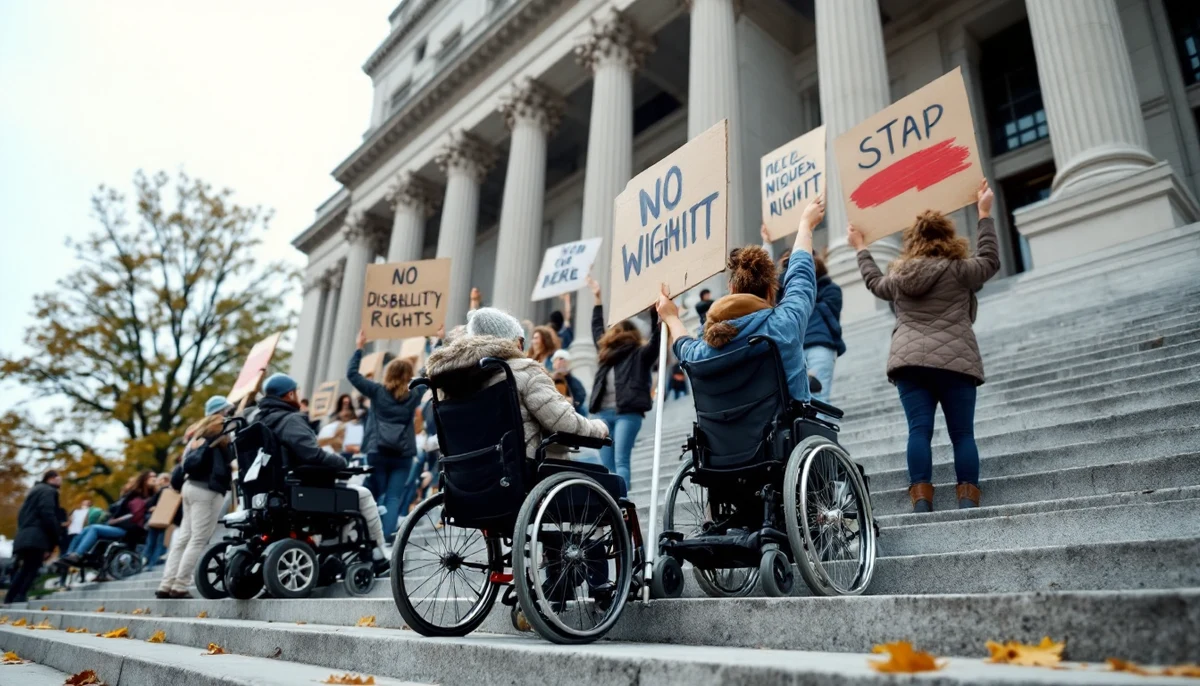
Mozambican society in general, continues to look at people with disability as useless and incapable; subjects them to constant marginalisation and discrimination; and gives them no space to participate in the massive effort of recovery and development of the country
On the scope of employment, people with disability face enormous barriers, due to, on the one hand, their low level of education, lack of vocational and or professional training, and on the other hand, the negative attitudes of employers who continue to discriminate against this social group.
Historic influences
This situation can be explained partly by looking at past Portuguese colonial time when Mozambique was colonised and by looking at the socialist regime adopted when the country become independent. Although there are some differences between these systems, there was also a similarity in that neither system was active in promoting the development of people with disability, nor offering them education, vocational and/or professional training in order to prepare them for independent lives. For example:
-
During the colonial era, it seems that problems arising related to people with disability were only those concerning welfare issues that in Mozambique was characterized by providing simple services. However, this system did not work to develop people with disability, but instead encouraged these people to look at themselves as definitely incapable and as simple beneficiaries of services;
-
During the socialist regime, the State took all the responsibility to itself but the situation of people with disability did not change so much. Therefore this social group continued its existence outside of normal life within the society;
Structural adjustment and free market
On the scope of structural adjustment, launched in 1987, the economical and social change took place. The country left behind a centralised economic policy and established the free market, with all related consequences where, really, it appears that disabled people have not been equipped for this competition for life.


In the countries, with free markets like Mozambique, people without or with low levels of education and professional training, face many difficulties to compete in the labour market. At the same time those people who cannot compete, live in extreme poverty and seem to be more vulnerable to any natural disasters and epidemic diseases.
New disability and employment policy
However, in 1999 the Council of Ministries approved a new policy for people with disability, which says that the employment system in Mozambique must assure the following:
-
o promote and develop specific professional training for people with disability, in appropriate technical, human and pedagogical conditions;
-
To create conditions which allow the professional maintenance, integration or insertion of people with disability in labour market, through the measures of professional rehabilitation;
-
The need to create progressively, through percentage mechanisms and targets, the guarantee of access by people with disability in public and private sectors; and
-
The need to create alternative ways of employment for the people with disability and to ensure the implementation of the adopted measures.
The reality gap
Although the approved policy by Council Ministries, in June 1999, intends to promote professional training and to create all conditions leading to integration of people with disability in labour market, through the measures of rehabilitation in all senses, there is a huge gap between what is foreseen in this policy and what happens day to day, because there is not any training professional centre or school which takes into account the people with disability.
According to Mozambican law, the Ministry of Labour is responsible to promote the development of specific professional training for people with disability in appropriate conditions.
Therefore, the Ministry of Labour should work to assure the professional training of all people with disability as soon they finish medical treatment, action which must be coordinated with the Ministry of Education.
This is the drama, on the scope of employment for people with disability which leads them to lack of dignity, self-esteem and ultimately to become beggars.
Mozambican associations of disabled people
Aware of the fundamentally difficult situation in which people with disabilities live, especially the lack of employment, The Mozambican Forum of Associations of Disabled People (FAMOD)has been established, composed of ten Associations of and for various groups. Its main role is to be a major voice of this social group through addressing issues to government and public sectors, and to promote and defend the rights of disabled people.
The Forum has been developing a lot of activities such as:
-
Realisation of two national seminars, with participation from SAFOD- Southern Africa Federation of Disabled , Finland and Zambia. The program concentrated on the area of lobbying and advocacy, and developing the best strategy and mechanisms to solve the major problems, such as access to labour market;
-
Realisation of three research projects, two on the area of violation of human rights for people with disability, and one on the matters of micro-projects, aimed to understand better and in a more profound way, the manner and dimension of how disabled people's human rights are being violated;
-
Training seminars in six provinces, on the topics of how the Association works, lobbying and advocacy related to disability issues, fund raising activities, and how to draw up plans and elaborate proposals. The policy for people with disability, in order that members Associations of FAMOD can be strong and to do more actions in terms of acquiring human rights for people with disability;
-
Raising awareness in urban and rural areas through presentation of community theatre, in order to promote the positive attitude change towards people with disability, which means that these people should be accepted by society by giving them space for inclusion, support for independent living and full participation in all social sectors.
Through these activities, FAMOD tries to strengthen itself and also the Association's members in order to do in a coherent way and with impact, the advocacy and lobbying necessary to create a positive attitude and friendship in decision makers, and the public in general so that people with disabilities can participate in politics, social and economic lives like other citizens.
|