
Costa Rica: Efforts of Disabled Citizens Yield Results
By Luis Fernando Astorga Gatjens (lferag@racsa.co.cr)
A new agreement to improve the conditions of access to education, work, public transportation, and housing for people with disabilities has been reached by representatives of the organizations of persons with disabilities and the Council of Social Affairs of the Government of Costa Rica.
Lawyer Lineth Saborío, Vice President and the Coordinator of the Council of Social Affairs, explained that this agreement is the result of a comprehensive negotiation by the representatives of the organizations of persons with disabilities and social sector institutions.
Petition and the process
In March 2003, the assembly of organizations of persons with disabilities, the Costa Rican Forum on Human Rights of Persons with Disabilities, presented a 10 Point Petition regarding the difficult situation of the disability community in our country. This Petition was approved for delivery to the Executive Government. It includes demands on education, employment, vocational and job-training, access to public transportation, poverty related issues and the strengthening of the Costa Rican National Rehabilitation Council, as the government agency responsible for disability issues. This was the beginning of a process that culminated at the end of October 2003
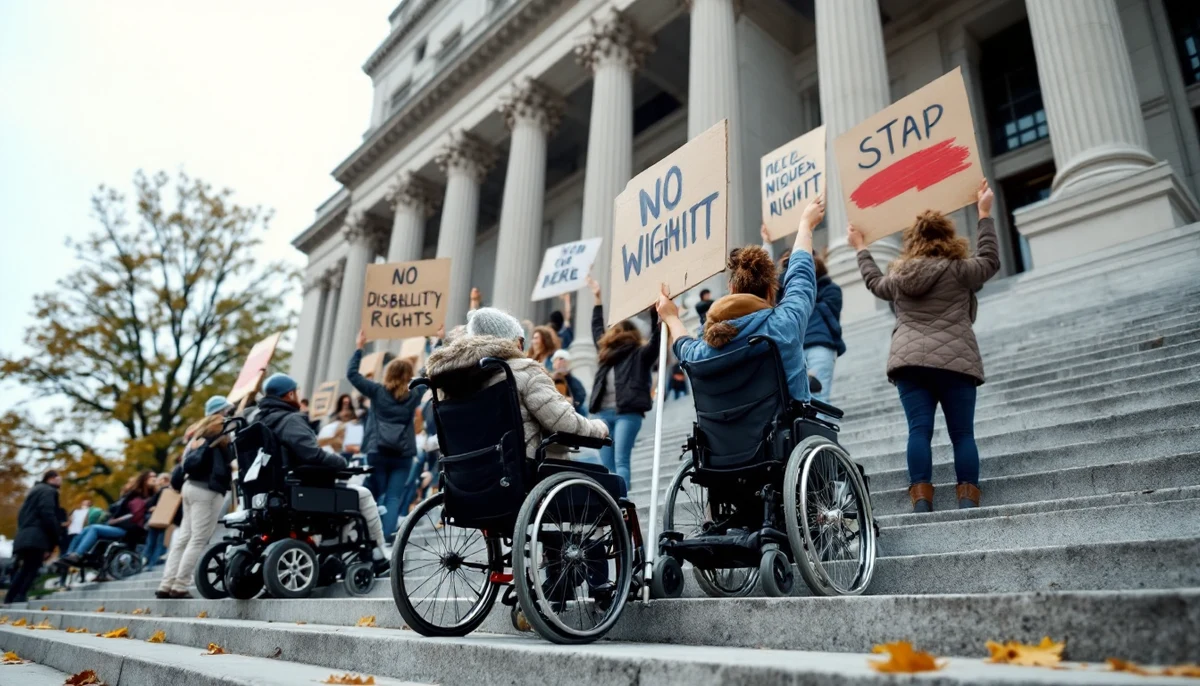
The document was delivered to the governmental authorities and no response was received. On May 29, the seventh anniversary of the Law 7600 on Equal Opportunities for Persons with Disabilities, almost 1000 persons, gathered at the Presidential House demanding that the government respond to the 10 Point Petition.
The result of this march was the beginning of negotiations that same day, between Lineth Saborío, Vicepresident and a delegation of the organizations of persons with disabilities: Catalina Devandas, Francisco Villalta, Jesús Hernández and Luis Fernando Astorga.
The team worked very hard over the next five months: They met three times with the Vice President, on several occasions with several ministers and vice-ministers and executives of the Ministry of Education, Ministry of Work and Social Security, Ministry of Public Works and Transportation, the National Institute of Learning, and the Combined Institute of Social Assistance.
The negotiations ended on October 26, at a meeting in the Presidential House with the participation of the negotiation team, Vicepresident Saborío, and the authorities mentioned above. The document was analyzed and approved.

Social Council Commitments
During the session of the Social Council on May 29, approval was given to: Education, technical training, protected employment, small business, open employment opportunities, accessible public transportation, housing, reduction of poverty and discrimination, and strengthening of the Costa Rican National Rehabilitation and Special Education Council (Consejo Nacional de Rehabilitación y Educación Especial (CNREE).
Luis Fernando Astorga, President of el FORO, underlined the importance of this participatory process and recognized the internet sponsored interest. He also noted the Vice President and her contribution to opening this important discussion space. He summarized: "Though we have the Law 7600 on Equal Opportunities, efforts have been insufficient, we are still excluded, so we need to make progress in the human rights of persons with disabilities."
Stated goals
The Ministry of Education will strengthen the training of its teacher on the human rights of persons with disabilities, so that this information and values will reach students.
The Ministry of Education will organize a National Congress on Education for People with Disabilities. It will also enforce accessibility and educational inclusion, including regular assessment of the accessible infrastructure, and discussion of the topic, "How are Women Doing?"
The Costa Rican Institute of Learning will make its admission requirements more flexible to increase the number of students with disabilities in technical courses. This institution will also provide individual counseling and job placement support in response to requests from students with disabilities. This study and job placement opportunities will includes on-the-job training and professional follow-up services.
Employment, housing, and accessible transportation
The government will support legislation to regulate, promote, and provide for protected employment. The government will request an expert in protected workshops from the International Labor Organization.
The Ministry of Labor will effectively promote employment opportunities for persons with disabilities and the Combined Institute of Social Assistance will allocate financial resources for the associations promoting protected employment.
The government will offer a "One and a Half Bonus" to purchase a house for the families having a member with disabilities. This money will be used either to build or modify the living conditions considering the accessibility needs of persons with disabilities.
The Ministry of Transportation and Public Works will launch an awareness campaign about the importance of accessible public transportation for all (Launch period: from January to March, 2004). The transportation companies committed to make 8% of the buses completely accessible by February 2004. Another agreement is that the Ministry of Transportation will invest 300 million colones to make bus stops accessible for all users.
Poverty and the institution responsible for disability issues
The government authorities agreed to a revised process to change the parameters they use to measure poverty in households where there is a disabled person, so that more help may be duly provided by the Combined Institute of Social Assistance.
Vice President Saborío, representing the government, agreed that the role of the Rehabilitation and Special Education Council must be strengthen and expanded to include: supervision, advice, training, and fostering the activities of organizations of persons with disabilities. This way this institution will be in a better position to respond to the needs of persons with disabilities, a majority of who live under conditions of poverty, discrimination, and isolation.
Follow up of the results
Catalina Devandas, Vice President of FORO, told Disability World: "We are satisfied with the agreement between the representatives of the non governmental organizations and the government. Effective compliance will provide a substantial improvement of the living conditions of persons with disabilities."
She concluded: "Our satisfaction will be greater if the government complies with all the points of this agreement, including the terms and conditions as stated therein. Otherwise, we will have to reorganize and use the same energy to demand, at any possible scenario, the complete fulfillment of the Agreement."
printer-friendly format |