
A View from Kenya on International Day of Disabled Persons
By Phitalis Were Masakhwe (phitalisw@amrefke.org)
Distinguished guests, fellow persons with disabilities, ladies and gentlemen; I salute you all on this important day in the calendar of the esteemed United Nations.
Ten years ago, the Security Council of the United Nations set aside the 3rd of December every year as an International Day in recognition of the more than 600million people with disabilities worldwide. The day was and still is, meant to galvanize national and worldwide consciousness and action with regards to those amidst us with various forms of disabilities. It is however unfortunate that this day is not well known and publicized as it should. Many Governments, Kenya included have not treated this day with the seriousness it deserves. Disability and the concerns of Persons With Disabilities are still lowly placed.


The United Nations started thinking about people with disabilities as early as the 70s. But serious UN action towards the disabled started in 1982 when it declared it the International Year of the Disabled. It made further bold steps by declaring 1983 - 1992 as the UN Decade for Persons With Disabilities, (PWDs). These initiatives culminated in the famous Agenda 22 or the UN Standard Rules on the Equalization of Opportunities for Persons with Disabilities (UNSREOPWDs) in 1993 and the subsequent declaration of the day we are commemorating today. The UNSREOPWDs are benchmarks and critical areas that States are to act upon if conditions and life in general for PWDs are to be improved. They range from raising awareness, medical and rehabilitative care, accessibility to physical environment and information, education training, employment, enabling policies and laws, self-representation, development of Disabled Persons Organisations, income maintenance and social security, to mention but a few. These are both pre-conditions for and actual conditions for equalization of opportunities for PWDs .It is on that basis that today's theme, "Reflecting on Ten Years since the proclamation of the UN Standard Rules on the Equalization of Opportunities for Persons with Disabilities," was chosen.
Well, a lot has happened since then. In the same vein, a lot of challenges lie ahead at the UN, Continental and National level.
At the United Nations level, we are yet to see a specialized UN Agency formed with the full mandate, human and adequate financial resources to specifically co-ordinate and spearhead the integration of disability and the empowerment of Persons With Disabilities. Similar agencies exist in what one would deem "important agendas," of the United Nations. The good news however is that the UN has moved to set up an ad hoc committee to rejuvenate and speed up the process of the drafting of a comprehensive International Convention on the Rights of Persons With Disabilities. We all must pressurize the Kenya Government to join other progressive Governments in supporting this process and the Convention. The Mexican, Ireland, South Africa and the Chinese Governments have taken a great lead on this front.
On the African Continental front, a lot remains to be done. Although the Organisation of African Unity, OAU and now African union, AU has declared 1999 - 2009 as the African Decade for Persons With Disabilities, the truth on the ground is that, that is as far as it goes! There is nothing much to write home about regarding the situation of the 80 million Africans with disabilities. With the exception of a few countries like South Africa, Uganda, Senegal, Malawi, Namibia, Lesotho which have tried to domesticate the various international instruments including Agenda 22, many African countries, Kenya included have not meaningfully recognized and appreciated those with disabilities. They are still viewed as a burden and a welfare issue. Their policies and laws still do not take on board the issues of their citizens with disabilities. Their annual budgets and estimates rarely make mention of Persons With Disabilities. Neither do their Parliaments and Local authorities embrace this diversity. The scourge of civil strife and armed conflict has worsened and increased the number of Persons With Disabilities in Africa. Africa has yet to come up with an African Charter on the rights of Persons With Disabilities.
Disability has been the major resultant effect of violence and turmoil in Africa. But the biggest casualties and victims of war anarchy in Africa have been Persons With Disabilities themselves. PWDs must therefore seek to be active participants in good governance, peace building and conflict resolution initiatives in Africa. African leadership under the auspices of AU and within the framework of African Peer Review Mechanism (APDM) can and should do more to halt the sickening and maddening wars and violence in Africa. If not, even noble initiatives like the New Partnership on African Development (NEPAD) will remain just another development fiasco, another experiment and mirage! NEPAD, too must take on board the concern and issues of Africans with Disabilities.
In Kenya, the struggle for recognition and mainstreaming of Persons With Disabilities is still thorny and murky. The gestation period for the Disability Bill has been torturous and unacceptably long. The same goes for the disability policy and now the Constitution Review, which Persons With Disabilities had seen as their last hope.
Many parents groups and Disabled Persons Organisations (DPOs) at all levels in Africa are still weak and fragile. How can they be strong and vibrant? DPOs and Parent groups must be supported to acquire the prerequisite capacity for self-advocacy, representation and constructive engagement with the policy makers and other authorities in society. Elsewhere, experience has shown that meaningful change in the situation of PWDs has happened only in those countries where such groups and organisations are strong and vocal. Governments should consider the funding of these organisations.
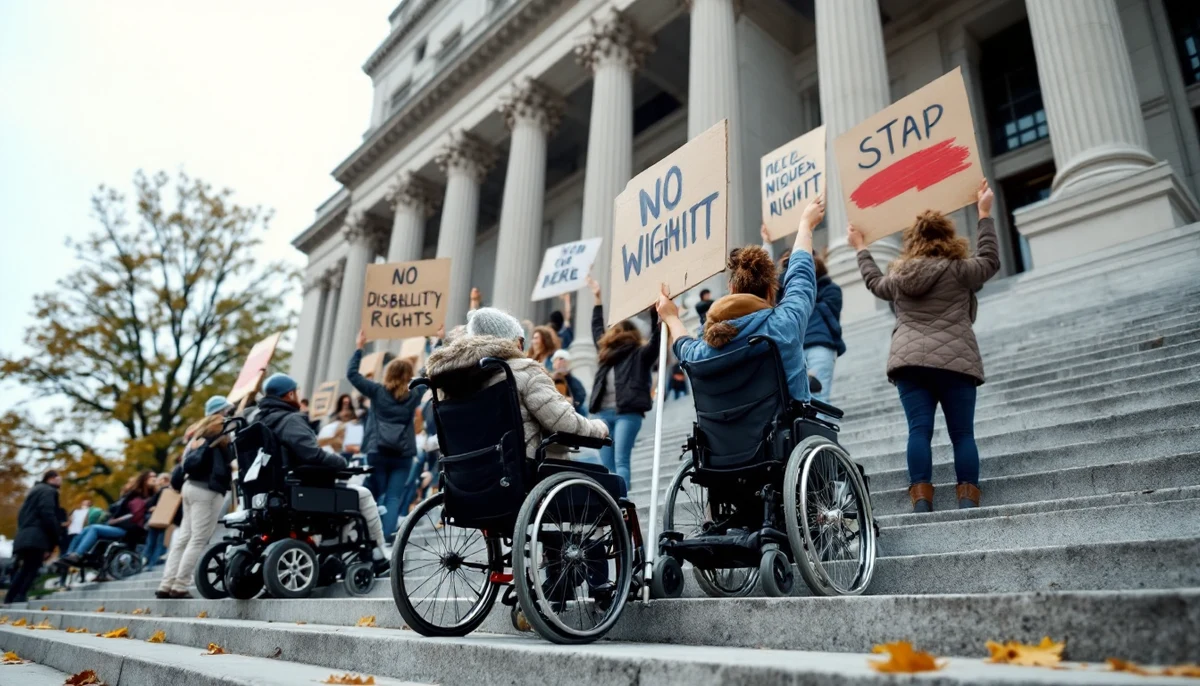
In the meantime, Persons With Disabilities in Africa and Kenya in particular must remain steadfast, vigilant, focused ad meaningfully engaged. I am not aware of any freedom that was voluntarily handed over to any marginalised group. Stand up and demand your place. Join hands with others in self-help groups to enhance your lives. Donít wait for anybody! Demand for opportunity and not for handouts. Demand for representation and visibility. Engage the media, the private sector, the civil society, the political leadership and the faith-based organisations for true inclusion. If you keep quiet and just mourn, nobody will take note of your issues.
On this occasion, I ask all to reflect on the UN Standard Rules on the Equalization of Opportunities for Persons With Disabilities and see how far we have performed. I ask the United Nations and Governments at all levels, to provide the leadership, resources, policy and enabling environment that will at last give real equality of opportunities to the one in ten of the worldís population.
AMREF remains committed to the cause of Persons With Disabilities at all levels. We ask everybody else to play their parts in an effort to make this world a better place for all. For if we buy into the illusion that we can make this world habitable for only a few, we will make it uninhabitable altogether! The struggle continues. Yote yawezekana and indeed we shall overcome somewhat, someday!!
Ashanteni.
printer-friendly format |