
International Abilympics: Advancing Employment Skills of People with Disabilities
By Kumud Mohan
Never stop us from dreaming
We are what we believe in,
We can touch the sky
We can and we will fly...
The words of the theme song set the tune for a magical event that was more heroic than the Olympics, more memorable than the Oscars, and probably the most uplifting experience for those who could be part of it.
On November 24, 2003, over 400 people with disabilities, along with an equal number of escorts, interpreters, officials and special invitees from all over the world, gathered in New Delhi, India, to take part in the 6th International Abilympics.
Abilympics are the Olympics of people with vocational skills of people with disabilities, aimed at helping them to become self-sufficient, productive members of society. They are held every four years in different countries, and are different from the Olympics in that their main aim is to constructively promote the vocational skills of persons with a disability. Disability often limits people in their everyday activities or in their choice of profession.
Age is no limiting factor here. Here, physically, mentally, orthopaedically and visually impaired people compete on equal grounds with the speech and hearing impaired. Since economic emancipation is the main focus, excellence of output is the only criterion. The quality of work must measure up to international standards and specifications.

The first Abilympics were held in Japan in 1981 to commemorate the UN International Year of Disabled Persons. The 2nd, 3rd, 4th and 5th Abilympics were held in Columbia, Hong Kong, Austria and the Czech Republic.
At the 6th International Abilympics, India, a total of 1030 delegates (including 425 contestants) from 34 countries, including Austria, Australia, China, Czech Republic, Japan, Hong Kong, Pakistan, Iran and UAE, converged in New Delhi to take part in 43 events, including vocational skills involved in painting, printing, photography, dressmaking, cake decoration and personal computer assembly; and leisure and living skills such as those involved in chess, bridge, embroidery and batik, as well as children's hobbies such as like origami, cartooning and Lego.
Since disability is often entwined with lack of financial resources, the largest number of delegates and contestants were from neighbouring or nearby countries. The largest contingent of 216 (including 115 contestants) was naturally from India, the host. China sent in 95 delelgates, including 28 contestants and 48 Special Invitees. USA, France, Germany, Britain and Holland together sent less than 10 delegates to take part in the one-day Conference.

The Abilympics at New Delhi got a high profile start with the Prime Minister of India, Mr. Atal Bihari Vajpayee, inaugurating the six-day long programme. "More than 80% of the world's disabled live in developing countries, and many of them are victims of growing poverty, social isolation and despair," he said. "Their problems...must be given priority in our developmental strategies......"

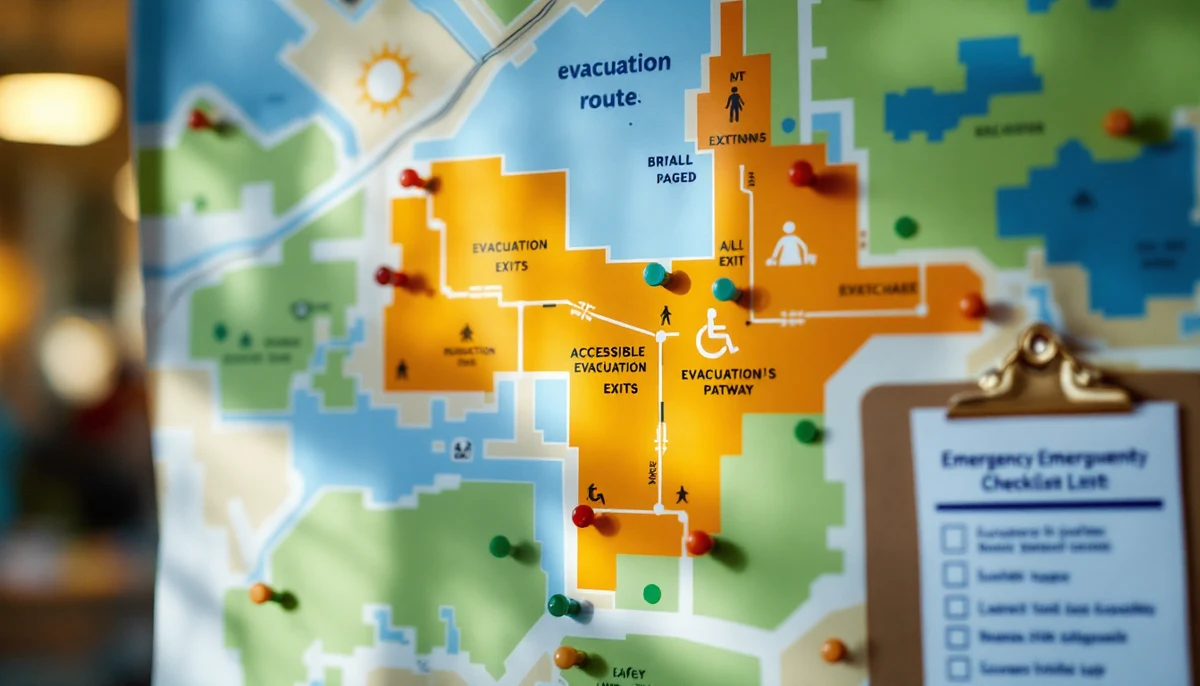
At the Indira Gandhi Stadium, every aspect of the arrangements bespoke good taste, thoughtfulness and consideration for the invitees. There were tactile pathways for those with visual impairments, ramps and accessible toilets for those with mobility impairments, and a loop induction coil system for the hearing impaired with their 'invisible' disability. Overlooking the vast indoor stadium was a glowing replica of the 6th Abilympics mascot, Ganesha, the remover of obstacles and the God of good beginnings.
The weather was perfect. Smartly attired boy scouts and guides welcomed and guided the guests, visitors and participants to their respective places.
A tuneful welcome song "Jyot se jyot jalao" (light up flames with the Eternal Flame) was sung sweetly and fervently by disabled children from several schools. Following was a folk dance, featuring acrobatic skills of the disabled dancers along with a merry dance of twirling participants in wheelchairs, was specially applauded.
The competitions were an opportunity for the education of onlookers, many of whom were amazed at the level of achievement of the disabled competitors. Painting, waste reuse, wood carving, cabinet making and cartooning were held inside the hall, while cane technology, silk hand printing, ceramics and flower arrangements could be seen outside. Strangely, there were no signs of frenzy or cutthroat competition. The competitors worked peacefully, diligently, confidently - their disabilities far from being evident.
"Why, they are just like us," muttered a tenth class schoolgirl. "After today I don't think I will ever feel awkward approaching a handicapped person and talking to him."
"If they can do it, then so can we," exclaimed another, watching the speed and accuracy with which a blind girl made a cane basket. Indeed, those who were used to labelling the disabled as blind, deaf and mentally retarded, were forced to change their perceptions. They realised that for these people everyday life was a far greater struggle, a greater challenge than any of them would have imagined. Hence they were to be admired, rather than pitied!
Andreas Poschek, a 25 year old Economics Engineer and Computer Scientist from Vienna, who uses a wheelchair since doctors attempted to improve his gait through spinal surgery, concentrated on his photography and won a silver medal. Jiang Xiolan, 42 who traveled all the way from the Nanjing Technical College of Special Education, China, had the rare honour of winning two gold medals for both her attempts, crochet and hand-knitting.
One gratifying feature for the competitors was the fact that the results were announced the same day, sometimes within hours of submission of their work. The maturity of the reactions of the disabled participants could be edifying for the non-disabled. The winners were inwardly elated of course. But they did not jump for joy. Nor did the losers break down. The happiest fact was that they had got the opportunity to meet and interact with so many others in an 'Olympic" atmosphere. This was sufficient for the present.
An international exhibition on assistive devices and the latest technologies for the benefit of disabled persons was part of the show. Visitors were also treated to a taste of rural India through arts, crafts, music and saleable products of Indian NGOs in an 'Abilympics Village'. There were colourful candles, stuffed toys, and paintings and pottery made by artists with disabilities. For many visiting teams, tense about their performance in the competitions and hard put to find their way about in a foreign land with a foreign language, the sunny Abilympics Village along with the Food Plaza opposite, served as informal meeting grounds.
Actually, the entire 6th International Abilympics were a meeting ground of several types of resources from several different sources, according to Dr. Uma Tuli, Secretary General of the National Abylimpic Association of India, as also the Chief Commissioner for Persons with Disabilities. While the ministries of Human Resource, Science & Technology Development, and Social Justice and Empowerment bore the financial expenses, Air India, the national carrier, brought the participants from across the world at a special discount. The government. gave them free visas.
The corporate sector was enthused to contribute in a major way: HCL & IBM took on the complete responsibility of the computer-related events, Pepsi provided drinks and ICICI, Reebok and Standard Chartered gifted sporty outfits. For the first time in the history of Delhi, shopping centres, stadia, hotels, public spaces, monuments, railway stations, bus stops and even buses became accessible to disabled persons - thanks to an outstanding effort by the Government. of the National Capital Territory of Delhi.
"On the whole, the 6th International Abilympics have been a most satisfying experience," concluded Ms Prabha Mehta, vice president of the National Abilympics Association of India. "I call Abilympics a great movement because it has propelled thousands of people with special needs to new levels of achievement and inspired them to test the limits of their potential."
Do note that the highest number and the highest percantage of medals ( 20, including 13 golds, amongst 30 contestants) were won by South Korea who had sent expert teams in advance to study the ground situation and to learn from the Indian experience. So, start now to prepare: Japan awaits you for the 7th International Abilympics, 2007!
printer-friendly format |