
Interview with Bengt Lindqvist, former Swedish Minister
Interviewed by Ilene Zeitzer, June 2004
Q. Before being appointed the UN Special Rapporteur on Disability, you had a position with the Swedish government?
A. Yes, I was the Minister for Health and Social Affairs.
Q. And how long were you in that position?
A. Six years. And before and after I was elected as a Member of Parliament, holding a seat for 14 years on the Stockholm bench.
Q. So you were elected prior to being a Minister and then after, so that means you were appointed in the middle and then went back to being elected again?
A. Yes, and took up that office in '92 and went on until '96, when I left freely, because I had a seat going up until '98. But the job as Special Rapporteur takes so much time that I said to myself before anyone else discovers how little I do in Parliament that I'd better leave. I sneaked out, but when I did of course, they...well, there was a little bit of media attention.
Experience as Member of Parliament in early 1980s
Q. Can you talk a little bit about when you were first elected to Parliament, what year was that?
A. That was in 1982. The background was that, by way of simplification, you could say I was chairing the disability movement in Sweden. At the same time we had a very difficult economic crisis around the year 1980, and the popular movements, like the trade unions, the pensioners, disability organizations -- we even had a strong renters union -- got together and said now we are going to publish a White Paper on the consequences of capping social expenditure in Sweden, and I chaired that exercise. The book got quite some attention and I think it contributed to the fact that Social Democrats came back to power in 1982. During that period, people asked me -- I belong to the Labor Party, the Social Democrats -- they asked me if I would like to run for Stockholm. So I did that in 1982 and got the seat from then on. So that's how I got in.
Q. At the time you were the first Minister who had a disability in Sweden, is that correct?
A. Yes.
Q. What do you think the impact of having you in the Parliament was on Swedish policy, and on your non-disabled colleagues?
A. Well, first of all, it contributed to making disability more visible in the political process. I mean, I was physically there. I came with my white cane, every time we had a voting procedure I came in, so everyone saw me, everyone reflected. A lot of people came up and said, "how can you do this, how do you get your information?" The flow of information is, of course, the big problem for a blind person in Parliament. And also from the very beginning, there was a very strong conviction, that we will manage the obstacles: we will see to it that Bengt gets the information he needs when he wants it. So, the party provided one full time secretary to me. In the Parliament in Sweden, everyone belongs to a Commission. I got into the Social Development Commission and the office of that Commission, the Secretariat, hired an additional person to assist me. So I was really spoiled from the very beginning with very good service.
Assistive technology: first scanner took two people to carry it
Q. Explain about how back in 1982, prior to the widespread use of the Internet and so forth, how you got your information then?
A. I have a story about that that I will tell you before I answer. When I came back to Parliament after the six years in government -- we had lost the election in 1991 and then I got re-elected-- by then, Parliament was completely computerized. I had gotten equipment for access, so the two secretaries I had in the Parliament in the previous period, I didn't need any more, not at all. I could manage. I think I had 20 percent more secretarial help then any other Parliament Member. So that's what computers can do.
Q. So what did you do prior to your first term?
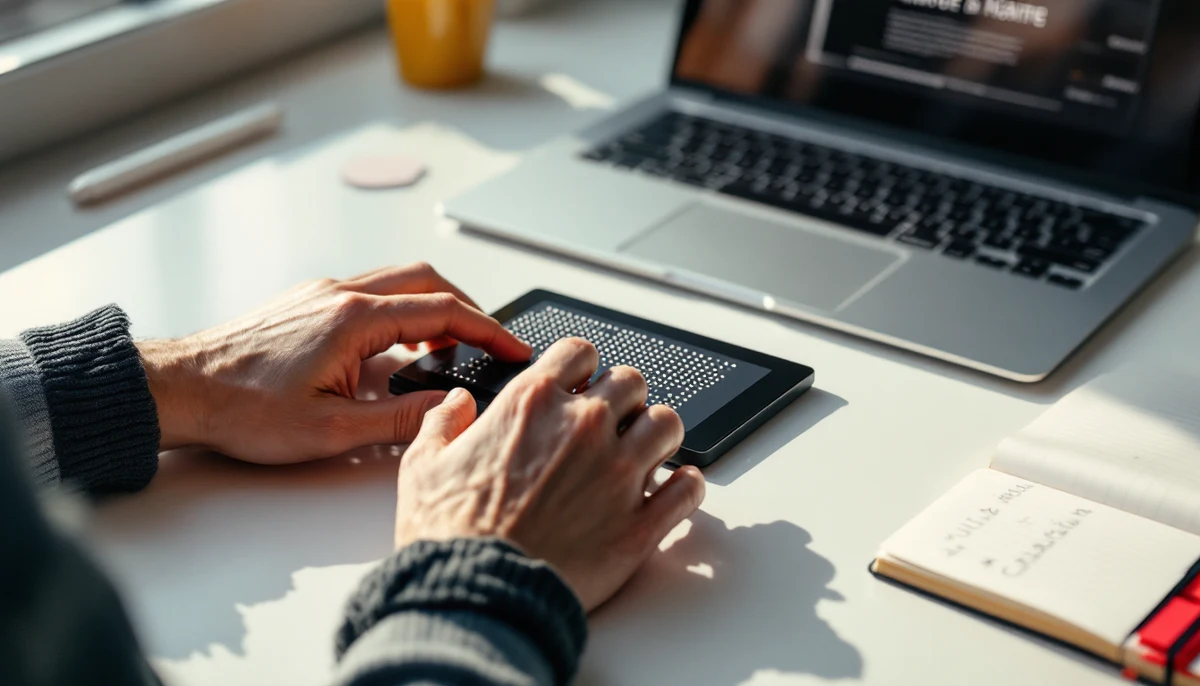
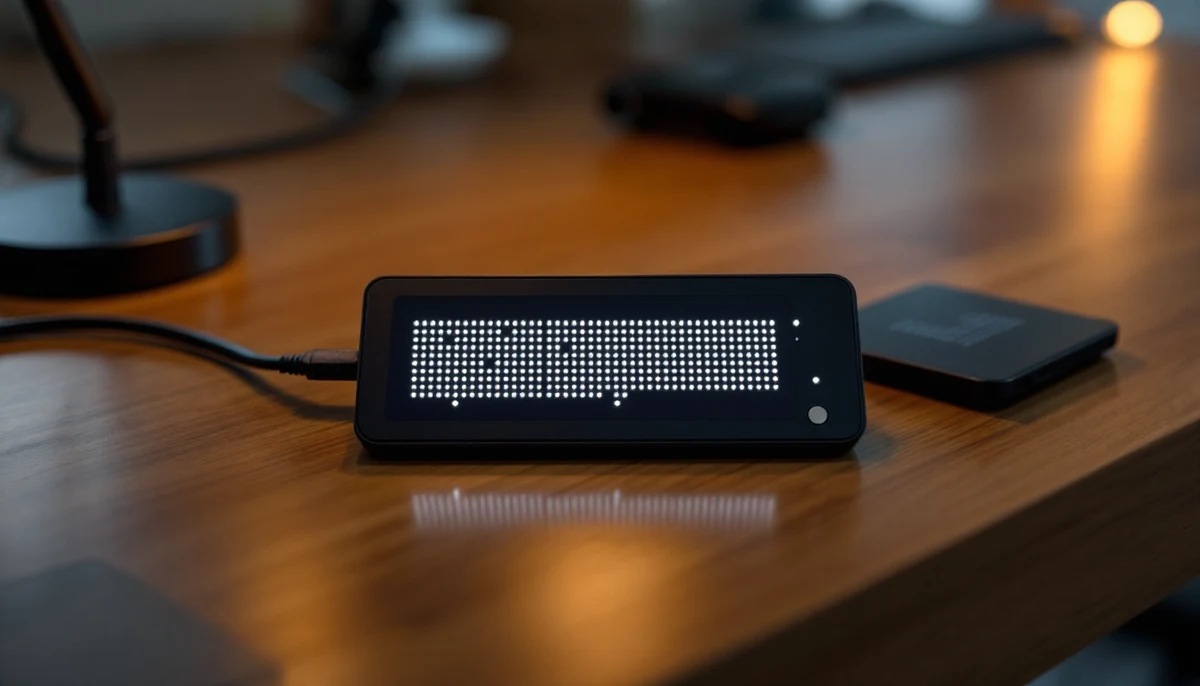
A. They recorded a lot on tape. We had a computerized printer, so, already in 1982, the important texts were produced in Braille. We had a colossal machine, which was a scanner, it's now in the museum because the Parliament bought it for I think half a million Crowns. It takes two people to carry it, but it could scan. So it scanned some text for me. You know, a scanner now is 2,000 Crowns and the size of a package of cigarettes. What a development!
Q. I thought I remember being told that back in the '80s that you had some kind of system that read you the newspaper or delivered the newspaper to your computer?
A. Yes, that was the Swedish system. We had it. If you subscribed to a newspaper and you were a blind person, and if the newspaper you wanted to read was part of the system--and I think some 80 newspapers in our small country belong to this system-- you get a special radio receiver that is then connected to your computer. During the night, the newspaper transmits the whole newspaper electronically to your computer, and in the morning you have your morning newspaper.
Q. And that existed back in 1982?
A. No, actually the first experimental service we had with daily newspapers began in 1980. The small newspaper in a local town, which they read on tape, not all of it, but about one hour of the most important content that the newspaper editors selected, then these cassettes were carried out by the newspaper distributors, like the other papers. That was the first. This was awkward of course, and step-by-step we have refined it. We still have this system and it's still being refined and simplified. We think it's an important aspect of civil rights, I mean to be able to read your own newspaper, the one you prefer.
Responsible for more than disability portfolio
Q. In terms of the things you were able to accomplish while you were in Parliament, as far as advancing the agenda of individuals with disabilities, can you point to things where you feel your presence made a difference?
A. Yes, but I want to make one point, which is important to me. When I became a Parliamentarian, I was not there solely for the purpose of disability. I had to accept other portfolios, and I got other responsibilities immediately and that was very encouraging. I got into family policy and childcare and training of doctors and I remember I had many issues like that when I was a Member of Parliament. But of course, I still held the position of Chair of the Swedish disability movement the first three years when I was in Parliament, so, of course, they used me very much and we made a lot of fuss. I put questions to different Ministers, I made motions, I was one of the most active Members of Parliament. Actually, when I was appointed a Minister [for Social Services], they joked in Parliament and said* that "the appointment was the only way to silence Lindquist." Most of the motions I did together with the movement of disabled people, so it was a lot of things, many details, of course, but also some very important, big things. One was the recognition of the sign language as the first language of deaf people. And I and another Member of Parliament made a motion to create a Bioethics Council in Sweden. I think this was in '83 or '84. Because the Prime Minister of Parliament himself got very interested in the idea of that Council, we got that through. A few years later I became a member of that Council. So those are some examples, and then when I came back from my time in government, I was one of those who initiated the Swedish disability office.
Impact on non-disabled colleagues in government
Q. What was the effect on your non-disabled colleagues, both when you were a Member of Parliament and also as a Minister? Did they become more aware of disability issues in areas that would not necessarily have been thought of as disability issues, such as transportation?
A. I think we had gone past that when I was a Minister, because there were responsibilities for disability measures in several Ministries, in the Ministry of Communication, Public Transport, Education, Labor Market, and, of course, Social. So many Ministries had programs already, but there's no doubt that my colleagues in the government, there were 22 Ministers, very often came to me and said, "Well, this is a disability issue. This must be yours" and I would very often tell that that, "No, it's an education issue which happens to be a concern for some people with disabilities, but it's your portfolio." So, often they tried to send issues, disability issues, back to me, because I was a disability advocate. I had that image. And sometimes I had to fight to make them take on their responsibility, and I think that was an educational process between us. But they were tempted to give it all to me.
Q. But then, as a result, they got used to having to think about disability without having to ask your opinion, is that a correct statement?
A. Yes, I think you can say that, yes. There was a certain educational element between us concerning disability, a learning curve. As there was between us and the Minister responsible for gender issues, I'm sure.
Serving as the U.N. Special Rapporteur on Disability
Q. Can we talk a little bit about your role as Special Rapporteur at the U.N. and how that came about in terms of your being appointed?
A. It's a special story because Sweden was one of two countries in the 80's proposing in the United Nations General Assembly that there be a Convention on the Rights of Disabled People. Italy did it, and we did it. And I was the Minister responsible for it. So I was in the U.N. in 1989 trying to get a convention, and that was the genesis of the Standard Rules. They rejected a convention, there was "convention fatigue" at the United Nations. You know, the Child Convention was coming on; they had enormous problems in getting the monitoring system financed for the Women's Convention. And they were saying, you know, "don't come with one more" -- that was the essential attitude, "not now." But when they had rejected our proposal, then there was a kind of guilty conscience, and we realized that we could use that. We said, "Well, something has to be done because what we achieved during the year, and two, three years prior to that, is now being destroyed due to lack of attention" and many governments agreed.
So, that is the background of the decision in 1990 to draw up the Standard Rules as an implementation tool to get things done. And I was involved in preparing that decision. I then got involved in preparing the Standard Rules, I actually wrote parts when I was employed as a consultant for 11 months by the U.N. at two different periods between 1991 and 1993. Then in '93 the Rules were completed, and were adopted in early '94. The UN Secretary General asked me and asked the foreign office if they would support his nomination of me as the new Special Rapporteur. I was was already knowledgeable about the Standard Rules, and I suppose that's why they chose me. It was Boutros Boutros-Ghali, the former Secretary General, who asked me and the Minister of Foreign Affairs if we were agreeable to this arrangement. There was one condition, not very clearly stated, but, of course, I used that, saying that the government providing the person should also support it.
Q. Pay the salary?
A. Yes, pay the salary but also support the office. And as I was a Parliamentarian, I made a condition that I should have a small office in Sweden but my base was in New York. We've had that office from the very beginning, from September '94 until we closed down in January of last year, 2003.
Q. And you were appointed initially for how long a period?
A. Three years.
Q. Three years was the first term and you did another term?
A. A second term also for three years, and then a third term of , almost three years. I don't know why they didn't make it a full three years.
Impact of 9 years as UN Special Rapporteur
Q. Can you explain how that office operated within the framework of the U.N.? Was it just a bully pulpit, just to try to get people to pay more attention to disability issues or were you able to have any oversight over things that the U.N. was doing?
A. I was certainly working hard to influence different parts of the U.N. to do more and to do it in harmony with what the General Assembly had adopted in the Standard Rules. So I approached all the U.N. family. I had a close cooperative relationship with the ILO [International Labor Organization], with the WHO [World Health Organization], with UNESCO [United Nations Educational, Scientific and Cultural Organization], and--to a lesser extent--with the UNHCR [Office of the United Nations High Commissioner for Refugees]. So it was a main part of our work to involve them and also to coordinate what we were doing with them.. If you look, for instance, at the education issue, what the U.N. decides has to make some sense, and the Standard Rules has a rather distinct section on education. And then the Salamanca Statement was developed by UNESCO, and I had a small, not-very-influential part in drafting that too. There are very strong forces in the special education field, as you know. But we tried to coordinate so that the two documents did not conflict, and it was the same when the Committee on the Rights of the Child started. We cooperated closely on monitoring the situation of children with disabilities. Not so with CEDAW [Convention on the Elimination of All Forms of Discrimination against Women] and the Women's Commission; they weren't so interested in cooperating. They were standing on their own feet and did what they wanted to do.
But the answer is, I tried to exert influence, I tried to form relationships, I tried to work system-wide in the UN.. I also tried to use the very small resources that there are in the U.N. family for disability to try to coordinate, especially with the WHO. We were successful to the extent that the third global survey I conducted, was done together with the WHO. That was another way of working, to do a global survey, to measure progress in countries. And the third one is, of course, to visit countries. We made it our policy that we must have an official invitation from the government. That is not to try to be a Special Rapporteur of the kind that you have in human rights, because they can stand on a Convention which gives them legal clout with countries and they can come and go when they like. If I did that, then governments were very reluctant to cooperate, so I said, "If you want advice, if you want guidelines, if you want to discuss your own achievements, I am happy to come. But you have to invite me formally." That way we were always received by the government of the country. Then we made it a point, of course, to mobilize the organizations of disabled people. Afterwards they thanked us for having opened the doors to the government ministries which they had been knocking on for a long time but prior to our visit, often had not been able to get a real conversation with them. In the country, we often tried to mobilize the U.N.D.P [UN Development Program] office, whatever there was, we tried to liaise.
Challenge of conducting international surveys on progress
Q. And when you did the monitoring mechanisms, the reports, how did you do that? Did you rely on the disabled people's organizations within the country to give you that information?
A. You know the official way is to ask the government, and we had official replies. More than 100 governments responded to our global surveys of progress achieved in implementing the Standard Rules, which is a lot for U.N. surveys - typical is anywhere from a high of 70 to a low of 40 replies. But we had more than that. We had 93 and the largest one was 107. But at the same time, we sent exactly the same survey questionnaire to the more than 600 national affiliates of the six organizational members of the panel. [Disabled People's International, Inclusion International, Rehabilitation International, World Blind Union, World Federation of the Deaf, and the World Network of Psychiatric Survivors] So we got responses from many of the organizations of the blind, of the deaf, and of the physically disabled. For instance, in the biggest survey, the second one, I think we had 250 organizations responding from many, many countries; we got organizational responses from 130 countries. Of course, if you actually compare the answers from the organizations and the answers from the government, sometimes you wouldn't believe it was the same country. They were very, very different. One problem for us was also that the replies from the organizations were very different, some were very positive and cited some achievements and others were very bitter and didn't see any progress at all.
Q. Within the same country, some organizations would see the glass as half empty or half full, is that what you're saying?
A. Yes.
Q. Do you think it was because of the type of condition that that organization was representing or do you think it was some organizations have official status with the government and others don't, was it that?
A. No, I think it was factual. If the visually impaired had had some recognition recently, then they took a very positive stance and said that we have made progress in this area, and this and that has happened, and it colored all of their responses. But in other cases, they were fighting with the government. And you could have different organizations expressing conflicting views in the same country.
Q. It must have been very hard then to sort it all out to get a sense of what the situation was really like?
A. Yes, it was impossible.
Q. How did you resolve it, what did you do?
A. I didn't attempt to tell the truth about the country, but I said that there is more than one way of looking at it. You can read those reports, and the summaries of the responses from each individual respondent. For example, take Sweden. I remember because I had been discussing this with people. We had the government's response and the organizations' responses. And I told them all, "sit down at the same table and try to come up with one version of reality, what is the truth. Is the law working as the government says it's working or in the way you're saying it's working?" There were some factual differences which were resolvable, and in some cases there have been dialogues between respondents about their responses, so it was a useful exercise. The first thing we must agree on, even if we don't have the same perspective, is, what is the situation?
Q. I think it's hard without having quantifiable, baseline measures.
A. And we didn't have that.
Q. So then doesn't it all become emotional, or episodic or anecdotal kinds of things that get reported?
A. Yes, but there also were measurable indicators of progress. You should see the questionnaire. Is there a national council on disability, yes or no? Are organizations of disabled people represented on that council, yes or no? Do they form the majority on that council, yes or no? We used those kinds of questions.
Q. Those are rather straightforward.
A. And yet we would have different answers in many cases. Take the issue of sign language. In Sweden (where I knew the situation), the deaf reported correctly with respect to the government, but the visually impaired didn't seem to know what the situation was concerning the sign language issue. So some organizations can be more ignorant than others.

But we made one mistake. I know that you know from the work you do, that it's very, very difficult to formulate such questionnaires internationally, because [countries] are also so different. With WHO, we asked about rehabilitation, and the questions were constructed in such a way that practically all the countries in the world seemed to have well-functioning rehabilitation programs because they could answer yes. And if you had one program for ten people, you could answer yes. So quantification is important. Practically every country has some kind of rehabilitation, for perhaps 10 or 100 people, but not for all people in these developing countries. There should have been a second step, a follow up question to go into more depth to see what the actual situation is. So, it's very difficult, but that is one way we tried to work. I would have liked very much more to link up with universities and to make them follow up, if not the whole global survey, at least certain aspects in a region or between a few countries or even this kind of clarification in one country. But we never did that, although I think we stimulated some individual researchers. I've never specifically seen the results, though.
printer-friendly format |