
Disability World
A bimonthly web-zine of international disability news and views • Issue no. 26 December 2004 - February 2005


home page - text-only home page

Summary of RI/International Paralympic Committee Symposium

Right to Participate, Rights to Win: International Paralympic Symposium Addresses the Role of Sport and Recreation in the UN Convention on the Human Rights of Persons with a Disability

On 17th September 2004, in Athens, 3,837 athletes from 136 nations were present to participate in the Opening Ceremonies of the XII Paralympic Games. As the second largest sporting event in the world, the Paralympics provide Olympic-level sporting opportunities for athletes with a disability from around the world. On the same day, the International Paralympic Committee (IPC), in collaboration with RI, which stands for Rehabilitation International as well as Rights and Inclusion, hosted the first International Paralympic Symposium on Disability Rights. The event, aimed to promote the draft UN Convention on the Rights and Dignities of People with Disabilities, advocated for the human rights of both Paralympic athletes and citizens with disabilities at large. These include but are not limited to: the right to play, the right to sport and recreation, and the right to full participation in society. It is vital that persons with a disability and organizations working with such persons are educated in the process and get involved in their own communities to support the work of the UN towards a Disability Convention.

The Paralympic Games were logically chosen as the site for launching the support of the IPC towards the draft UN Convention. As the UN Secretary General explains, "the Paralympic Games are a powerful demonstration of the vitality and achievements of persons with a disability world-wide". The athletes exemplify a human spirit that inspires and excites the world, they show the energy that sport has to offer in changing perceptions, and because sport is a common global language, the Paralympics have the opportunity to unite us all. In September 2004, the IPC adopted a position statement on human rights that serves to reinforce its core belief that every individual should enjoy access and opportunities to leisure, recreation, and sporting activities. This right should be granted and guarded by the legal and administrative systems of responsible governments and communities. The IPC believes both sport and human rights are for all.

While improvements have been made in some countries for persons with a disability, the fact remains that without an international human rights convention, the rights of those members of society cannot be effectively guaranteed. As the largest minority group in the world, these individuals have not received the same assurances of rights that other minorities have achieved. In all regions and countries of the world, they continue to face discrimination in numerous ways. A UN Convention will have a global affect and will strengthen the ability to advocate for human rights both locally and nationally.

In the context of sport and recreation, persons with a disability have, among others, the right to:

  • Participate in sporting and recreational activities at all levels;
  • Organize and participate in sporting activities;
  • Receive the necessary instruction, training and resources; and
  • Access sporting, recreational and leisure venues.

In addition, children and youth with a disability have the right to equal access in sporting, recreational and leisure activities, including those within the educational system. They also have the right to engage in play. Despite these obvious assertions, these rights remain unattainable for most citizens with disabilities.  

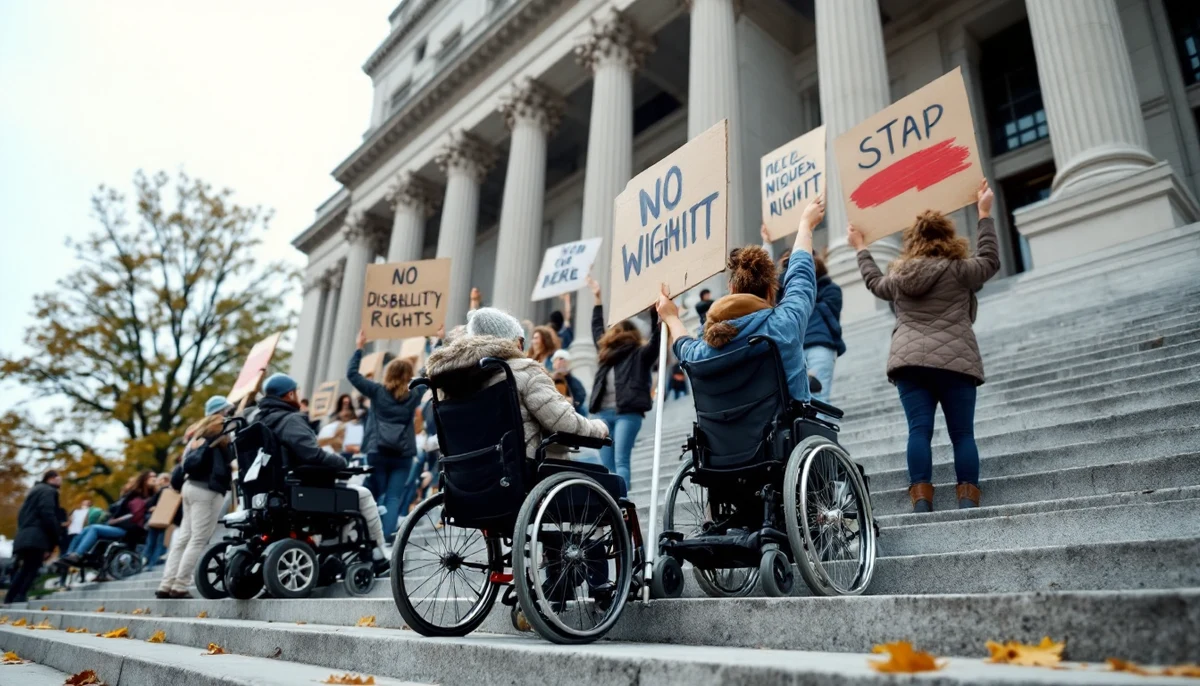
"If I want to be the world champion in the marathon, and I am committed to the training and lifestyle that will make me be a world-class athlete, than no lack of opportunity should stand in my way. If I want to get up at 6:00 AM to go push 26 miles on a daily basis for months at a time, I should not be prohibited from doing so by a set of steps that leads up to the training path. In addition, I should be able to say with pride that I am a wheelchair marathoner, and that in defining my course, I have the potential to be a member of the United States Paralympic Team. This is a human right."

- Cheri Blauwet, 2000 and 2004 Unites States Paralympic Athlete

International human rights law also recognizes that all people have a right to rest, to leisure time and to participate in recreation and sports. In 1976, the first International Conference of Ministers and Senior Officials responsible for Physical Education held by UNESCO affirmed, among other things, the right of persons with a disability to participate in physical education and sport. The treaty body which monitors the implementation of the Covenant on Economic, Social and Cultural Rights in General Comment 5 on Disability has recognized the relevance of these broad rights for persons with a disability which extend to participation in tourism and recreation activities, including sport. Rule 11 of the UN Standard Rules on the Equalization of Persons with a disability outlines the measures States should take to ensure that persons with a disability have equal opportunities for recreation and sports.

As we can see through observations of our global society, persons with a disability undoubtedly face discrimination. In some cases, this discrimination manifests itself in the complete denial of access to participation in recreational activities, including competitive sporting activities and spectator sporting events. Even in cases where access to sports and recreational activities may be open to persons with a disability, they may nonetheless face restrictions owing to physical access, prohibitive costs, inequitable services and programmes, or the poor quality of integration. Lack of understanding and awareness of how to include persons with a disability in sport and recreation has contributed to exclusionary practices and, accordingly, their participation remains undervalued and ignored. It is therefore essential that the convention currently being drafted within the UN explicitly include a provision on this right and its specific application to persons with a disability.

Sports and recreation are also related to rehabilitation and education. The origin of the Paralympic Movement lies in rehabilitation. In 1944 Dr. Ludwig Guttmann, at the request of the British Government, opened a spinal injuries centre at the Stoke Mandeville Hospital. A new approach introduced sport as a paramount part of the remedial treatment and total rehabilitation of persons with a disability. Rehabilitation sport evolved rather quickly to recreational sport and within only a few years, the next step was competitive sport. Sports and recreation assist in achieving the goals of many rehabilitation programmes. In the words of Prince Ra'ad Bin Zeid of Jordan "Sports have proven to be an invaluable vehicle for early rehabilitation for persons with a disability and plays an important role in their integration".   It is critical for persons with a disability to have the means to comprehensive and proactive rehabilitation, including the opportunity to participate in sport and recreation.

It is also important to recognize the role of sport and recreation in education and professional development. The physical strength, self-determination, and empowerment often realized through participation in sport and recreation can raise the bar for persons with a disability to achieve excellence in these areas. In the words of a current Paralympic athlete, " Through my participation in sport, I have now developed the strength, agility, and chair handling skills that enable me to participate competitively in medical school, where physical tasks are often an imperative part of my occupational duties."

The IPC believes strongly in the right to participate in sport and recreation activities. As stated in its position statement, the IPC agrees to continue to promote its philosophy on human rights and actualize its policy through the Paralympic Games and other IPC-sanctioned sporting activities. At a grassroots level, this is often achieved through its membership and work with nations, regions, sports, and groups representing persons with a disability.

For more information on this topic, please consult the Toolkits developed by RI and the IPC on the rights of persons with a disability to leisure, sport and recreation. The toolkits are available on the IPC website at www.paralympic.org.

The International Paralympic Committee (IPC) supervises and co-ordinates the Paralympic Summer and Winter Games and other competitions, of which the most important are World and Regional Championships. The IPC, headquartered in Bonn, Germany, also supports the recruitment and development of athletes at a local, national and international level across all performance levels.

Contributions to this article have been made by RI and the Center for Sport in Society at Northeastern University.

graphic of printer printer-friendly format

home page - text-only home page


Email this article to a friend!