
Disabled People's Organizations Working in Tsunami-Affected Areas
The Global Partnership for Disability and Development has created the first compilation of information on the work of disabled persons organizations (DPOs) in the context of the tsunami. The information was obtained from a listserve created by the World Bank's Disability and Development Team for members of DPOs. This DPO summary is being incorporated into a larger report by the Civil Society Team, which will also include information on how foundations are reacting and, of course, NGOs. The Bank's media team is also incorporating some of this information into its daily updates for the crisis team and managers.
The Disability and Development Team expects to continue receiving information from DPOs via the listserve, and additional information will be compiled as it comes in over the next few weeks.
Disability News Ticker
Please visit the Disability News Ticker at http://www.abilityinfo.com/ticker/tsunamidisability.html for a listing of recent news articles on how disabled people are being affected by the tsunami.
Handicap International (HI)
Following the tsunami on December 26, the France-based DPO, Handicap International, has been working around the clock to provide emergency relief services in Sri Lanka. An emergency program to help the victims of the natural disaster has been set up. HI is focusing on displaced people, people with temporary or permanent disability and vulnerable populations, such as children, pregnant women and elderly people. As HI teams were already working in the area, it was able to provide help within hours of the tsunami. It is currently concentrating its efforts on the districts of Batticaloa and Ampar, south east of Sri Lanka where 13,000 people have died and a further 430,000 are displaced. HI has evaluated the needs and identified the main risks, such as heavy physical disability due to injuries and lungs infections due to swallowing sea water. HI is open to a collaboration with the Bank on these efforts. Contact: Florence Thune; www.handicap-international.org .


Disabled Peoples' International Indonesia (DPI Indonesia)
DPI Indonesia is focusing on what it calls the most fragile victims of the tsunami, the disabled. The tsunami has affected people both mentally and physically, and DPI Indonesia volunteers in Aceh estimate that hundreds of persons are newly disabled in just one area alone. DPI Indonesia is sending new and used assistive devices to Aceh, such as wheelchairs, white canes, and other needed items. Contact: Mr. H. Siswadi at ppcindo@eudoramail.com ; www.dpiap.org .
Indonesian Disabled Peoples Association (IDPA)
IDPA has set up a recovery center for the newly disabled in Aceh, and it has opened a crisis center in Jakarta.
Disabled Peoples, International, Asia-Pacific Regional Development Office (RDO)
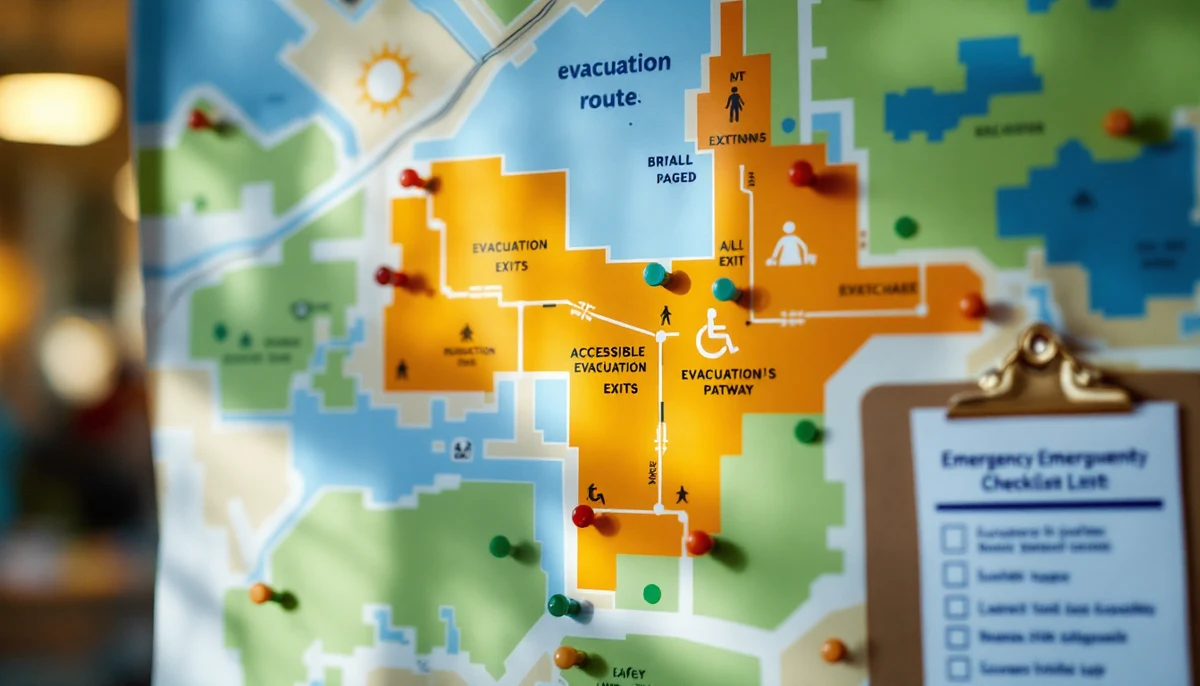
RDO has now collected information related to disabled persons affected in Indonesia, Sri Lanka and India and Thailand, which it has provided to other aid agencies. It is concerned with assessing the number of newly disabled people, how to identify them, approach them, and provide assistance to them. RDO is also looking for ways to introduce accessibility issues to the reconstruction effort. RDO sees the evacuation of disabled persons as a serious challenge. In Thailand, a team of teachers and students from Redemptorist Vocational School for the Disabled (RVSD) was dispatched to Puket province. They jointly worked with other agencies to develop a website, and to enter data. Contact: Mr. Topong Kulkhanchit, Regional Development Officer, at rdo@dpiap.org; www.dpiap.org .
DPI-Thailand
DPI-Thailand is working with NGOs in the affected areas to create a comprehensive relief plan. Contact: Ms. Panomwan Boontem, dpith@ksc.th.com; www.dpi.org .
GTZ (German Government's Aid Agency)
Specific needs for people with disabilities will be an issue in the medium term. Initially, GTZ has focused on supplying drinking water, health risks, and the reconstruction of schools. It is offering its expertise in the area of orthopedic aid and prosthetics. It is open to collaborating with the Bank. Contact: Rudiger Krech at Ruediger.Krec@grz.de; www.gtz.ed/jahresthema .
Rehabilitation International (RI)
RI has an extensive network of members and organizations worldwide and in Asia. It is looking to assist with programs, guidelines and standards for urban and rural areas (accessibility, communications, transportation, housing, employment and education). It is particularly interested in promoting accessibility standards for reconstruction. RI is looking to collaborate with the Bank. Contact: Michael Fox; www.riglobal.org .
Asia and Pacific Development Center on Disability (APCD)
APCD has developed plans to assist the situation in the immediate, medium and long term. Staff have been deployed to Puket to assist in rescue efforts. It believes there may be a large number of amputees (legs/arms) due to injury and infections. It estimates there may be a 20 percent increase in the number of persons with disabilities due to the disaster. Workshops on a self-help approach will be created and experts on disability will provide consultations. APCD will advocate accessibility standards in reconstruction (barrier-free and universal design) so that all new buildings will be accessible to disabled people. APCD is also collecting information that will be put up on a website that is being created ( http://www.apcdproject.org/ ). APCD will send a mission to Maldives and Sri Lanka in May or June, and a mission Indonesia in March. Contact: Mr. Akiie Ninomiya at info@apcdproject.org .
UNESCAP
UNESCAP is creating a website called Disaster Management and Prevention within UNESCAP ( http://www.unescap.org/icstd/dmp.aspx ). It expects the Commission session scheduled for April 22-28 to prioritize the tsunami response at the project level. Also, its disability subprogram is planning a workshop on July 5 that will focus on community based rehabilitation and poverty rehabilitation of persons with disabilities and this will also incorporate the tsunami response. Contact: Aiko Akiyama at akiyama@un.org; www.unescap.org/esid/psis/disability/index.asp .
Cambodian War Amputee Rehabilitation Society (CWARS)
CWARS would like the Bank's Global Partnership on Disability and Development (GPDD) to take on a major role in terms of accessible infrastructure, and providing aid and emergency health care to disable people in the affected region. Contact: Sam Oeurn Pok at samoeurn@online.com.kh ; www.cwars-landminevictims.org .
Sight Savers International (SSI)
SSI will consider the provision of financial assistance to any of its partners (NGOs or governments) who are actively involved in helping with eye care-related relief efforts in the affected areas. In the short term, relief efforts will support the visually impaired with accommodation, food, clothes, etc. Additionally, SSI will support schools and institutions of the blind that have been affected by the flooding and eye-related medical services at base hospitals. Longer term, SSI will refurbish and re-equip its partner's eye hospitals, education units for children, etc. SSI is aware of some schools for the blind and some health and eye units that have been damaged. It knows of 12 blind children who drowned. SSI believes its services will be most valuable in the medium to longer term where it can help with reconstruction. Contact: Wilma Van Berkel at WVanBerkel@sightsavers.org; www.sightsavers.org.uk .
The Directorate General of Primary and Secondary Education and the Directorate of Special Education of Indonesia (DITPLB)
DITPLB has begun work on physical reconstruction. Many NGOs and organizations have contributed to the government's efforts. Many companies and individuals throughout Indonesia have also made substantial contributions. It notes that field observation have revealed that 14 of 36 special schools have been completely destroyed. Two-thirds of the staff of provincial education offices are either missing or dead, and many students are missing. It estimates an increase in the number of disabled people. Attention to accessibility during reconstruction is strongly advocated. Contact: Dr. Mudjito at mudjito@ditplb.or.id .
printer-friendly format |