Disability World
A bimonthly web-zine of international disability news and views, Issue no. 7 March-April 2001


International News:

Gabriela Brimmer Left Us with the Century...

By Eilleen Girón Batres, El Salvador (acogipri@salnet.net)
 

Gabriela Brimmer, "Gaby", a daughter of Austrian Jewish immigrants, was born in Mexico on September 12, 1947. She contracted cerebral palsy at birth and, since childhood, she learned to act in a world that does not tolerate diversity. At 8 years old, she was enrolled into a rehabilitation center's elementary school and, at that age, a teacher recognized her talent with words and recommended that she become a writer. In 1967 she went into a regular school and her Language Arts teacher was a poet who also persuaded her to write. That very same year she started to write poems. The first time her mother read one of her poems she was deeply moved, cried and asked her to keep them all so a book could be published. She could only type on the typewriter with a toe from the left foot, the only part of her body she could control.

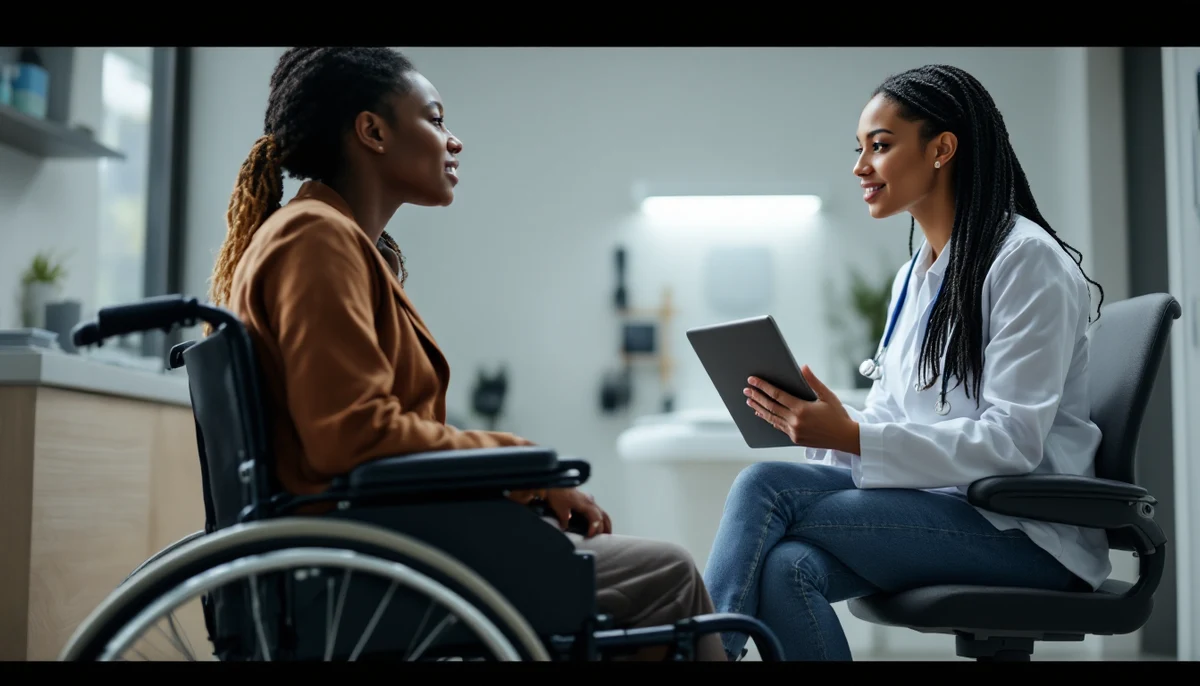
At the time the student revolt of 1968 exploded, Gaby was a student. Could that have influenced her in her own revolutionary thought? In any case, hers was a conscious one that was leading towards transformation and never towards destruction. In 1971 she was accepted into the Social and Political Sciences department at the National Autonomous University of Mexico as a Sociology Major, but did not graduate. Years later she returned to complete Journalism, but the access limitations in the college and colleagues' attitudes forced her to drop out again. If a fighting spirit like that of Gaby ever retreated, it was because she understood that whatever she could reach would be superior to everything she could lose on the way there. Since we have lived it, we understand that well.

Soulful poet

Let us delve into her soul through one of her poems for a while, where we can witness her intense love for our Earth, a love that transcends the borders of her native land, a poem she named Latin America:
 

"América Latina, me dueles 
desde el fondo de mi sangre, 
me hieres en lo hondo 
de todos mis sistemas corporales 
porque eres mía, mi patria 
la gran patria herida, la madre, 
la tierra, el cielo, el viento 
que pasa por las pirámides 
y canta, silba, metiéndose 
por las ruinas y los rascacielos 
y los edificios derrumbados 
por terremotos y guerras 
Intestinas." 
Latin America, you create pain
in the depths of my blood,
you hurt me at the core
of all my bodily systems
because you are mine
the great wounded motherland, the mother,
the land, the skies, the wind
that cruises the pyramids
and sings, whistles, strolling
amidst the ruins and the skyscrapers
and buildings wrecked by 
earthquakes and internal
wars.

Gaby, the film

She grieves for that land she loves, a grieving for all human species. I feel Gaby felt she belonged to the whole universe. For some time, she did not want to talk about a film "Gaby, una historia verdadera" (Gaby, a True Story). This was a famous film that shows her as a person who exerted herself to accomplish everything, including her right to enjoy her sexuality. Later on, though, she recognized that the film made her widely known to the world.
 
"América Latina, déjame llenar 
tus heridas de palabras: sé 
que estás derrotada, cansada, 
triste, angustiada de que tus 
propios hijos te vendan al 
mejor postor como en una 
gran subasta "¿Quién da más?" 
Se oye en Méjico, Brasil, 
Venezuela, Chile, Colombia, 
Panamá, Argentina, "¿Quién 
da más por su materia prima?" 

"A ti América Latina, 
ya te da igual, te violan 
por enésima vez tu cuerpo 
tan bonito, hermoso 
porque en él contienes selvas, 
desiertos, trópicos, glaciares 
que no le piden nada a nada." 

Latin America, allow me to fill
your wounds with words: I know
you are defeated, tired,
sad, anguished because your own
offspring do sell you
at the best offer heard in a
huge auction "Do I hear...?"
It is heard in Mexico, Brazil,
Venezuela, Chile, Colombia,
Panama, Argentina, "Do I
hear more for its raw materials?"

Latin America, now it is all
the same to you, they rape
for the hundredth time
your body, so beautiful, so good-looking
by virtue of your jungles,
deserts, tropics, glaciers
that are second to none.

Astute predictions

Since she was a child, she liked to listen to her father talk to her about everything, with an emphasis on politics. An astounding aspect in her poetry is the way she predicted the negative effects of globalization on our region.

She could not speak words, but she could foresee what was coming to come and she wrote about it. This poem is an outcry resulting from the loss of sovereignty we are suffering. Even when knowing how wealthy, noble and great Latin America is, the economic policies imposed on us make us even poorer and dependent, and owned by foreign banks. Yes, Gaby understood it.

Result in our being

Gaby founded an organization of people with disabilities -ADEPAM- and she was an active participant of other organizations that continued to invite her. One wonder how could she have dedicated herself so deeply to the full participation of people with disabilities and, at the same time, se could dedicate time to her writing of poetry. She enjoyed a moving sensitivity, and a strength that stemmed from the depths of her soul. She did not think of herself as an "outstanding personality," even when people could not hide their astonishment in seeing her do the things she did. Simply, she used to say, "life makes me to do it." As people with disabilities, we need to rethink our ways of living and forget about the limits people tend to place on us.

Motherhood

Gaby has taught us another great lesson, i.e.; she aspired to feel the joy of motherhood and adopted a newborn girl. In her book "Gaby, una historia verdadera" (Gaby, a True Story) co-authored with the famous Mexican writer Elena Poniatoska, she fully describes the happiness she felt when waking up by the child, and by watching her grow up. She was very involved in her up bringing and she never complained about sharing what had been the undivided attention of Florencia, her eternal companion, assistant and mother. The baby's name became Alma Florencia.

January 2, 2000, Gaby left us at fifty-two years old. She did want to say farewell before doing so, and as always, through poetry. At her funeral, attended by all of her good friends, her only brother read the following poem:
 

"Cuando me vaya, no quiero que me 
lloren 
Mi alma se irá por caminos no andados,
Y no me da miedo cruzar el universo. 
Al irme quiero hacerlo con manos 
limpias de rencor, 
sin odios y sin ambiciones, eso se lo 
dejo a los vivos. 
Cuando me vaya quiero hacerlo con alivio 
Y, pasaré al otro mundo dejando una ruta 
      [de triunfos." 
At the time I leave, I do not want you
to cry for me.
My soul will travel unfamiliar roads,
And I do not fear crossing the Universe.
I want to leave with hands
unpolluted by rancor, where
hate and ambitions are absent: that,
I leave for the living.
When I leave I want to do so with ease
and, I will step into the next world
          [leaving a path of triumphs.

On January 5, 2000, the Mexican newspaper Unomasuno included the above poem in an article to commemorate her departure.

Honored by President of Mexico

Ernesto Zedillo, the Mexican president used the "Pláticas de un Presidente" (Presidential conversations) radio program to speak about Gaby's contributions to all Mexicans with disabilities and announced an annual prize to honour her memory. He concluded speaking by saying "To honour her memory, during the next few days we will announce the creation of a Premio Nacional de Rehabilitación Física o Mental (Physical and Mental Rehabilitation National Prize) with her name, and also a scholarship for artists and writers with disabilities. Likewise, Mexico City's Centro de Rehabilitación Zapata (Zapata Rehabilitation Centre) that mainly provide services to children with cerebral palsy will carry her name. Thus, we can remember Gaby Brimmer for ever with the fondness and admiration we have for her." The president fulfilled his commitment on March 13, 2000 in a ceremony he himself presided.

What else can we say? I only saw Gaby once, in 1997, and I did not need to talk to her to recognize her quality as a woman. Since she was and will continue to be an example of courage and love, her spirit has not died: it is as free as ever. Thank you Gaby, for what you have left us.

The only thing left for me to say is that I could have never been able to write these lines without Mario Avila Delgado's help, a friend of Gaby's for more than twenty-five years and from Guadalajara. He offered me so much information.


Return to Table of Contents

Return to disabilityworld home page

Copyright © 2000 IDEAS2000. All rights reserved.