
![]() |
Access & Technology:
Nicaragua: Accesibility for All
by Architect Claudia Márquez
|
On August 24, the Asociación Nicaragüense de Apoyo al Discapacitado (Nicaraguan Association for the Support of the Disabled - ANAD), carried out its second conference on "Architectural Accessibility for @ll" [in the female gender-Ed.] at the Nicaraguan Central Bank's Presidents of the Library Room. Among those present at the event were representatives from different organizations of people with disabilities, journalists, members of the Urban Architects Association, and architects and students from Architecture Faculties at different universities.
Managua
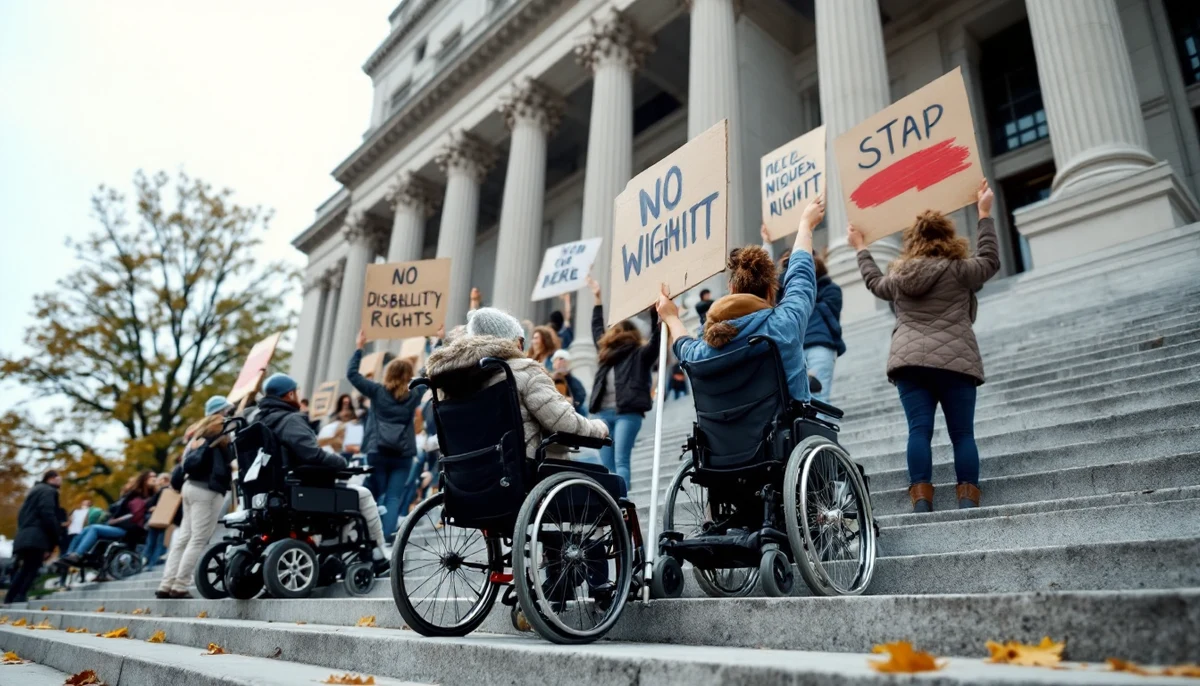
City and Urban Access: a diagnosis Each and every one of the members of this growing "at risk" population will be affected by thousands of barriers not only urban but architectural. Managua has been famous for having impassable streets that threaten the lives of all passersby and especially those who have physical or limitations. These streets are characterized by a large numbers of barriers sitting on the sidewalks. These impediments affect not only activities, but also the access to buildings, use of services, walking and car movement, a fact that clog main avenues. The city is not prepared for pedestrians. Street crossings are dangerous to all in any circumstance. There are neither ramps (curb cuts) in sidewalks or street corners, no texture contrasts, sound or visual alarms to alert blind pedestrians, nor signs that alert one to main avenues, services or important places. The general notion is that of complete disorder and it works against all people.

On the other hand, buildings also present barriers for users. These can be seen not only in historical structures but also in new ones. They continue to feature a lack of access and sensibility towards people with disabilities. In spite that accessibility is required by Nicaraguan Decree 202, it has not been complied with in either urban planning or buildings. Even when some of the new facilities like hotels, malls, and restaurants are being built under technical requirements that take into account people with disabilities (such as those needing wheelchairs), it can not be said they comply with the full and true version of accessibility since this must contemplate all forms of disability. One thing that must be recognized is that efforts are being made to, at least, offer accessible spaces where people with disabilities can go and use services with the help of assistants. The best of cases would be that where people could act independently as in opening doors, go up a ramp, use bathrooms or access information. Compliance with the Law must be observed, beginning right now, and sanctions must be pushed against those who do not comply so that all facilities, present and future are redesigned into accessible spaces.
Decrees for the elimination of architectural barriers in cities and for accessible design norms must be approved because both tools are essential to make all facilities accessible in future buildings and renovations. The prevailing concept must be that of Accessible Design, beginning with the initial moments of design and planning stages. Essential is that this issue of barriers and Accessibility is studied by all sectors and not only by organizations by and for people with disabilities, but by all school, hospitals, universities, City Halls, Ministries of Education and Health, architecture and engineering professionals and students and, in the end, it becomes an open issue where everybody participate. It is only by letting it be known and organizing forums round the issue that best solutions can be found and existing myths and prejudices eliminated. |
For
more information in Nicaragua:
Asociación Nicaragüense de Apoyo al Discapacitado (Nicaraguan Association
for the Support of the Disabled - ANAD)
Ciudad Jardín Q-12
Managua, Nicaragua
Telefax: 244-1572
Cell: 0779-0812
Email: anad_@hotmail.com
(From ANAD's monthly Bulletin - Vos Sos! No. 14, September 2000)
Copyright © 2000 IDEAS2000. All rights reserved.