Disability World
A bimonthly web-zine of international disability news and views, Issue no. 7 March-April 2001

Access & Technology:

Making Science Accessible to Blind Students

by Marc Krizack (krizack@sfsu.edu)
 

With the help of a grant from the National Science Foundation, a San Francisco State University researcher is developing a basic set of three-dimensional chemical and biological models to be used as educational aids for blind students enrolled in college courses in the physical and biological sciences.

The researcher, Dr. Dennis Fantin, has a PhD in biophysics from Berkeley and has done post-doctoral fellowship work in chemistry and plant biology. He is a faculty member in the biology department at San Francisco State University and a visiting research scientist in the division of Physical Biosciences at the Lawrence Berkeley National Laboratory. Equally important is that Dr. Fantin has been blind since youth.

"The basic reason for the project," Dr. Fantin explained, "is that blind students have often been discouraged from pursuing careers in the sciences because the methods for representing molecular and cellular structures in both biochemistry and organic chemistry tend to be primarily visual. Illustrations are available in print in textbooks, which assist the sighted student but they are of no direct use for blind students. Traditionally, in order to make this information accessible to blind students, the illustrations needed to be described in words, which is tedious and indirect, or in some cases, raised line drawings have been made."
 

No appropriate models

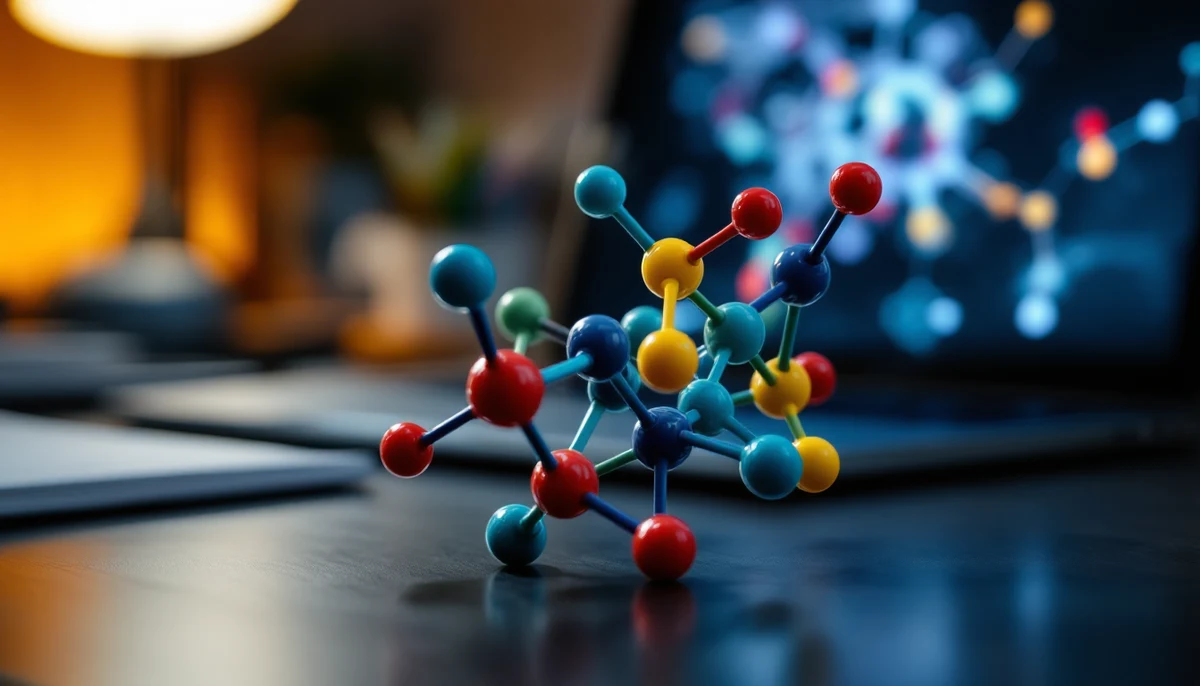
A third way of representing chemical structures is the molecular structure model kit which is often provided in organic chemistry. According to Dr. Fantin, these models are of some limited use, but these are color coded for the use of the sighted student and the color-coding conveys no information to the blind student. "If they were designed with the blind student in mind, these kits would provide shape and texture coding which would make them more useful," Fantin said. "At present, there is no appropriate molecular model kit for blind students."

Fantin's method is to select a certain number of chemical and cellular structures and processes that are well-described and common to virtually all courses in both introductory and more advanced biology and chemistry, including courses in biochemistry, molecular biology, cell biology, biophysics, zoology and botany. These common processes and structures include metabolic processes common to all cells, (glycolysis, the Krebbs cycle,) cell division processes (mitosis and meiosis), and macromolecules like nucleic acids DNA and RNA) and proteins.

Currently in the second year of a three-year project, Fantin has developed models that are a cross between a flat two dimensional picture like a raised line drawing and the full scale molecular model, such as might be represented by a ball and stick type organic chemistry model kit. Fantin's models are tactile illustrations or representations rather than full-scale molecular structures.  With Fantin's models, a blind student uses the cutaneous touch available through the fingertips to gather information about the structure in a way akin to reading braille. However, by itself, this is slow and "local" and doesn't quickly lead to an overall impression of the structure, Fantin noted.
 

Using the Whole Hand to Comprehend

"The models I am developing," said Fantin, "have features that allow the blind student to use the hand fully in comprehending the structure being represented."  The models are designed so that the student can use the palms and insides of the fingers to gather information as a whole, rapidly giving the student a larger and broader view of the overall structure.

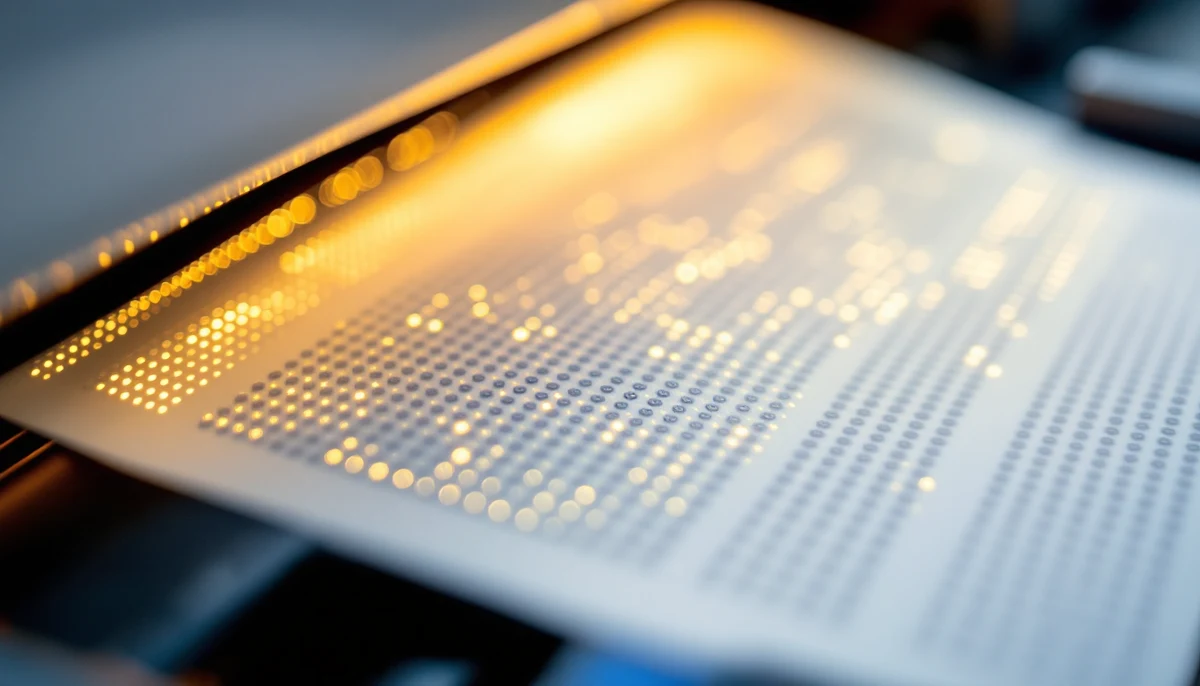
Photo of model structureFantin's model structures consist of symbolic representations of atoms and the bond lines between atoms which are represented on the surface of a plastic matrix which contours along the outside of the structure "forming a redundant and more general representation of the chemical structure."

"If you have just a thermoform illustration," continued Fantin, "you get only a series of lines and very low relief shapes that need to be followed slowly. A complicated and common structure such as ATP, a high energy compound used to drive cellular processes, can be more fully appreciated with a model that can offer both an accurate representation of the placement of all the atoms and a structure that is designed to be quickly felt to understand the larger parts of the structure in relation to one another. This gives the student the opportunity of getting the big picture, and it is accurate and faithful to all the details of the inner connections as well."


Coding to Provide Structural Information

In Dr. Fantin's models, atoms are indicated by different raised geometric structures: square for carbon, triangle for nitrogen, pentagon for phosphorous, circular disk for oxygen, and a small dome for hydrogen. These shapes are designed to be as small as possible to conserve space while being large enough to be immediately recognizable through the fingertips. For example, through experimentation, Dr. Fantin determined that in order for a shape to be recognized by touch alone, the size of any side or diameter can be no less than 1/4 inch. The bond lines between the atoms are either flat or sloped. This is a coding Dr. Fantin developed to indicate the three dimensional relationship between adjacent atoms. This coding gives the blind student more information about the structure than if all of the lines were flat.

"In truth," Fantin ruminated, "this is really a cognitive science project. It's about getting into the minds of blind students who must use their hands to gather information about the physical relationships of molecular structures."
 

Designing Improved Speech Tutorials

To date, Fantin has gone though almost twenty iterations of the glycolosis pathway, which itself includes twenty chemical structures. In addition to the physical models he is developing, Dr. Fantin is developing a digital audio playback system to guide the students through the exploration of the models with a set of easy-to-navigate human speech tutorials. In collaboration with Scott Luebking, a software systems designer, and Mark Sutton, an expert in access software for the visually impaired, Fantin currently has produced a working prototype of the digital audio navigation system which consists of a 23-minute voice recording that is played back over a PC's sound card and controlled through a software program. The student can use a numeric key pad or voice input through the commercially available Dragon Dictate software to control the playing of the tutorial. The tutorial can be controlled by information increments. You can move through the tutorial by sentence, paragraph, section, or chapter. This is a great advance over audiotape which has typically been used to convey information to people with visual impairments. Large libraries for the blind are currently in the process of converting from audiotape to digital audio.

Dr. Fantin is one of the founders of the Disability Policy and Planning Institute (DPPI), which currently has a grant from the United States Agency For International Development (USAID) to set up a disabled students program in Novosibirsk, Russia.  The program is the first of its kind in that nation.


Return to Table of Contents

Return to disabilityworld home page

Copyright © 2000 IDEAS2000. All rights reserved.