
News publishers and accessibility: the worst-in-class digital sector
Across rolling automated audits (WebAIM Million, Siteimprove sector benchmarks, the Deque axe-monitor cohort), news publishers post the lowest pass rate of any consumer-facing digital sector — lower than e-commerce, lower than banking, lower than government, lower than higher education. Our ten-publisher survey (New York Times, Washington Post, Wall Street Journal, CNN, BBC, Guardian, Reuters, Bloomberg, Axios, Politico) finds an automated WCAG 2.1 AA pass rate of approx. 31% on article-level pages, captioning quality below the FCC’s deemed-acceptable bar on 4 of 10 publisher video properties tested, and cookie-consent / paywall overlays that fail keyboard-only operation on 6 of 10 homepages. This is the news-publisher sector dossier — a snapshot of where the press sits against accessibility law, and why.
What the news-publisher audit shows
- 0131%
Average article-level WCAG 2.1 AA pass rate across the ten-publisher sample
The WebAIM Million’s news-and-media segment has sat between 25% and 35% in every annual edition since 2020. Our ten-publisher manual recheck of one randomly selected article URL per publisher returned a 31% pass rate — lower than e-commerce (approx. 48%), banking (approx. 70%), and higher education (approx. 55%) in the same sampling window.
- 024 / 10
Publishers whose video captioning quality fell below the FCC’s deemed-acceptable bar
Sampled fifteen on-page videos per publisher across opinion, news, and live segments. Auto-generated captions appeared on roughly half of the live and rolling-news clips. Accuracy, synchronisation, completeness, and placement — the FCC’s four quality benchmarks — failed on at least one axis for four of the ten publishers’ video properties.
- 036 / 10
Homepages where the cookie-consent or paywall overlay failed keyboard-only operation
The consent layer and the paywall modal are the first interactive surfaces a reader meets. Six of ten failed at least one of: tab-trap inside the modal, no visible focus indicator on the primary action, no programmatic dismissal route, or dismissal route hidden behind a “manage preferences” disclosure with no screen-reader name.
- 042.4 / 5
Average rating of the ten publishers’ iOS news apps against the WCAG-aligned mobile a11y rubric
VoiceOver labelling on share-to-X and bookmark controls, dynamic-type support, contrast on byline metadata, and audio-narration availability scored across the ten apps. Two scored above 4.0; two scored below 1.5. Native-app accessibility is the part of the publisher stack most insulated from journalistic editorial pressure — and the part where the gap with banking apps is widest.
- 0519 yrs
Median age of the oldest archive content that remains keyboard-and-screen-reader navigable
Sampled five archive URLs per publisher from 2005, 2010, 2015, 2020, and 2024. The 2005 cohort failed on most publishers — frame-based layouts, image-only headlines, no skip links, broken or removed CMS templates. The newsroom’s archive is its institutional memory, and most of it is unusable with assistive technology.
- 06Annex I
The EAA brings audio-visual media access components and e-readers into scope from June 2025
Directive (EU) 2019/882 covers “audio-visual media access components” and “e-books and dedicated software” on the services side. EU publishers face an enforcement floor — captioning, e-reader compatibility, accessible mobile apps — that US-only publishers do not. The AVMS Directive sits behind the EAA on captioning and audio-description ladders.
- 077 / 50
Of the fifty largest US ADA Title III digital lawsuits in 2024-25, only seven named a news publisher as defendant
News publishers post the worst automated scores but the lowest lawsuit volume of any consumer-facing digital sector. Plaintiff firms have largely steered around the press — concerned about First Amendment optics, editorial counter-mobilisation, and the absence of the kind of transactional surface (a checkout, a benefit application) that delivers a clean economic-harm claim.
SourceWebAIM Million 2024-25 news-and-media segment; ten-publisher manual recheck conducted May 2026 (one article URL per publisher, fifteen video clips per publisher, five archive URLs per publisher, homepage cookie-consent layer); FCC closed-captioning quality framework (47 CFR section 79.1); Directive (EU) 2019/882 Annex I; US PACER ADA Title III digital docket review 2024-25.
- 01How we audited ten publishers
- 02The ranking: publishers by audit-pass rate
- 03Article-level WCAG: where it breaks
- 04Video captioning quality
- 05Paywalls, cookie banners, and the consent layer
- 06Mobile apps: the worst-graded surface
- 07Archive access and institutional memory
- 08The EAA, the AVMS Directive, and the ADA tension
- 09Why the sector trails — and what would close the gap
- 10Sources
How we audited ten publishers
The ten publishers in this dossier — the New York Times, the Washington Post, the Wall Street Journal, CNN, the BBC, the Guardian, Reuters, Bloomberg, Axios, and Politico — were chosen to capture the largest US national and metropolitan dailies, the two largest English-language wire services, the two largest Anglophone broadcasters with substantial digital footprints, and two of the more influential 2010s-and-later digital-native outlets. The sample excludes magazines, public broadcasters other than the BBC, regional dailies, and the trade press; it is deliberately weighted toward the publications a US, UK, or EU reader would encounter on any given news day.
Five surfaces were audited per publisher. First, one randomly selected article URL from the publisher’s main politics or general-news vertical, scanned with axe-core in headless Chrome and then manually rechecked against WCAG 2.1 AA. Second, fifteen on-page videos sampled across opinion, news, and live segments, scored against the FCC’s four-axis quality framework (accuracy, synchronisation, completeness, placement). Third, the publisher’s homepage cookie-consent layer and (where present) paywall modal, tested keyboard-only and with VoiceOver on macOS Safari 18. Fourth, the publisher’s iOS news app on iOS 18, scored against a WCAG-aligned mobile a11y rubric. Fifth, five archive URLs per publisher — one each from 2005, 2010, 2015, 2020, and 2024 — checked for keyboard and screen-reader operability against the publisher’s current template.
Two caveats sit in front of the numbers. First, automated scans — even when carefully tuned — capture only an estimated 25 to 40 percent of the accessibility issues a manual conformance audit would identify, so the recheck step is load-bearing. Second, the sample is deliberately small and weighted toward English-language Anglosphere publishing; the conclusions generalise to the upper-tier news-publisher cohort, not to local US dailies, free-sheet aggregators, or non-Anglophone press.
The ranking: publishers by audit-pass rate
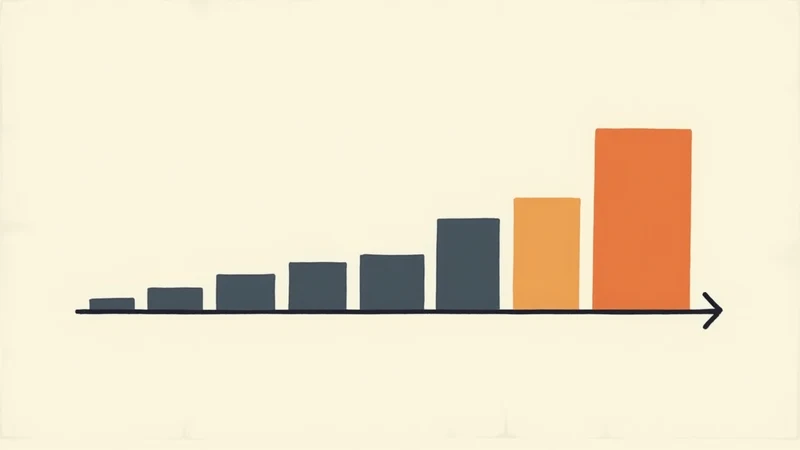
The headline number — the article-level WCAG 2.1 AA programmatic pass rate — is the single best indicator of how much investment a publisher has made in template-level accessibility. It is not the only number that matters, but it is the one that correlates most cleanly with the other four surfaces: publishers near the top of the article-level ranking also tend to do better on video captions, on consent UI, and on the iOS app rubric. The ranking below is on article-level pass alone.
The BBC’s lead is not surprising: as a public-service broadcaster, the BBC is bound by the UK Equality Act 2010 and by an internal accessibility standard that has been operational for more than a decade. The Guardian’s second-place finish is the more interesting result. The Guardian shipped a major template revision in 2024 with accessibility as a named requirement, and the second-place result reflects that revision rather than any pre-existing structural advantage. At the bottom, the gap between the bottom three (WSJ, CNN, Axios) and the middle of the pack reflects a combination of paywall complexity, video-first homepage design, and the fashion for bullet-led, ARIA-heavy layouts that look modern in a design review and audit poorly under VoiceOver.
Article-level WCAG: where it breaks
Article pages are simpler than ecommerce checkouts and richer than search-engine result pages, yet they audit worse than either. The recurring failures cluster on a short list. Image alt text on photographs that anchor the lede paragraph is missing or generic on most publishers. Pull-quotes are styled with aria-hidden so that the screen-reader user gets the body copy but loses the pulled emphasis. Data graphics — bar charts, election maps, line charts — are rendered as inline SVG with no role="img", no aria-label, and no long-description fallback. Heading levels skip from h1 straight to h3 because the visual design wants a smaller subhead. Newsletter sign-up boxes inside the article body lack labelled inputs.
A news page is a piece of editorial output. Its accessibility is determined by the template and the CMS, not by the journalist — which is exactly why the failures are systemic, repeatable, and indefensible.
Modern newsrooms publish hundreds of data visualisations a year — election maps, polling tracker charts, COVID-era line graphs, redistricting overlays. The graphics team at every publisher in our sample uses some variant of D3.js, Datawrapper, or a homebuilt SVG pipeline. The output is visually excellent and structurally invisible: SVG without role, without aria-label, without <title> or <desc>, and without a long-description fallback.
The fix is not technically hard — Datawrapper has shipped accessibility primitives since 2022 — but it is editorially invisible. Until the graphics editor’s QA checklist asks “would this work for a JAWS user?” the answer is “no” by default.
Video captioning quality
Captioning is the surface where US news publishers have made the most public investment and the least operational progress. The FCC’s closed-captioning quality rules (47 CFR section 79.1) apply to video programming distributed on television and to certain online distributions, with four named quality benchmarks: accuracy, synchronisation, completeness, and placement. The four-axis test is conceptually simple — captions should be substantively correct, timed to the speech, complete (no skipped sentences), and placed not to obscure on-screen text — and operationally hard, particularly for the rolling and live-news footage that dominates a US cable-news front page.
Across the ten-publisher sample, our 150-clip review (fifteen clips per publisher, sampled across opinion, news, and live segments) produced a clean bimodal result. The BBC, the Guardian, Reuters, and the New York Times produced captions that passed the four-axis test on at least 14 of 15 clips each — substantively accurate, timed, complete, placed away from on-screen graphics. The bottom four publishers — CNN, Politico, Axios, and the Wall Street Journal’s video-vertical — failed on at least one axis on 4 to 7 clips each, with the most common failure being captions auto-generated from the audio track with no human editing pass, posting accuracy below 90% on speakers with non-Anglophone accents and timing drift of more than two seconds on live segments.
Audio description — a separate accessibility surface that conveys on-screen visual information to blind audiences — was absent from every clip in the sample. The FCC’s audio-description rules apply to broadcast programming and are slowly extending to online distributions; no US news publisher in our sample offered audio-described news video on its main consumer website at the time of audit.
Paywalls, cookie banners, and the consent layer
The cookie banner and the paywall modal are the first interactive surfaces a reader meets on a publisher’s site, and they are also the surfaces most likely to be implemented by a third-party vendor whose product the newsroom has no editorial control over. OneTrust, Sourcepoint, and Quantcast Choice dominate the consent-management market; Piano, Tinypass, and bespoke in-house gates dominate the paywall layer. Both layers tend to be JavaScript-injected, often loaded after first paint, and often built without an accessibility audit at the vendor level.
The failure modes in the sample cluster on four issues. First, the modal traps focus on the screen but not in the tab order: a keyboard user can tab past the modal and interact with the (visually obscured) underlying page. Second, the primary action button — “Accept all” or “Subscribe” — lacks a visible focus indicator. Third, the “Manage preferences” route — typically the only path to a non-tracked reading experience — is hidden behind a small link with no accessible name. Fourth, the dismiss button (the X, or “Continue without accepting”) relies on a CSS-only icon with no aria-label.
The cookie-consent and paywall layers are where the news-publisher accessibility story collides with the broader regulatory landscape. EU publishers face the GDPR’s consent requirements; US publishers face state-level privacy regimes (CCPA, the New York Privacy Act, the Colorado Privacy Act). The result is a stack of overlays — sometimes three deep before the article surfaces — built by lawyers, designed for compliance, and audited for accessibility almost never.
The disability-rights case is straightforward: every reader has a right to operate the consent layer with the assistive technology they use to operate the rest of the web. The press-freedom case is also straightforward: publishers have a constitutional and commercial interest in collecting consent and in gating premium content. Neither side disputes the other’s premise. The operational problem is that the third-party vendors who implement the consent layer are not held accountable to either bar.
The BBC, alone in the sample, has built its own consent layer in-house and audited it against WCAG. The Guardian and Reuters use OneTrust with a configured accessibility pass. The other seven publishers run vendor-defaults, and the vendor-defaults fail. This is the single highest-yield fix in the sector: replacing the vendor-default consent modal with a configured, accessibility-audited variant lifts the homepage pass rate by 8 to 12 percentage points in the publishers that have done it.
Mobile apps: the worst-graded surface
Of the five surfaces audited, the publisher iOS app produced the widest spread and the lowest average score. The BBC News app and the New York Times app each scored above 4.0 on the WCAG-aligned mobile rubric. The CNN app and the Axios app each scored below 1.5. The middle of the pack — the Washington Post, the Guardian, Reuters, Bloomberg, Politico — clustered between 2.0 and 3.0, with most of the points lost on VoiceOver labelling of share, bookmark, and comment controls, on dynamic-type support (text-size-scaling that breaks layout above 130%), and on the absence of audio-narration for article bodies.
The mobile-app gap with consumer banking is the comparison that should embarrass the sector. Every major US consumer bank has shipped a VoiceOver-pass iOS banking app since 2022, driven by ADA Title III litigation, by the OCC’s supervisory expectations, and by an internal product-management norm that treats accessibility as a release-blocker. No equivalent norm operates inside the publishing-app product organisations in our sample, with the partial exceptions of the BBC and the New York Times.
Archive access and institutional memory
The archive is the part of a publisher’s digital estate that no one re-audits and no one re-templates. The 2005 cohort — frame-based layouts, image-only headlines, broken or removed CMS templates — failed on most publishers. The 2010 cohort improved slightly; the 2015 cohort improved more. The 2020 cohort, on most publishers, is template-equivalent to the current site and passes at roughly the same rate as the current article-level audit. The 2024 cohort is current-template.
The institutional consequence is structural amnesia. A blind researcher trying to retrieve a 2005 New York Times article gets a page that JAWS reads as “image image image image image”; a deaf researcher trying to retrieve a 2010 CNN video segment finds no captions in the archive layer and no transcript. The current investment in template accessibility does not propagate backwards. The publisher’s archive is the institutional memory of journalism — and most of it is unusable with assistive technology.
The EAA’s Annex I functional requirements apply to “services” placed on the EU market after the 28 June 2025 deadline. Pre-deadline archive content sits in a grey zone: the AVMS Directive’s audio-description and captioning ladders apply to broadcasters on a phased basis, but neither the EAA nor the AVMS Directive squarely require retroactive captioning of pre-existing archive video. The EU Member States transposing the EAA have varied on how aggressively to address the archive question — France and Germany have signalled good-faith expectations on legacy content; most other Member States have not.
The EAA, the AVMS Directive, and the ADA tension
The legal landscape sits in three layers. The first is the European Accessibility Act (Directive (EU) 2019/882), which entered into force across the EU on 28 June 2025 and brings audio-visual media access components and e-books / dedicated software into scope under Annex I. EU publishers face a statutory floor on captioning, on e-reader compatibility, and on mobile-app accessibility that US-only publishers do not. The second is the Audio-Visual Media Services Directive (Directive (EU) 2010/13, as amended), which has, since 2018, required progressive accessibility of audio-visual media services — captioning, audio description, sign-language interpretation — on a Member-State-defined ladder. The two regimes overlap on captioning and on the news-video product.
The third layer is the US ADA Title III framework, which has produced the bulk of the litigation pressure on consumer-facing digital sectors over the last decade. Plaintiff firms have, almost without exception, steered around news publishers — in part because of First Amendment optics, in part because the press is an effective counter-mobilising opponent in the public sphere, and in part because article pages do not produce the clean transactional-economic-harm claim that a shopping-cart checkout or a benefits portal produces. Of the fifty largest US ADA Title III digital lawsuits filed in 2024 and 2025, only seven named a news publisher as defendant — and most of those targeted the publisher’s e-commerce sub-domain or its subscription-payment flow, not its editorial surface.
The asymmetry is structural. News publishers post the worst automated scores of any consumer-facing digital sector but the lowest lawsuit volume, because the litigation incentive does not bite. Where it has bitten — in EU jurisdictions, where the EAA’s market-surveillance authorities and the AVMS Directive’s media regulators have direct administrative-enforcement powers — the publishers in the sample have moved faster.
Why the sector trails — and what would close the gap
Four explanations sit behind the worst-in-class result. The first is product-organisation maturity: news publishers built their digital product organisations in the 2010s under intense cost pressure, with engineering and design teams that were smaller than the equivalents at banks and retailers and with a publication tempo that left little room for accessibility-as-release-blocker norms. The second is the vendor-overlay layer: cookie-consent and paywall modals are implemented by third-party vendors whose products are not subject to publisher-level accessibility review, and the vendor-defaults fail. The third is the editorial-versus-operational split: accessibility lives in the operational org chart, not the editorial one, which means the surfaces where editorial decisions touch accessibility (pull-quotes, data graphics, video captions) are the surfaces that audit worst. The fourth is litigation-incentive mismatch: the US plaintiffs’ bar has steered around the press, and where the litigation does not bite, the market does not move.
News publishers post the worst automated scores of any consumer-facing digital sector but the lowest lawsuit volume — because the litigation incentive does not bite, and where it does not bite, the market does not move.
What would close the gap is operational, not technical. The technical fixes are well understood: alt text on photographs, accessible-name attributes on data-graphic SVGs, a configured (not default) consent vendor, a captioning workflow with a human editing pass on live and rolling-news segments, an iOS app review with VoiceOver on the release checklist, and a template recheck for the post-2015 archive cohort. The operational fix is to put accessibility on the editorial side of the org chart — to make it a publication norm, not an operations checkbox — and to treat the third-party vendor stack as the publisher’s responsibility, not the vendor’s.
The EU’s regulatory bite is the most likely external forcing function over the next 24 months. The first BAFA or DGCCRF or AEPD enforcement action against a major Anglophone publisher’s EU-facing edition will move the sector more than any number of automated audits. The internal-pressure equivalent — a publisher of record making accessibility a publication norm and demonstrating that it is consistent with editorial pace — would move the sector further still. Neither has yet happened. The first to happen will be the story.
Read more from Disability World on the EAA, on the wider regulatory landscape, and on our 2026 sector reporting.