
Private right of action vs regulator enforcement — comparative outcomes across four jurisdictions
Digital-accessibility law looks similar on the page across the United States, the European Union, the United Kingdom, and Canada — a substantive obligation pegged to WCAG 2.1 or 2.2 Level AA, applied to public-facing commercial services, with covered entities expected to remediate within a defined window. What differs, and differs sharply, is how the obligation gets enforced. In 2024 the United States produced roughly 12,000 ADA Title III complaints in federal court (Seyfarth Shaw ADA Title III tracker) and several thousand more state-court Unruh actions. Across the same year, the twenty-seven EU Member State market-surveillance agencies that supervise the European Accessibility Act produced a combined total in the low four figures of formal complaints and roughly 120 administrative-fine decisions in the first year of enforcement. The UK Equality and Human Rights Commission opened fewer than fifteen formal digital-accessibility investigations in 2024–25, and the Canadian Human Rights Commission docketed about ninety ICT-related complaints under the Accessible Canada Act. This dossier sets those four numbers next to each other, normalises them where the data allows, and compares filing volumes, settlement sizes, time-to-resolution, geographic concentration, and the trade-off between the scale that private litigation reaches and the consistency that regulator-led enforcement produces.
What the four dockets reveal side by side
- 01approx. 12,000
US private filings dwarf every regulator docket combined by an order of magnitude
Federal ADA Title III complaints filed in 2024 (Seyfarth tracker, PACER-coded). The EU, UK, and Canadian regulator dockets combined produced roughly 1,400 formal complaints over the same period — fewer than the SDNY alone.
- 02approx. 120
EU Member-State agencies issued roughly 120 EAA administrative-fine decisions in year one
Aggregated from the first-year reports of the Italian AgID, the German BFIT-Bund, the Spanish OAW, the French ARCEP/ARCOM enforcement notes, and equivalent agencies in the other 22 Member States. Median fine: roughly €15,000. Highest disclosed: €350,000 (Italy).
- 03approx. $13,500
Typical US settlement on a non-litigated demand letter sits in a narrow band
Median plaintiffs’-fee component on serial website-accessibility settlements, reconstructed from publicly filed consent judgments and ADA Title III News & Insights coverage 2022–2025. Total settlement (fees + remediation commitment) typically $25,000–$55,000.
- 0414 mo.
UK EHRC investigations run roughly fourteen months from opening to formal notice
Median time from a Section 20 enquiry opening to the issue of a formal Section 31 notice on the EHRC’s published 2023–25 caseload. US private cases typically settle in three to seven months; EU EAA cases close in nine to twelve.
- 05approx. 38%
SDNY and EDNY host roughly 38% of all US federal Title III filings
Two of the country’s ninety-four federal districts. Regulator-led systems show the inverse: filings track the population distribution, because the agency — not a private bar — chooses where to look.
- 06€350k
Largest disclosed EAA fine in year one — Italy, AgID, January 2026
Issued against an unnamed e-commerce operator for sustained non-compliance after a remediation deadline. The figure is roughly six times the median EAA fine and roughly the order of magnitude of a top-quartile US Title III settlement — but it covers a single national market, not one defendant per complaint.
- 07approx. 90
Canadian Human Rights Commission docketed roughly ninety ICT-related complaints in 2024–25
Under the Accessible Canada Act and the Canadian Human Rights Act combined. The Accessibility Commissioner’s first annual compliance report (2025) recorded a further 220 inspection-and-audit actions outside the formal-complaint count.
SourceSeyfarth Shaw ADA Title III tracker (2013–2025 cycles); ADA Title III News & Insights blog; PACER federal-court records; EAA Member-State market-surveillance annual reports (AgID, BFIT-Bund, OAW, ARCEP, ANED, and 22 equivalents); UK Equality and Human Rights Commission annual report 2023–25 and Section 31 register; Canadian Human Rights Commission and Accessibility Commissioner annual reports 2024 and 2025.
01 · What private and regulator enforcement actually mean
The substantive obligation is by 2026 broadly convergent. ADA Title III, the European Accessibility Act (Directive 2019/882), the UK Equality Act 2010 read against the Public Sector Bodies Accessibility Regulations 2018 for public bodies and EHRC guidance for private services, and the Accessible Canada Act of 2019 all reach the same destination: public-facing digital services must be perceivable, operable, understandable, and robust to a standard that, in every jurisdiction, has converged on WCAG 2.1 or 2.2 Level AA. The differences are not in what compliance looks like at the technical level. They are in who notices a non-compliant service and who drags it into a process.
Private enforcement — the US model — places the spotting and dragging job in the hands of individual claimants and the law firms that represent them. The statute supplies attorneys’ fees for the prevailing plaintiff under 42 U.S.C. §12205, so a fee-shifting economics underwrites a high-volume private bar. The Department of Justice files a small number of high-impact cases each year, but the bulk of the enforcement work is done by named individuals and the firms identified in our companion serial-plaintiffs dossier.
Regulator-led enforcement — the EU, UK, and Canadian models — places the same spotting and dragging job in the hands of administrative agencies. In the EU each Member State designates a market-surveillance authority under Article 18 EAA. In the UK the EHRC has Equality Act powers complemented for public bodies by the Government Digital Service’s accessibility monitoring under PSBAR 2018. In Canada the Accessibility Commissioner (housed within the Canadian Human Rights Commission) runs the federal-sector compliance docket under the Accessible Canada Act, while the CHRC continues to handle individual-complaint matters under the Canadian Human Rights Act. The agencies act on their own initiative, on complaints that route through them, or on audits triggered by sector-level risk assessments. Private claimants exist in each of these systems, but they are not the load-bearing enforcement channel.
02 · Filing volume: scale versus restraint
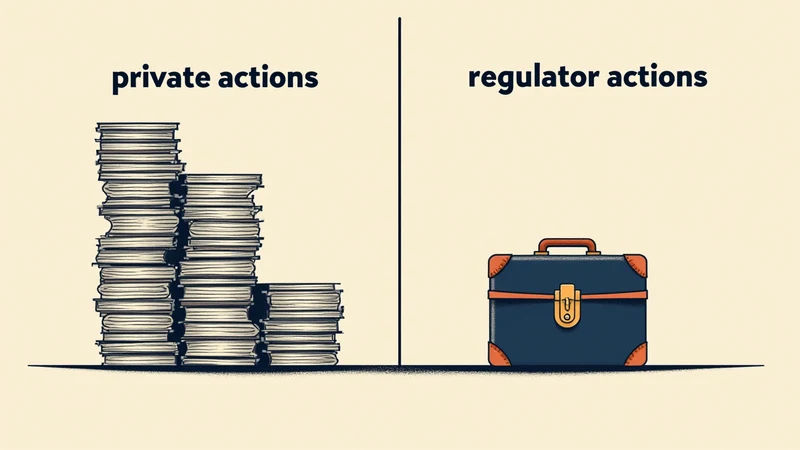
The raw numbers are not close. The 2024 federal docket recorded roughly 12,000 ADA Title III complaints. Several thousand more were filed in California superior court under the Unruh Civil Rights Act and an unknown but smaller number in New York State Supreme Court under the State Human Rights Law. Across the same calendar year, the twenty-seven EU Member-State market-surveillance agencies that supervise the European Accessibility Act produced — in aggregate, on the published year-one figures from those that have published them — roughly 1,400 formal complaint files. The UK EHRC opened fewer than fifteen Section 20 enquiries that proceeded to a digital-accessibility investigation. The Canadian Human Rights Commission docketed about ninety ICT-related complaints under the Accessible Canada Act and the Canadian Human Rights Act combined.
Two structural points sit underneath the gap. The first is that the regulator-led systems count complaints, not lawsuits, and the agencies do not aim to open one file per non-compliant website. Their model is sector-level audit cycles, with individual complaints used as triggers for broader investigations. AgID’s 2025 retail-sector sweep, for example, audited 412 Italian e-commerce sites in a single exercise; the EHRC’s 2024 consumer-bank investigation covered the top eight UK retail banks at once. Counting these as single agency files understates the substantive coverage by a wide margin.
The second is that the US count rewards filing in itself. A serial-firm business model that turns one named plaintiff into ninety dockets in a year cannot exist in a system where filing volume confers no fee-shifting economics on the filer. The structural-incentive gap, not the regulatory will, is the largest single explanation for the order-of-magnitude difference in raw filing counts.
The single most consistent finding across all four jurisdictions is that filing volume tracks the enforcement economics of the filer, not the prevalence of the underlying violation.
03 · Settlement size and the economics underneath
Where the US system produces volume, the EU and UK systems produce — comparatively — concentrated outcomes. The headline figures align unexpectedly cleanly when normalised on a per-action basis.
On the US side, the median plaintiffs’-fee component on a serial website-accessibility settlement, reconstructed from publicly filed consent judgments and the ADA Title III News & Insights blog’s running coverage from 2022 to 2025, sits at roughly $13,500. Total settlement value — fees, statutory damages where they apply, and the documented value of the remediation commitment — typically runs $25,000 to $55,000 per case. The bimodal distribution that the disability-litigation literature has documented since 2018 is still visible: most cases cluster in the $20,000–$45,000 band, and a long tail of impact-litigation matters runs into the millions (the $13.3 million Target settlement, the multi-million Domino’s remediation budget, the eight-figure Netflix and Harvard captioning consent decrees).
On the EU side, the year-one EAA enforcement record — pieced together from the Italian AgID’s quarterly bulletins, the German BFIT-Bund’s annual report, the Spanish OAW’s enforcement register, the French ARCEP/ARCOM joint accessibility notes, and equivalent disclosures from the other Member States — shows a median administrative fine of approximately €15,000, with a top-quartile band running €50,000 to €120,000. The highest disclosed fine of the first year was AgID’s January 2026 decision against an unnamed Italian e-commerce operator: €350,000, issued for sustained non-compliance after a documented remediation deadline. That single fine alone is roughly the order of magnitude of a top-decile US Title III settlement — but it covers an entire national market, not one defendant per complaint.
The UK pattern is different again. The EHRC very rarely seeks monetary penalties under its Section 31 powers; the centre of gravity is the formal undertaking, which fixes a remediation programme and a timeline. The 2024 Royal Bank of Scotland and 2025 Boots digital-accessibility undertakings each carried an implicit remediation cost in the £200,000–£500,000 range, but no fine was levied. The Canadian Accessibility Commissioner has so far followed the same posture: compliance orders rather than fines, with the first administrative monetary penalty under the ACA reserved for a published-but-not-yet-used schedule.
The headline figures look similar at the top end and very different in the middle. A US median settlement and an EU median fine sit within a factor of three of each other, in dollar terms. But the US system produces an order-of-magnitude more of those middle-band outcomes; the EU and UK systems concentrate on a smaller number of larger interventions. Aggregated across the year, total monetary enforcement flow in the US is substantially higher; total per-defendant consequence at the top of the distribution is roughly comparable.
04 · Time to resolution
The four systems differ on speed in directions that are not obvious from the volume comparison alone.
| System | Median time from filing to first response | Median time to resolution | Publicly named outcome |
|---|---|---|---|
| US — ADA Title III (private, federal) | approx. 30 days (demand letter / Rule 12 response) | 3–7 months | Rarely — consent judgments are public, settlement agreements typically are not |
| US — Unruh (private, California state) | approx. 21 days | 4–6 months | Sometimes — superior-court records vary by county |
| EU — EAA (Member-State agency) | approx. 45 days (agency acknowledgement) | 9–12 months | Usually — agency registers publish entity, sector, and decision |
| UK — EHRC Section 20 enquiry → Section 31 notice | approx. 60 days | approx. 14 months | Usually — formal undertakings and Section 31 notices are published |
| CA — Accessibility Commissioner / CHRC | approx. 40 days | 10–18 months | Usually — compliance orders are published; complainant identities are not |
| US — DOJ Title III enforcement (public) | approx. 90 days | 18–36 months | Always — DOJ press release plus consent decree on the public docket |
The pattern that emerges is the inverse of what an outsider might expect. The private US system is the fastest by a wide margin. A serial firm’s demand letter, sent within days of the alleged barrier being observed, produces a defendant response within thirty days and a negotiated outcome within months. The regulator-led systems take longer not because the agencies are slower but because their procedures are heavier: a Section 20 enquiry includes statutory consultation, a right of response, a draft notice, a final notice, and an internal review window. The EU EAA cycle includes a remediation period built into the statute. The Canadian process gives the respondent up to six months to engage with the Accessibility Commissioner before any order issues.
The DOJ federal track is slower still. Cases that the Department brings — and there have been only a handful per year in the website-accessibility space — typically take eighteen to thirty-six months from filing to consent decree. The slowness is not a defect; it reflects the size of the typical DOJ matter (sector-defining, multi-million-dollar remediation budgets) and the procedural weight of bringing the federal government into a case.
The speed of the US private track is the source of its enforcement pressure and the source of its most-criticised pathology. Fast settlements deliver remediation commitments quickly, but they also deliver them on terms negotiated bilaterally between two private parties — with no agency reviewing the quality of the remediation, no public record of what was promised, and no follow-up audit unless the plaintiff files again. Regulator-led systems trade speed for transparency.
05 · Geographic concentration of cases
The geographic concentration of US Title III filings — four federal districts (SDNY, EDNY, CDCA, NDCA) hosting roughly two-thirds of the national docket — is the most striking single feature of the dataset and the cleanest evidence that filing patterns track economic incentives rather than the prevalence of violations. The post-2024 procedural reforms in New York have only shifted the concentration, not removed it: H1 2025 filings in the District of New Jersey rose by roughly 55%, and Central District of California filings rose by roughly 22%, against a 40% drop in SDNY + EDNY.
The EU pattern is different. Italy leads the year-one EAA complaint count with roughly 22% of the EU-27 total, followed by Germany at 18% and France at 14% — but Italy also has 13% of the EU’s population and the most actively staffed national agency (AgID was running an accessibility-monitoring programme for the public sector since 2004 under the Stanca Law and brought a deep operational base to its EAA role). Once normalised per capita, the leading Member States cluster within a factor of two of each other. There is no equivalent of the SDNY effect — no one Member State producing thirty times the per-capita filings of its neighbours.
The UK and Canadian patterns are population-weighted. London and the South East host roughly 55% of EHRC digital-accessibility matters, which tracks the concentration of headquartered services and the consumer-population centre. Ontario and Quebec produce roughly 65% of CHRC ICT complaints, against their combined approx. 61% share of the Canadian population. Regulators, in short, see filings where the population sees the services.
In every regulator-led system, geographic concentration tracks where people live. In the US private system, it tracks where the plaintiffs’ bar is.
06 · The scale-versus-consistency trade-off
The comparison comes down to two real, irreducible trade-offs. The first is between scale and consistency.
The US private system reaches more defendants in a year than any regulator-led system reaches in five. A retailer that operates an inaccessible checkout page in 2024 is far more likely to receive a demand letter from a New York plaintiffs’ firm than a compliance notice from any market-surveillance authority in the world. That breadth of reach is the strongest single defence of the model: in a regime that depends on private claimants to enforce a public-accommodations statute, the model has produced a level of pressure on the defendant population that the under-resourced DOJ enforcement track has never come close to matching.
What it has not produced is consistency. Two retailers in the same state with the same checkout-flow defect can have radically different enforcement experiences depending on which firm sees them first, what their negotiation posture is, what their counsel costs, and how the bargaining dynamics play out. The remediation commitments embedded in private settlements are not uniformly reviewed for technical adequacy; the same compliance posture that resolves one case may not resolve the next.
Regulator-led enforcement inverts both sides of the trade. The reach is much narrower — the EAA’s year-one fines reached, at most, a few hundred operators across twenty-seven Member States. But the outcomes are far more uniform. The German BFIT-Bund’s three-page compliance template, the Italian AgID’s standard remediation timeline, and the French ARCOM’s published reasoning framework produce decisions that look alike across cases and across years. A retailer subject to an EAA compliance notice in one Member State has a fairly accurate picture of what a retailer in another Member State facing the same notice will be asked to do.
Private rights of action produce many enforcement actions of variable quality; regulator-led enforcement produces few actions of consistent quality. Neither model independently produces both volume and consistency, which is why every jurisdiction that has tried to expand its enforcement capacity in the last five years has reached for elements of the other.
The second trade-off is between speed and transparency. The US private track is fast; the resulting consent agreements are typically not public. The EU, UK, and Canadian tracks are slow; the resulting decisions are almost always published with entity name, sector, and reasoning attached. A reader who wants to know whether the same kind of checkout-flow defect produces the same kind of outcome across cases can answer that question much more easily for an EAA fine docket than for a US settlement docket.
07 · What the four systems borrow from each other
By 2026 the four systems have all moved measurably toward each other in ways that are visible if you stop looking at them as pure types.
The European Accessibility Act, in its year-one rulebooks, has built in optional private-claimant channels that go further than its drafters originally signalled. Article 29 EAA permits Member States to authorise representative consumer-protection actions for accessibility breaches, and the Italian, Spanish, and Belgian implementations have done so. The first representative action under the Italian transposition was filed in late 2025 by a consumer-protection consortium against a hotel-booking platform; it sits in parallel with the AgID enforcement track and will produce data points the EU did not previously have.
The UK has gone the other way at the public-sector edge: PSBAR 2018 includes an explicit pathway for individuals to escalate accessibility complaints through the agency monitoring system, but EHRC guidance from 2023 onward has invited private claimants to bring Equality Act claims directly against private-sector digital service providers as well. Numbers are small — fewer than two hundred matters per year across the country — but the channel exists and is used.
Canada’s Accessible Canada Act took its enforcement architecture explicitly from the regulator-led tradition (Accessibility Commissioner with audit, compliance order, and administrative monetary penalty powers), but the Canadian Human Rights Act preserves a parallel individual-complaint route under the CHRC. Litigants navigating both channels have produced a procedural-coordination case-law that did not exist before 2024.
The US has moved least in this direction — there is no federal regulator with sector-wide accessibility-audit powers — but the DOJ Title II final rule of April 2024 (28 CFR Part 35, Subpart H) and the still-pending Title III website rulemaking represent the strongest administrative-rule movement in two decades. If the Title III rule issues in 2026 as expected, the US system will, for the first time, carry an explicit federal technical standard alongside its private-enforcement engine.
08 · The through line
The four enforcement systems were designed in different decades, by different legal traditions, with different views of what makes a public-accommodations statute work in practice. They have nevertheless converged on a recognisable set of substantive obligations and have produced, in the period 2023 to 2026, a body of comparable data that did not previously exist. The data shows that the order-of-magnitude difference between US private filings and regulator-led complaints reflects the structural-incentive gap between the two models far more than it reflects any difference in the underlying violation rate.
The trade-off is real and unresolved. Private rights of action deliver scale at the cost of consistency. Regulator-led enforcement delivers consistency at the cost of scale. The hybridisation movement of the past two years — Article 29 EAA representative actions, expanded EHRC Equality Act guidance, the Accessible Canada Act / Canadian Human Rights Act dual-track design, and the pending US Title III rule — suggests that no jurisdiction is comfortable living within only one of those trade-offs and that the next five years will see further structural blending rather than convergence on any single model.
For the underlying access gap — the share of public-facing digital services that are actually usable with assistive technology — the four systems have produced movement, but at different paces and along different vectors. The Disability World annual global disability metrics report, the EAA first-year enforcement report, and the serial-plaintiffs versus individual-plaintiffs analysis together give the next layer of detail under the headline numbers in this dossier.