
Serial plaintiffs versus individual plaintiffs — who actually drives ADA Title III enforcement in 2026
Thirty-six years after the Americans with Disabilities Act was signed into law, almost all of its public-accommodations enforcement is carried out not by the United States Department of Justice but by private plaintiffs — and within that universe, by a strikingly small number of plaintiffs’ firms filing in a strikingly small number of federal districts. Roughly 12,000 ADA Title III complaints were filed in US federal court in 2024 (Seyfarth Shaw ADA Title III tracker, the de facto industry baseline since 2013), with state-court filings under California’s Unruh Civil Rights Act and New York’s State Human Rights Law adding several thousand more. The top ten plaintiffs’ firms account for roughly 70% of all federal filings; the Department of Justice has filed under 200 federal website-accessibility actions in a decade. This dossier reconstructs the 2026 state of who is actually driving Title III enforcement, what the 2025 procedural reforms have changed, and what the data does and does not show about whether any of it is reducing the underlying access gap.
What the Title III docket reveals
- 01approx. 12,000
Federal Title III filings rebounded to roughly 12,000 in 2024
After dipping to 8,227 in 2023, federal-court ADA Title III filings climbed back to the 2021 peak of 11,452 and beyond. The 2024 rebound is driven almost entirely by website-accessibility cases out of the Southern District of New York.
- 02approx. 70%
Ten firms file roughly seven out of every ten federal complaints
The Seyfarth tracker and the AAJ Disability Rights Practice Group’s 2024 working paper identify ten plaintiffs’ firms — Mizrahi Kroub, Stein Saks, Mars Khaimov, Pacific Trial, Wittenberg, Center for Disability Access, Lipton, Manning, and two Florida-based filers — as the source of the bulk of federal Title III activity.
- 03approx. 4,500
SDNY and EDNY hosted more than 4,500 federal complaints in 2024
Roughly 38% of the national federal-court total. Add the Central and Northern Districts of California and you cover well over 60% of the docket. Four districts host the majority of federal Title III filings in the country.
- 04approx. 4,300
Website-accessibility cases are now more than a third of all federal Title III activity
Per Seyfarth and the ADA Title III News & Insights blog, website-accessibility complaints accounted for roughly 4,300 federal filings in 2024 — the doctrinal descendant of Robles v. Domino’s Pizza (9th Cir. 2019).
- 05<200
DOJ has filed fewer than 200 federal website-access cases in a decade
Estimated federal-court website-accessibility complaints filed by the Department of Justice and US Attorneys’ Offices, 2015–2024 combined. The public-enforcement floor that private litigation actually operates above is very low.
- 06$4,000
California’s Unruh statute provides statutory damages per visit — the ADA does not
Title III itself authorises only injunctive relief and attorneys’ fees. California Civil Code §52 supplies statutory damages of $4,000 per visit when paired with an Unruh claim — the economic engine behind the California serial filings.
- 07-40%
SDNY and EDNY filings dropped roughly 40% in H1 2025
The first measurable effect of the New York CPLR §3211 amendment. Filings did not disappear — they moved. New Jersey filings rose approx. 55% and Central District of California filings rose approx. 22% over the same period.
- 082026
DOJ’s Title III website rulemaking is still pending
Listed on the Unified Regulatory Agenda since 2022. The Title II equivalent finalised in April 2024 (28 CFR Part 35, Subpart H) adopts WCAG 2.1 Level AA as the federal standard for state and local government — and is already moving private-litigation bargaining postures.
SourceSeyfarth Shaw ADA Title III tracker (2013–2025 cycles); ADA Title III News & Insights blog; California Commission on Disability Access annual reports; New York State Office of Court Administration docket data; PACER federal-court records; American Association for Justice Disability Rights Practice Group 2024 working paper.
01 · The numbers, and what they count
The headline figure for ADA Title III enforcement — the one that appears in every congressional staff memo and Chamber of Commerce filing on the subject — comes from a single private dataset. Since 2013, the law firm Seyfarth Shaw has hand-coded every ADA Title III complaint filed in US federal district court using PACER docket searches and a stable taxonomy. The Seyfarth ADA Title III tracker reported 11,452 federal-court filings in 2021, 8,694 in 2022, 8,227 in 2023, and approximately 12,000 in 2024. The 2024 rebound — driven almost entirely by a surge in website-accessibility cases out of the Southern District of New York — is what makes the “is private enforcement broken” debate live again in 2026.
Three caveats sit underneath that headline number. First, it counts federal filings only. A complaint that pleads a Title III claim alongside a California Unruh Civil Rights Act claim is counted; one that omits the federal claim and pleads Unruh alone in state court is not. The California Commission on Disability Access estimated in its 2024 annual report that several thousand additional disability-access complaints are filed in California superior courts each year under the Unruh statute, which — crucially — allows statutory damages of $4,000 per visit where the underlying ADA does not.
Second, “complaints filed” is not the same as “judgments entered.” The Seyfarth dataset is explicit that the overwhelming majority of Title III cases settle within months and never produce a reported decision. The structural reason is the same one the disability-rights bar has cited since the early 1990s: Title III itself does not authorise damages, only injunctive relief and attorneys’ fees. A defendant facing $30,000 to $80,000 of plaintiffs’ fees on a fast-track demand letter typically settles for a fraction of that figure plus a remediation commitment, regardless of the merits.
Third, the categories that drive the year-on-year volatility are not the brick-and-mortar physical-access cases the ADA was written for in 1990. Website-accessibility cases — claims that a public-facing commercial website is itself a “place of public accommodation” or so closely connected to one as to trigger Title III — accounted for roughly 4,300 federal filings in 2024, per Seyfarth and the ADA Title III News & Insights blog. That is more than a third of all federal Title III activity, and it is concentrated in two districts.
Title III contains no damages remedy. The DOJ files vanishingly few enforcement cases. The result is that the only entities with the financial incentive to enforce the statute at all are private firms paid on a fee-shifting model.
02 · The firms behind the docket
The firm-level concentration is sharper than the geographic one. The Seyfarth tracker and a 2024 working-paper analysis by the American Association for Justice’s Disability Rights Practice Group identify a recurring set of names at the top of the filing tables. In New York, Mizrahi Kroub LLP, Stein Saks PLLC, and Mars Khaimov Law PLLC have together filed several thousand website-accessibility complaints since 2020. In California, Pacific Trial Attorneys, Wittenberg Law, and the Center for Disability Access (a unit of Potter Handy LLP) dominate the Unruh-coupled federal filings. Lipton Law and Manning Law appear consistently in the 9th Circuit website-access dockets.
The firms are not interchangeable. The New York cluster is overwhelmingly focused on website accessibility — claims that a retailer’s checkout, a restaurant’s menu PDF, or a hotel’s reservation page is unusable with a screen reader. The California Unruh specialists work both physical-access and digital cases but lean on the statutory-damages multiplier. The Florida and New Jersey filers sit closer to the original Title III pattern: parking, restrooms, ramps, signage, hotel reservation rules under 28 CFR §36.302(e).
Inside each cluster, a small number of named plaintiffs appear repeatedly. The California Civil Code §425.55 “high-frequency litigant” definition — a plaintiff who has filed ten or more disability-access claims in a 12-month period — is itself a count that the courts publish: California’s annual judicial-council data has identified roughly two dozen individuals each year who clear that threshold, and they file the great majority of the state’s serial Unruh actions. New York has no equivalent public count, but the post-2024 procedural reforms were designed in response to a comparable concentration.
03 · Geographic concentration
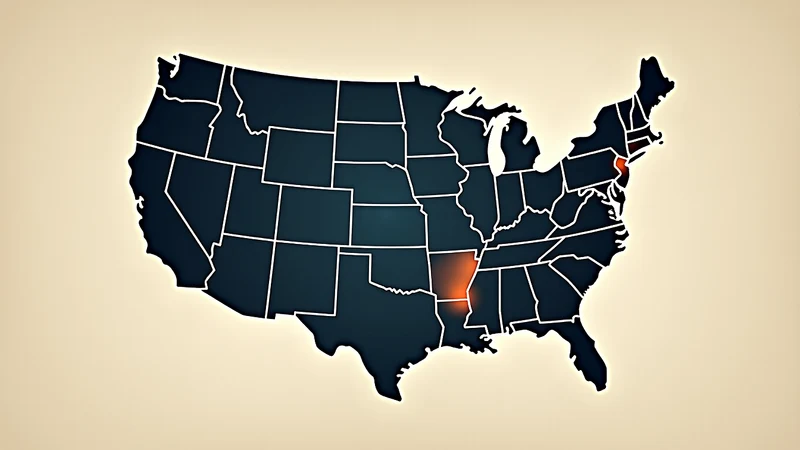
Geographic concentration is the single most consistent feature of the dataset. In 2024, the Southern District of New York and the Eastern District of New York together hosted more than 4,500 Title III complaints — roughly 38% of the national total. The Central District of California and the Northern District of California added another 2,800 between them. Florida’s Southern District and the District of New Jersey round out the next tier. Four districts, in other words, host the bulk of all federal Title III filings in the country.
The pattern is not random. SDNY and EDNY combine a friendly district-court line on website-as-public-accommodation (Andrews v. Blick Art Materials, LLC, 268 F. Supp. 3d 381 (E.D.N.Y. 2017), and its progeny), permissive personal-jurisdiction precedent that has historically allowed New York plaintiffs to sue out-of-state e-commerce defendants, and a dense bar of specialised firms. The Central District of California combines the Unruh statutory-damages multiplier with the Ninth Circuit’s Robles rule. The Florida and New Jersey districts are second-best forums when the primary ones tighten their procedural rules — and as Section 05 shows, that’s exactly what 2025 has begun to demonstrate.
04 · The website-accessibility wave
The doctrinal background that explains the 2020–24 volume is short. In Robles v. Domino’s Pizza, LLC, 913 F.3d 898 (9th Cir. 2019), the Ninth Circuit held that the ADA applied to the pizza chain’s website and app because they were sufficiently connected to its physical stores. The Supreme Court denied certiorari in October 2019. Carparts Distribution Center v. Automotive Wholesaler’s Association, 37 F.3d 12 (1st Cir. 1994), had already provided the older First Circuit doctrine that a “place of public accommodation” is not limited to physical locations. Gil v. Winn-Dixie Stores, 257 F. Supp. 3d 1340 (S.D. Fla. 2017), produced an early bench trial in favour of a blind plaintiff that the Eleventh Circuit later vacated and remanded on mootness grounds in 2021 — leaving the circuit-level law unresolved in the Eleventh Circuit even now.
The result is a patchwork. Plaintiffs filing in the Ninth and First Circuits have a clear doctrinal hook. Plaintiffs filing in the Second Circuit have a friendly district-court line. Plaintiffs filing in the Eleventh Circuit work under residual uncertainty. The Department of Justice’s still-pending Title III website rulemaking — listed on the Unified Regulatory Agenda since 2022 — would resolve the question administratively but has not yet been issued. The Title II rulemaking finalised in April 2024 (28 CFR Part 35, Subpart H) does the equivalent work for state and local government websites and apps, with staged compliance dates running through 2026–27 depending on jurisdiction size. The Title II rule’s existence — and its explicit adoption of WCAG 2.1 Level AA as the standard — has changed the bargaining posture in private Title III settlements even though it does not technically apply to them.
The unresolved doctrinal question across the circuits is whether a website without a physical-store counterpart — a pure e-commerce site — is itself a “place of public accommodation” under Title III. The Ninth Circuit (per Robles) requires a nexus to a physical location. The First and Seventh Circuits read the statute more broadly. The Eleventh Circuit’s posture is unresolved after the 2021 Winn-Dixie vacatur. The plaintiffs’ bar files where the doctrine favours them.
05 · The procedural responses
State legislatures responded to the filing volumes before Congress did. Three reform models matter in 2026.
California: §425.55 and the high-frequency-litigant declaration
California Civil Code §425.55, enacted in 2015 and tightened in 2024, requires any plaintiff meeting the high-frequency-litigant threshold to file a separate declaration with every Unruh complaint disclosing prior filings, identifying counsel, and stating the reason for visiting the defendant’s establishment. A $1,000 supplemental filing fee applies. The 2015 statute was upheld against an equal-protection challenge in Thurston v. Omni Hotels Management Corp., 69 Cal. App. 5th 299 (2021). The 2024 amendments — moved through SB-585 — added a stricter “personal visit” pleading requirement designed to filter out tester-based Unruh claims where the plaintiff had never physically visited the business.
New York: CPLR §3211(g)(1) and the non-resident plaintiff reform
The New York State Legislature in mid-2024 amended CPLR §3211 to require plaintiffs in certain accessibility-related actions to plead a connection to New York and to allow pre-answer dismissal motions on a heightened showing where the complaint is one of a series of materially identical filings. The drafters’ published memorandum named the Mizrahi Kroub and Stein Saks filing patterns explicitly — non-New York-resident plaintiffs filing dozens of materially identical website-accessibility complaints against out-of-state defendants — as the conduct the reform targeted.
Florida: the 2021 surcharge and pre-suit notice
Florida’s 2021 amendments to Title VIII of its civil-procedure rules added a $250 surcharge on serial ADA filings (defined by per-plaintiff thresholds) and required a pre-suit notice giving defendants a window to cure. The federal counterpart — a federal pre-suit notice bill (commonly cited as the “ADA Education and Reform Act”) that passed the US House in 2018 but never the Senate — has reappeared in each subsequent Congress. The 119th Congress version is pending as of mid-2026.
The early returns on the New York reform are visible in the 2025 mid-year Seyfarth update. Federal Title III filings in the Southern and Eastern Districts of New York fell roughly 40% in the first half of 2025 compared to the first half of 2024. Filings in the Central District of California rose by approximately 22% over the same period. Filings in New Jersey — long viewed as a back-up jurisdiction for the New York firms — rose by roughly 55%. The total national federal filing count for the first half of 2025 was down about 18% year-over-year.
The interpretation is contested. Defence-side commentators have read the data as evidence that the New York reform is working. Plaintiffs-side commentators have read it as evidence that the reform is displacing filings to neighbouring jurisdictions and to state court, where the data is harder to track. Both readings are partly right. The California Commission on Disability Access’s first-quarter 2025 numbers show Unruh state-court filings up roughly 12% year-over-year; the New York State Office of Court Administration’s docket-level data, where it is broken out, shows a smaller but real increase in state-court accessibility filings in the same period.
06 · Defendants and disability-rights pushback
Two narratives sit on top of the same docket. Both are partly right, neither is fully right, and the disagreement between them is the structural shape of the Title III policy debate in 2026.
Reform-side advocates — including the US Chamber of Commerce, the Restaurant Law Center, and Retail Litigation Center — have framed high-volume Title III filers as opportunistic since 2017 amicus filings. The vocabulary they use (“extortion scheme,” “drive-by lawsuits,” “click-by lawsuits”) frames the serial firms as bad actors exploiting a fee-shifting loophole. The 2024 New York reform memorandum borrowed this framing explicitly.
Disability-rights organisations including the Disability Rights Education and Defense Fund (DREDF), Disability Rights Advocates (DRA), and the National Federation of the Blind have responded with a structural argument: Title III contains no damages remedy, the DOJ files vanishingly few enforcement cases, and the result is that the only entities with the financial incentive to enforce the statute at all are private firms paid on a fee-shifting model. Strip out the fees and you do not get a cleaner system — you get an unenforced one.
Whether the underlying remediation is happening is harder to measure than the filing count. The Seyfarth tracker does not record settlement terms; only a fraction of consent decrees are publicly accessible. The ADA National Network and the Job Accommodation Network have published occasional remediation-tracker work, but neither has a comprehensive longitudinal dataset. The structural question — does the filing volume translate into web pages that are actually usable with a screen reader? — does not have a clean answer in the public data as of mid-2026.
07 · Individual plaintiffs and strategic litigation
The serial-firm dockets crowd out a smaller but doctrinally more important track: cases brought by individual named plaintiffs supported by strategic-litigation organisations. These are the cases that produce the appellate decisions.
The National Federation of the Blind has run a coordinated Title III strategy since the early 2000s, including NFB v. Target Corp., 452 F. Supp. 2d 946 (N.D. Cal. 2006) (one of the earliest federal decisions to apply Title III to a commercial website), NFB v. Scribd, 97 F. Supp. 3d 565 (D. Vt. 2015), and a series of post-Robles matters in the higher-education and financial-services sectors. The American Foundation for the Blind contributes amicus work and policy litigation around the federal Section 508 ecosystem. The National Association of the Deaf has been the lead institutional plaintiff in the captioning line of cases — including NAD v. Netflix, 869 F. Supp. 2d 196 (D. Mass. 2012), NAD v. Harvard (D. Mass. 2015 onward), and NAD v. MIT — establishing that streaming video services and university lecture archives are subject to Title III’s communication-access requirements.
Disability Rights Advocates (DRA) and the Disability Rights Education and Defense Fund (DREDF) operate impact-litigation dockets that include Sullivan v. Doctor’s Associates LLC, 1:18-cv-09309 (S.D.N.Y.) and related franchisor-liability matters, and structural cases against transit authorities, school districts, and large retail chains. These dockets typically run for years, settle into consent decrees with multi-million-dollar remediation programmes, and produce remediation that the per-website serial track does not. They also, by their nature, produce a handful of cases per year — not thousands.
A small number of strategic cases produce the legal doctrine. A very large number of serial cases produce the day-to-day enforcement pressure. The DOJ, in practice, fills neither role at scale.
08 · 2026 outlook
Three threads are likely to define the rest of the year.
- DOJ’s Title III website rulemaking. The proposed rule has been on the Unified Regulatory Agenda since 2022. If it issues in 2026, it will resolve — administratively — the circuit-split uncertainty around website-only defendants and is likely to formalise WCAG 2.1 Level AA as the federal standard, matching the Title II final rule. The plaintiffs’ bar expects the rule to raise the floor of what compliance looks like and therefore to expand, not contract, the pool of potential defendants.
- A possible SCOTUS cert grant on the “nexus” question. The Eleventh Circuit’s unresolved posture, the Ninth Circuit’s Robles line, and the Second Circuit’s district-court patchwork have produced a recurring petition queue. The Court denied cert in Robles in 2019 and in several follow-up petitions through 2023; the 2025 term’s petitions in the website-access space are pending as of this writing.
- State-court drift. The most measurable effect of the 2024–25 procedural reforms is a shift of filings from federal to state court, and from New York to California, New Jersey, and Florida. If that pattern continues, the Seyfarth federal-court tracker will progressively understate the true national volume — and the policy debate that uses its figures will need a new baseline.
The through line
The 2026 picture of ADA Title III enforcement is one in which the statute’s public-accommodations promise is kept, when it is kept, by a private bar concentrated in a handful of firms and a handful of districts, operating on a fee-shifting model that was not the original drafters’ centrepiece but has become the load-bearing one. The 2024 procedural reforms in New York and California have changed where the filings happen more than how many. The underlying access gap — the fraction of US commercial websites that are actually usable with assistive technology — is moving more slowly than the litigation curve, which is the strongest single argument that the current system is producing pressure but not yet outcomes at the scale Congress assumed in 1990.
Whether the pending DOJ Title III rule, the next wave of state-court reforms, or a Supreme Court grant of certiorari changes that pattern is the open question of 2026. Read more from Disability World on the ADA, on the wider US accessibility-law landscape, on how compliance, conformance and accessibility differ, on the WCAG 2.2 reference, and on the 2026 reporting record.